Treatment goal / Hair
Hair Reduction
Compare a focused 808nm diode platform with configurable IPL or OPT systems.
Decision frame
Define the workflow before the equipment.
Start by deciding whether hair reduction is the main revenue category or one part of a broader treatment menu. That choice determines whether a dedicated diode system or a configurable light platform belongs on the shortlist.
Shortlist questions
Four answers that improve a quotation.
- 01
Dedicated or multi-treatment workflow?
- 02
Which skin types and body areas are in scope?
- 03
Which cooling and handpiece details require verification?
- 04
What training and destination-market documents are required?
Decision guide
The short answer: choose focus before features
If hair reduction will be a core service with regular large-area appointments, begin with a dedicated 808nm diode platform. If hair reduction is one part of a wider light-based menu, compare it with an IPL or OPT configuration. That is the first branch. The second is whether the delivered handpiece, cooling and service plan can support the volume you expect.
Neither path guarantees the same result for every client. Hair colour, calibre, growth phase, body area and surrounding skin all affect the response. Pale or grey hair contains little of the melanin used as the optical target. Darker or recently tanned skin places more competing pigment near the surface. Your consultation process must recognize those limits before the machine is switched on.
Decision guide
Understand the target without turning theory into a protocol
Selective photothermolysis is the useful foundation: choose optical conditions that favour a target while limiting unwanted heating around it. In hair reduction, melanin in the hair shaft and follicular structures absorbs light and converts it to heat. Wavelength, pulse delivery, spot, contact and cooling work together. No single specification can stand in for the whole system.
Hair cycles through active growth, transition and rest. Only a share of follicles present the same target condition at a given visit, which is why professional services are planned as a course with reassessment. A supplier may explain the principle, but should not promise a fixed session count or permanent clearance for every person. Published trials compare defined devices and protocols; they do not validate every machine carrying the same wavelength label.
Decision guide
Dedicated diode or flexible light platform?
A diode laser gives the room a focused hair-reduction workflow. That can simplify training, consultation language and inventory. When you compare diode platforms, look beyond nominal wavelength. Verify the exact handpiece, contact window, cooling behaviour, spot configuration, adjustable ranges, water-system maintenance, alerts and expected wear parts. Ask how the handpiece performs through repeated appointments, not just during a brief demo.
IPL uses filtered broad-spectrum light and can support a wider menu when the correct filters, handpieces and controls are delivered. That flexibility has a cost: operators need to understand more treatment paths, and the business must maintain clear boundaries between them. Ask what OPT means on the offered model. Treat it as a platform term to be defined, not as proof of a standard wavelength, pulse form or result.
Decision guide
Map the patient mix to the room
Write down the Fitzpatrick skin types commonly seen, the proportion of facial versus large body areas, and the colour and calibre of hair you expect. Add weekly appointment volume, operator count and room turnover needs. This short operational profile gives the supplier something concrete to answer. It also lets you compare proposals on the same basis instead of reacting to different feature lists.
A room serving many darker skin types requires conservative assessment and especially credible training. Surface cooling is important, but it does not make copied or aggressive settings safe. A room focused on large areas may place more weight on handpiece ergonomics and sustained cooling. A low-volume salon adding several light services may value flexibility, provided the staff can be trained for each workflow.
Decision guide
Build safety and expectation-setting into the service
Consultation should cover skin tone, recent sun exposure, medicines, relevant medical history, prior reactions and the target hair. Eye protection, test procedures and exclusion criteria must follow the current manual and professional guidance. This site does not provide a treatment protocol and cannot determine suitability for an individual.
Use accurate outcome language. ‘Hair reduction’ is more defensible than a promise that every hair will disappear forever. Explain that response and maintenance vary. Make photography and consistent recordkeeping part of the workflow so the client and operator can review change over time. Strong consent and follow-up protect the business as much as the equipment does.
Decision guide
Compare ownership, not only purchase price
Ask for the exact model and electrical version, delivered handpieces or filters, cooling design, eyewear, routine maintenance, expected replacement parts, training format, warranty terms and destination-market documents. For IPL, include lamp or handpiece service assumptions. For diode, ask about water care, filters and the process for a handpiece fault. Require freight and remote-support responsibilities to be clear.
A useful supplier answers with a configuration list rather than a family brochure. It distinguishes current documents from historical references and avoids transferring specifications between models. When two quotes differ, normalize them: compare what is in the box, what is needed to start safely, what is replaced over time and what happens when the room cannot operate.
Procurement checklist
Questions to put in writing.
- Exact model, wavelength or filter set, handpieces and spot configuration
- Cooling method, water care, cleaning and fault alerts
- Expected patient mix, body areas and appointment volume
- Training scope, current manual and operator materials
- Consumables, wear parts, warranty, remote diagnosis and freight terms
- Current model-specific documents required in the destination market
Candidate platforms
Open the product comparison.
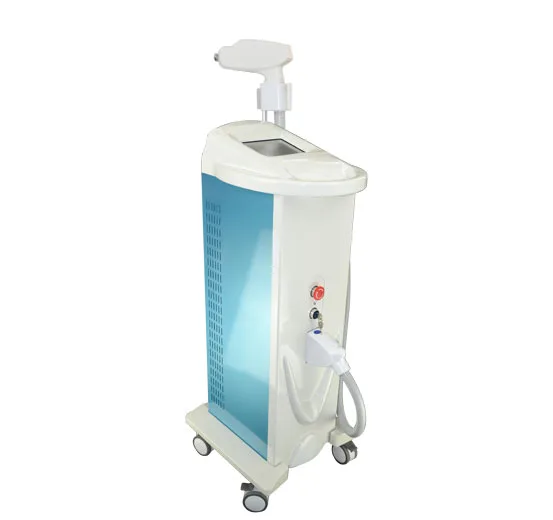
- 808nm Diode Laser — A single-wavelength platform documented for professional hair-reduction workflows.
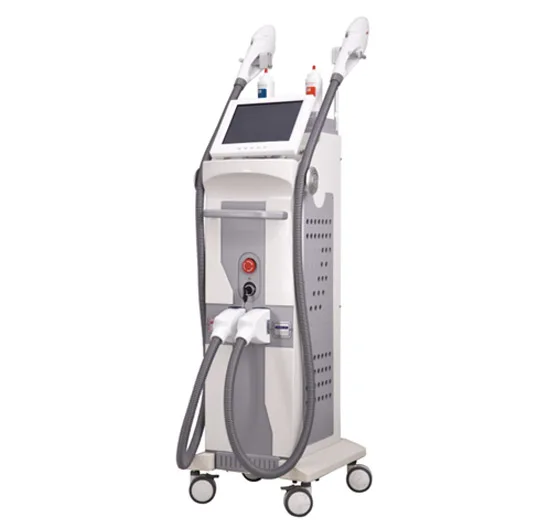
- OPT & IPL Platform — Configurable light-based platforms for buyers building a broader treatment menu.
Frequently asked questions
FAQWhich platform is the better first purchase for hair reduction?
Choose a dedicated 808nm diode when hair reduction is the main service and a focused workflow matters. Consider IPL or OPT when you need a broader light-based menu and can support the extra training. The exact configuration and service plan still decide whether either option fits.
Can these systems treat every hair colour?
No. Optical hair reduction depends on pigment in the target. Grey, white and very light hair may respond poorly. The operator must also account for pigment in the surrounding skin, tanning and other individual factors.
How many sessions should the business advertise?
Avoid a universal number. Hair cycles, body area and individual characteristics change the response. Build a course-based consultation with reassessment and use claims allowed by your local rules and supported by the delivered device.
What is the strongest sign of a usable quotation?
It names the exact model, handpiece or filters, cooling, accessories, training, documents, wear parts and service responsibility. A generic catalogue price leaves too many operational questions unanswered.
Evidence trail
Published research behind the comparison
This guide is educational material for equipment selection. It is not medical advice, an operating protocol or a promise of clinical outcome.
Next step
Compare current configurations for a hair reduction workflow.
Tell us your priority services, market, client mix and business type. Ask for the exact configuration, documents, training and service terms you need.
Describe your equipment plan ↘