Specification comparison
30K, 40K and 80K Cavitation Machines Compared
Three numbers, one question. Buyers want to know whether a 30K cavitation machine beats a 40K or an 80K one, and most vendors answer with whichever number they happen to stock. The kHz figure does mean something, but it is not a ranking, and it will not tell you which console survives a full booking day.
Buyer guide
The specification question buyers actually type
Search for cavitation equipment and you land on pages laid out like a league table. 30K on the entry tier, 40K in the middle, 80K at the top with a bigger price attached. Bigger number, harder working machine. That is not how the physics runs, and it is not how the quotations get built either.
The honest version is duller. A kHz figure tells you roughly where in the tissue a handpiece works and how the session feels to the client. It says nothing about build quality, nothing about how much acoustic energy reaches skin, nothing about whether the console survives six back-to-back appointments. Those questions decide whether the machine pays for itself.
Buyer guide
What the kHz figure describes
Kilohertz counts cycles per second. Nothing more exotic is going on. A 40k cavitation machine drives its transducer forty thousand times a second, and an 80k cavitation head roughly doubles that rate. A 30K handpiece runs slowest of the three, at the deep-reaching end. Here is the part nobody spells out for you: 30K on a listing is a rounded label for a transducer somewhere in the high-20s kHz band, not a measured 30,000 cycles. Our device manuals offer one cavitation module as 28 kHz or 40 kHz on the same body tip, and 28 kHz is exactly the figure that gets rounded up to 30K.
The rule you need comes from diagnostic ultrasound, where it has been documented for decades. Lower frequencies reach deeper into tissue but resolve less fine detail; higher frequencies show more detail and give up depth (American College of Emergency Physicians, Sonoguide). Carry that across to body equipment. The 30K end reaches deepest, aimed at the subcutaneous fat layer on large areas. 40K sits in the middle and became the default. 80K stays nearer the surface, feels milder, and gets offered for smaller or thinner areas where a deep-reaching tip is wrong. Treatment depth is what handpiece frequency buys you, and depth is a job description rather than a grade.
Set the three bands side by side and the league table collapses.
| Label on the listing | Relative working depth | Typically offered for | How the session feels | What the label omits |
|---|---|---|---|---|
| 30K, normally a transducer in the high-20s kHz band; our device manuals list a 28 kHz option | Deepest of the three, at the low-frequency end | Large areas with a real subcutaneous layer: abdomen, flanks, thighs | Lowest tone, most noticeable pressure | Rounded marketing shorthand, not a measured or certified figure |
| 40K, forty thousand cycles per second, the common body default | Mid-range, still aimed at the subcutaneous fat layer | General body work; most multi-handpiece bundles are built around it | The familiar body cavitation sensation operators are trained on | Two 40K heads from two factories can differ in real acoustic output |
| 80K, roughly double the 40K rate | Shallowest of the three, closest to the surface | Smaller or thinner areas where a deep-reaching tip is wrong | Mildest, which is why it is sold as the comfortable option | A higher number means shallower, not stronger or newer |
Depth stays relative on purpose. Vendors like to attach centimetre figures to each band, and those numbers were not measured on your client. What happens down there is gentler than most brochures admit. In a histology and electron-microscopy study of human abdominal adipose tissue exposed to 20 kHz ultrasound, adipocytes shrank significantly and developed micropores that let triglycerides leak out, with no signs of fat-cell death and no appreciable change to the microvascular, stromal or epidermal components (Bani and colleagues, Plastic and Reconstructive Surgery Global Open, 2013). Leaking, not exploding. Mark down any supplier who calls fat-cell destruction settled fact.
Buyer guide
Why one quotation carries several handpieces
Notice how rarely anyone sells you a single frequency on its own. That is not upselling. No one frequency covers a whole body menu, so the console gets a set.
Our engineering archive makes the point bluntly. That 28 kHz or 40 kHz module sits on the same 72 mm tip, at the same maximum 60 W across five power levels, whichever option the factory fits. Same envelope, same tip, same ceiling. Frequency is a build choice, not a price tier. Tiered online pricing reads very differently once you have seen that.
A second console in the archive shipped six handpieces: vacuum, RF, infrared and roller combinations sized for different body areas, plus one dedicated 40 kHz ultrasound head rated at 100 W. One machine, several jobs. That is why the ultrasonic cavitation equipment family is described at family level here until a configuration is on paper. Ask what each handpiece is for, area by area, in their own words. Hesitation tells you the bundle was assembled for a price list, not a treatment room.
Buyer guide
How to read a multi-handpiece quotation
Four figures earn their place on a comparison sheet. The rest is packaging.
- Frequency, stated per handpiece. One number for the whole console tells you nothing when the trolley carries four heads.
- Output power at the tip, with the number of adjustment steps. A 60 W head with five coarse levels behaves nothing like a 100 W head with fine control.
- Handpiece count paired with the intended body area for each one. Get that area list in writing, not in conversation.
- Duty cycle, meaning on-time against off-time. Almost nobody asks for it. Everybody should.
Duty cycle is the figure buyers skip and later regret. One archive console lists pulse width adjustable in ten steps up to ten seconds, alongside a pulse delay in eight steps up to eight seconds. Read that as work against rest. A machine idle for half its cycle is not the same purchase as one running continuously, and the gap shows up in session length and daily bookings.
Now the decoration. Console-level rated power is mains draw, not what reaches tissue, and our own manuals show how wide the gap gets. One cavitation leaflet prints a nominal power of 350 W beside an ultrasound output of 50 W. A trifold for a related unit gives a rated 500 W beside a tip capped at 60 W. Same page, an order of magnitude apart. Quoting a console figure against a rival's tip figure is sleight of hand. Tip diameter is a fit specification, not a strength claim. Net weight, cabinet dimensions and phrases like medical grade belong in the shipping notes.
If radio frequency shares the trolley, give it its own column. Our device manuals list RF handpieces at 2.64 MHz with heating durations set from 0.5 to 5 seconds in half-second steps: a different control set, a different safety conversation. Judge it against the RF skin tightening criteria on its own terms. A combined console hides a weak half behind a strong one.
Buyer guide
Two 40K handpieces can behave differently
No standards body polices the number printed on a cavitation handpiece. No agreed test method, no calibration certificate, no obligation to say whether a wattage figure is electrical input or acoustic output. Our own archive shows how loose the convention runs: a six-handpiece body console leaflet prints its ultrasound frequency as 40K, with no tolerance and no measurement note. Marketing shorthand, sitting inside an engineering document.
Driving frequency is cheap to hit and easy to publish. Delivered acoustic output is neither. Transducer quality, acoustic matching, driver electronics, tip wear and even the coupling gel sit between the printed spec and the client's skin, and every one of them can be economised. Two handpieces stamped 40K, from two factories, at two prices, can run noticeably different sessions. Not a conspiracy. The predictable result of an unregulated label.
The clinical literature ignores the marketplace ladder anyway. A 2022 prospective pilot study in Aesthetic Plastic Surgery ran its ultrasound stage at roughly 64 kHz, a figure on no vendor tier list, and its authors flagged a small sample, short follow-up and no control group before anyone else could. So ask three questions. Where is the power figure measured? Input or output? Will you show me the test report? Vague answers are answers.
Buyer guide
A comparison method instead of a winner
Start from your rooms and your clients, not the catalogue. List the three or four areas you genuinely intend to service, then shortlist only configurations whose handpieces cover them. Normalise every quotation to that list before you look at a price: exact model, each handpiece with its frequency and rated tip output, electrical version, warranty, training days, per-session consumable cost. Half the price gaps close once the lists match.
Then demand a full-length demonstration rather than a thirty-second touch on a forearm. Watch the cable strain, the tip temperature, the console deep into the session, and how fast staff swap heads between areas. Room time is the real running cost of a multi-handpiece platform. That workflow question sits at the centre of any body programme equipment plan, and it deserves more of your attention than the frequency debate ever will.
Keep the clinical boundary visible while you do it. The US Food and Drug Administration's guidance on non-invasive body contouring is blunt about the ceiling: these procedures do not treat obesity and will not produce weight loss, the desired effect may not arrive, and any result may be temporary. Where a console also carries RF or infrared heads, thermal settings bring burn and post-inflammatory pigment change into play, and darker skin types warrant more conservative parameters set by trained staff. Screening and anything resembling an underlying condition belong with a clinician.
Which number wins, then? None of them. The machine that wins is the one your team can still run properly at four o'clock on a Friday, on the areas you actually sell, at a consumable cost you can predict.
Frequently asked questions
FAQWhat is a 30K cavitation machine, and is 30 kHz the real frequency?
A 30K machine carries the lowest-frequency handpiece of the common three, so it works at the deeper end of the range and is aimed at large body areas. Treat the number as a label rather than a measurement. Transducers sold as 30K normally sit in the high-20s kHz band, and our own device manuals offer 28 kHz as the low option on a body tip. Ask your supplier for the exact figure in writing.
Is an 80K cavitation machine better than a 30K or 40K one?
No. Higher frequency means shallower, gentler work; lower frequency reaches deeper. That is a difference in job, not in quality. An 80K handpiece is a poor substitute where you need depth, and a low-frequency head is the wrong tool on a thin or delicate area. Judge the machine on output control, handpiece coverage for your service areas, duty cycle and support, then treat frequency as a fitting question.
Which frequency should I choose for abdominal work?
Body areas with a real subcutaneous layer are generally served by the lower-frequency handpieces, which is why 40 kHz became the common body standard and why our archive lists 28 kHz and 40 kHz as options on the same body tip. Confirm the intended area for each handpiece in writing on your quotation. Protocol selection for an individual client is a trained-operator and clinician decision, not something a specification sheet can settle.
Can I compare two suppliers' 40K handpieces on paper alone?
Not reliably. There is no standard test method behind the number, and vendors are free to publish electrical input, acoustic output or nothing at all. Transducer quality, driver electronics and tip condition all change what reaches tissue. Ask where each power figure is measured, whether it is input or output, and whether a test report exists. Then run a full-length session on both before you decide.
Does a bigger wattage figure mean a stronger treatment?
Only if the two numbers describe the same thing. Console-level rated power is mains draw. Our own manuals print a 350 W nominal figure beside a 50 W ultrasound output, and a 500 W rated figure beside a tip capped at 60 W. Compare tip output to tip output, note how many adjustment steps exist, and check the duty cycle. A fine-grained 60 W head running continuously can out-work a coarse higher-rated one.
Evidence trail
Published research behind this guide
This guide is educational material for equipment selection. It is not medical advice, an operating protocol or a promise of clinical outcome.
Read the research
- ACEP Sonoguide: ultrasound physics, frequency, penetration depth and resolution ↗
- Bani et al., Histological and Ultrastructural Effects of Ultrasound-induced Cavitation on Human Skin Adipose Tissue, Plast Reconstr Surg Glob Open 2013 ↗
- US FDA. Non-Invasive Body Contouring Technologies: what these devices do, and that they do not treat obesity or produce weight loss ↗
- Urdiales-Galvez et al., Body Contouring Using a Combination of Pulsed Ultrasound and Unipolar Radio Frequency: A Prospective Pilot Study, Aesthetic Plast Surg 2022 ↗
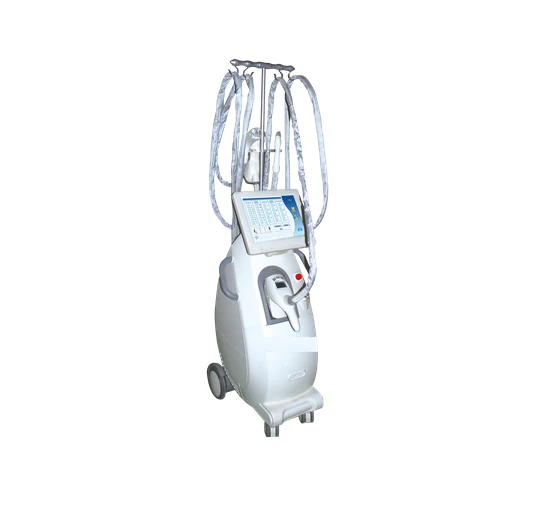
Ultrasonic Cavitation Machines
Cavitation machines buyer guide: how 40kHz ultrasonic cavitation fits a body-contouring menu, what to compare across configurations, and which claims to verify on the exact quotation.
40 kHz ultrasound↘05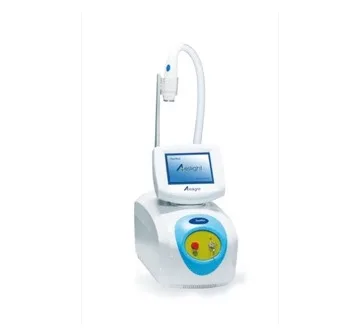
RF Skin Tightening
A non-laser energy family for buyers comparing thermal skin platforms.
Radio frequency↘Next step
Compare current configurations against the criteria in this guide.
Tell us your priority services, market, client mix and business type. Ask for the exact configuration, documents, training and service terms you need.
Describe your equipment plan ↘