Technology explainer
What Ultrasonic Cavitation Actually Does to Fat
Ultrasonic cavitation is one of the most oversold categories in body work, and one of the most useful once you sell it honestly. This is what low-frequency ultrasound really does inside subcutaneous tissue, what a handful of small clinical studies actually measured, and what you should never print on a price list.
Buyer guide
Sound is pressure, and pressure does the work
Press a transducer against skin and nothing is shone into anybody. It pushes and pulls. Low-frequency ultrasound drives alternating compression and rarefaction through tissue tens of thousands of times a second, and on the negative half of each cycle the local pressure can drop far enough that dissolved gas comes out of solution. Tiny bubbles form. They grow across successive cycles, turn unstable, then collapse. That collapse is what everyone means by the word, and the link between ultrasound and cavitation is the whole of the mechanism.
Two consequences follow. The effect is mechanical rather than thermal, so you're not chasing a temperature endpoint the way you would with radiofrequency. It's also broadcast rather than aimed: a flat tip on an abdomen puts its field into everything sitting under the contact area.
The hardware in our engineering archive sits in the conventional band. Transducer tips run at 40 kHz behind a 72 mm flat face, ultrasound output lands somewhere in the 50 to 60 W region depending on the unit, and the cavitation handpiece is normally paired with a separate radiofrequency module near 2.64 MHz for the tightening half of a protocol.
Buyer guide
The claim about the adipocyte membrane
An adipocyte is an awkward cell. Most of its volume is one lipid droplet, and the membrane wrapped around that droplet is stretched thin. The argument for cavitation runs like this: the cell is mechanically fragile next to the vessels, nerves and fibrous septa around it, so an oscillating pressure field stresses it first. The membrane gives way, triglyceride is released, and the lymphatics and liver deal with what's left.
Plausible. It's also a good deal weaker than the selectivity you get in light-based work, and you want to know that difference before a physician buyer asks. Anderson and Parrish set the standard in Science in 1983: choose a wavelength your target absorbs more strongly than its surroundings, deliver it in a pulse shorter than that target's thermal relaxation time, and the damage stays where you aimed it. A 40 kHz pressure wave has no chromophore to aim at. Selectivity here rests on relative cell fragility, which is an argument rather than a mechanism.
Say that out loud in a sales meeting. It costs nothing and buys the rest of the conversation.
Buyer guide
What the studies actually measured
The clinical literature is real, and it's thin. Tonucci and colleagues treated the abdomens of twenty women with a low-frequency, low-intensity ultrasound device over five sessions and reported mean circumference reductions of 1.5 cm at the waist, 2.1 cm across the abdomen and 1.9 cm at the umbilicus. The authors described satisfaction as moderate and asked for more research. Mild burning, tingling, numbness and pain appeared among the adverse effects.
Focused ultrasound, a different and more expensive device class, reads better. Moreno-Moraga and colleagues gave three treatments a month apart and measured a mean circumference reduction of 3.95 cm with a standard deviation of 1.99 cm. Read that spread again. Variability running at half the mean is the honest headline for this entire category, and it's why two clients on one protocol get very different photographs.
One figure from that study matters more than the centimetres: body weight didn't move. A 2019 review of non-invasive contouring devices puts the ceiling plainly, noting these technologies do not achieve what liposuction achieves. Anyone who tells your client otherwise has just written a refund.
Buyer guide
Why the frequency figure matters, and where it stops mattering
Lower frequency means a longer wavelength, deeper reach and rougher bubble behaviour. Push the frequency up and energy lands shallower with gentler dynamics. That's why roughly 40 kHz became the workhorse setting for body areas, and why higher-frequency tips get marketed for the face and small zones. The number describes a design decision. It doesn't promise a result.
Buyers over-read it anyway. Two machines quoting identical frequencies can behave differently because of transducer construction, duty cycle, how well the tip couples to skin, and how the operator moves. What separates a good result from a wasted half hour is gel discipline, handpiece speed, steady contact, time on area, and whether the client changes anything at all about how they eat. Don't buy a number off a brochure.
Buyer guide
A session, described honestly
Our device manuals give a protocol shape rather than a promise. Twenty to forty minutes per treated area. Sessions three to seven days apart. A course of ten to twelve treatments, commonly two a week for the first fortnight and weekly after that. Aftercare in the same documents is unglamorous: drink water, go easy on heavy fatty food, skip the hot shower for a few hours.
Screening comes first, every single time. The contraindication lists in our manuals cover pregnancy, cardiac pacemakers and implanted defibrillators, epilepsy, serious cardiac or clotting disease, kidney stones, metal implants inside the treatment field, and broken or infected skin. Treat it as a commercial fact too: it tells you how many walk-ins you'll turn away.
Then do the room arithmetic before you sign anything. A thirty-minute abdomen slot across eleven visits is over five hours of chair time for one client. Price the course, staff it properly, and sell it inside a structured plan instead of one session at a time. Our body programme planning notes work through that scheduling in more detail.
Buyer guide
Where cryolipolysis or RF is the better tool
A discrete bulge you can pinch, with clean edges, on a client already close to target weight? That's applicator territory. A cryolipolysis platform parks a fixed cup on one spot for a set cycle, and the evidence base behind that modality is stronger. It also ties up a room for a long quiet block, and that is a scheduling cost.
Skin that has gone soft and crepey needs heat, not bubbles. Radiofrequency is the tool for that; the manuals in our archive put radiofrequency heating through roughly 5 to 15 mm of tissue depth, with infrared reaching around 5 mm, and laxity lives inside that band.
Cavitation earns its slot when the area is broad and diffuse, when the client wants a programme rather than a procedure, and when budget and floor space are both modest. That's the honest positioning for an ultrasonic cavitation machine: a contouring adjunct inside a plan, never the headline device.
Buyer guide
What you can and cannot advertise
One line should govern every page you write about a fat cavitation machine. The US FDA states that non-invasive body contouring does not treat obesity and will not result in weight loss or the health benefits that come with losing weight. So no pounds. No dress sizes, no melts fat, no permanence claim, and no before-and-after that quietly omits the diet running alongside it.
Skin type deserves a sentence of its own. Cavitation has no pigment target, so post-inflammatory hyperpigmentation isn't the headline risk here that it is with light-based devices. The heating modalities you'll bolt onto the same protocol are a different story, and deeper phototypes need conservative staging and a test area first. Transient redness, tingling and tenderness turn up often enough that clients should hear about them in the consultation, not on the phone afterwards.
Some presentations aren't yours to treat. Sudden abdominal swelling, painful and disproportionate limb fat, a suspected hernia, a mass someone noticed last month: all of it belongs with a clinician before any handpiece touches skin. Sending that appointment away costs far less than the alternative.
Frequently asked questions
FAQDoes ultrasonic cavitation destroy fat cells permanently?
The mechanism claims membrane disruption, and a genuinely disrupted adipocyte doesn't return. What the published studies measure, though, is circumference rather than cell counts, and the follow-up windows are short. Remaining fat cells can still enlarge if intake rises. Sell it as a change in contour that holds while the client's habits hold. You'll be accurate, and you'll skip the argument later.
Is a fat cavitation machine a weight loss device?
No, and claiming otherwise is a regulatory problem as well as a clinical one. The FDA is explicit that non-invasive body contouring does not treat obesity and will not result in weight loss or its health benefits. In the focused ultrasound study most often cited for this category, circumference fell while body weight stayed flat. Contouring and weight loss are separate outcomes. Advertise the first.
Why is 40 kHz the number on most machines?
Lower frequencies reach deeper and drive rougher bubble behaviour, which is what you want in subcutaneous tissue rather than in skin. Around 40 kHz became the conventional body-work setting, and the tips in our engineering archive sit there behind a 72 mm face. Treat it as a sensible design choice. It tells you nothing about how a given transducer or operator performs.
How many sessions before a client sees anything?
Protocols in our device manuals run ten to twelve treatments per course, twenty to forty minutes per area, spaced three to seven days. Published studies took their measurements after three to five sessions, so something is usually visible partway through. Spread between clients is wide. Measure and photograph at baseline so the conversation stays factual.
Can it replace liposuction for a client who asks?
It can't, and the review literature says so directly: non-invasive contouring devices do not achieve what liposuction achieves. Surgery removes a defined volume in one session. Cavitation nudges a circumference over weeks, and the outcome leans on lymphatic clearance, diet and session count. When a client wants a surgical result, the correct answer is a referral rather than a discounted course.
Evidence trail
Published research behind this guide
This guide is educational material for equipment selection. It is not medical advice, an operating protocol or a promise of clinical outcome.
Read the research
- Tonucci LB, Mourao DM, Ribeiro AQ, Bressan J. Noninvasive body contouring: biological and aesthetic effects of low-frequency, low-intensity ultrasound device. Aesthetic Plast Surg. 2014;38(5):959-967. ↗
- Moreno-Moraga J, Valero-Altes T, Riquelme AM, Isarria-Marcosy MI, de la Torre JR. Body contouring by non-invasive transdermal focused ultrasound. Lasers Surg Med. 2007;39(4):315-323. ↗
- Mazzoni D, Lin MJ, Dubin DP, Khorasani H. Review of non-invasive body contouring devices for fat reduction, skin tightening and muscle definition. Australas J Dermatol. 2019;60(4):278-283. ↗
- US FDA. Non-Invasive Body Contouring Technologies: what these devices do, and that they do not treat obesity or produce weight loss ↗
- Anderson RR, Parrish JA. Selective photothermolysis: precise microsurgery by selective absorption of pulsed radiation. Science. 1983;220(4596):524-527. ↗
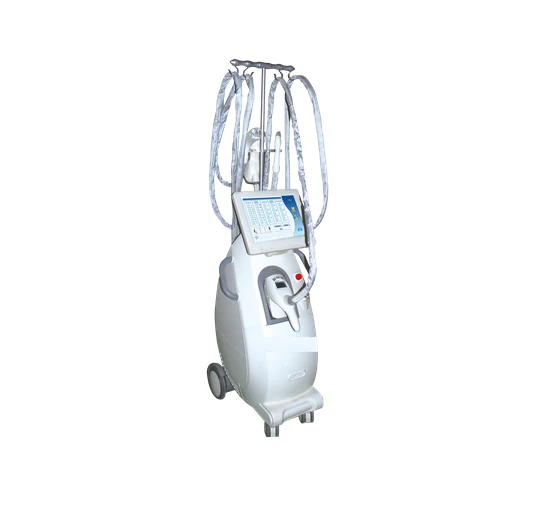
Ultrasonic Cavitation Machines
Cavitation machines buyer guide: how 40kHz ultrasonic cavitation fits a body-contouring menu, what to compare across configurations, and which claims to verify on the exact quotation.
40 kHz ultrasound↘06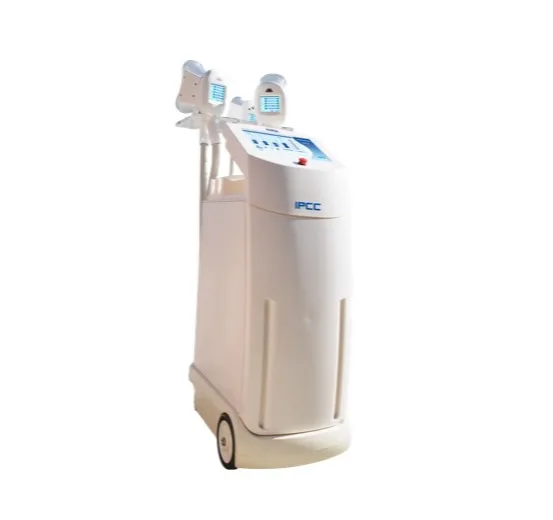
Cryolipolysis Fat Freezing Machine
Fat freezing machine buyer guide to cryolipolysis machines: a controlled-cooling equipment family for buyers planning a localized body-contouring workflow.
Controlled cooling↘Next step
Compare current configurations against the criteria in this guide.
Tell us your priority services, market, client mix and business type. Ask for the exact configuration, documents, training and service terms you need.
Describe your equipment plan ↘