Clinic operations
Measuring Body Contouring Results Without Overclaiming
Measuring body contouring results is an operations problem, not a marketing one. Fix the tape landmarks, the camera position and the consent wording before the first session, and even a modest outcome reads as professional work. Skip that and your best case turns into an argument you cannot win.
Buyer guide
Your camera roll is not evidence
Ask a clinic to prove its body programme works and you usually get a phone gallery. Week one by the window in morning light. Week twelve under a ceiling panel at six in the evening. Different stance, different foot. Much of that change is posture and shadow, and a seasoned buyer spots it instantly.
That gallery isn't only weak evidence. Run it in advertising and it's exposure. Under the US endorsement rules a testimonial about a key attribute reads as a claim about what clients will generally achieve, and without substantiation you must disclose clearly what they generally do achieve. Regulators tested the escape hatch: results not typical failed to shift the impression, and so did the blunter warning that readers were unlikely to see similar results. Two options survive: hold proof the pictured result is ordinary, or say plainly what ordinary looks like.
Nobody ever won that argument with a nicer filter.
Buyer guide
Fix the landmarks before you fix the price list
Circumference measurement is the cheapest instrument in the building and the most abused. Public health surveillance solved repeatability decades ago, so borrow it. The WHO field manual takes the waist at the midpoint between the lower margin of the last palpable rib and the top of the iliac crest, with a constant tension tape, read to the nearest 0.1 cm at the end of a normal expiration, tape horizontal and snug, never compressing. Hip is the maximum circumference over the buttocks.
Body work needs more than a waist number. Umbilicus with the tape parallel to the floor, abdomen relaxed, not held in. Add an upper abdominal reading a set distance above the navel and a lower one the same distance below, ten centimetres each way by default, with the offset in the file so the next person finds the same skin. Thighs go a recorded distance below the knee crease, each leg logged separately. A landmark you can't write down in centimetres isn't a landmark.
Technique, quickly. Client upright, arms loose, feet together, tape flat and snug without biting. Read every landmark twice and record both numbers. WHO measures once because it's describing a population; you're tracking one person over twelve weeks, which needs the second reading. If a pair disagree by more than a centimetre, take a third. Same therapist across a course where the rota allows.
Buyer guide
Timing beats technique
Measure one person at nine in the morning and again at six that evening and you can collect a centimetre from a meal, a litre of water and a day spent upright. That isn't a result. That's digestion.
So write timing into the protocol and defend it at the desk. Same time of day every measuring visit, blocked at booking. Tape first, in the opening five minutes, before any handpiece touches skin. Two hours clear of a heavy meal. Bin the number when a client turns up straight off a hard gym session, and note where a female client sits in her cycle, since fluid retention can swallow a genuine change.
One rule outranks the diary. Never put a tape around skin that's still visibly red, warm or puffy. Vacuum, roller and radiofrequency work leaves an area flushed, and our device manuals expect that, with redness settling within three to five days. They run the radiofrequency endpoint at 40 to 48 degrees Celsius on the skin surface, checked with an infrared skin temperature tester and held to 40 to 45 on Fitzpatrick III and darker skin. Tissue heated yesterday measures however it likes.
Those two rules pull against each other, so do the arithmetic once. Our manuals build a course of ten to twelve treatments at three to seven day intervals, and at the short end the next visit lands inside the redness window, so most session starts are not clean measuring moments. Take four comparison readings instead: baseline, a midpoint, a closing reading, then a follow up four to eight weeks later. Book the midpoint and closing readings after a seven day gap, the long end of the manual's own interval, so skin has cleared. Short interval readings are logged provisional and stay out of the comparison; if an area is still coloured, write not measured, area still reactive, and take it at the next clear visit. Four defensible numbers from a course on ultrasonic cavitation equipment beat twelve you can't stand behind.
Buyer guide
Same camera, same light, same shorts
Photography is where most clinics lose the argument, and floor tape plus a spare wall fixes it in an afternoon. Surgical practice has said so for years: usable before and after documentation depends on uniformity in equipment, lighting, room setup, positioning and camera settings, and camera distance or focal length alters apparent proportions by itself.
Mark the floor first. Two footprints in tape, a camera position at a measured distance, a tripod at a height written on the wall. Same lens, same focal length, every session, digital zoom and portrait mode off. Plain matte wall in a mid tone, one room light source for every shot, blind shut in July as well as January. Five views a visit: front, both obliques at forty five degrees, and back or profiles depending on the areas treated. Arms clear of the torso, hair tied up, the same clinic garment every time, never the client's own underwear. File names carry client reference, date, session number and view.
No editing at all. Don't crop one frame tighter than its partner, don't smooth anything, no filters. Boring photographs are the ones that hold up.
Buyer guide
Consent that names the use
Consent to treat isn't consent to publish, and the two should never share a signature line. A photograph of a client's body in a clinical file is health information, and many jurisdictions treat it that way.
Split the form. One consent covers imaging for the record. A second, separate and optional, covers marketing, naming the channels: site, social accounts, print, trade stands. Let people withdraw later without a fuss. Write down how long files are kept and who opens them, and ask separately about anything identifying: a face, a tattoo, a scar.
Risk belongs in that conversation. Our device manuals rule out pregnancy, cardiac pacemakers and internal defibrillators, epilepsy, severe diabetes, hypertension and heart disease, recent infection, and damaged skin in the treatment area. Bruising matters past comfort. Our skin disease atlas describes post inflammatory hyperpigmentation as pigment appearing during or after inflammation, brown through to nearly black, flat rather than raised, fading on its own while tracking sunshine and season. On deeper phototypes a bruised flank outlasts the centimetres you won. A client whose real problem is weight, hormones or metabolic health belongs with a doctor first.
Buyer guide
Work out your margin, then say the small number out loud
Here's the part clinics dodge. A course ends, the tape reads a centimetre and a half at the umbilicus, and the client waits for your verdict. Round it up and you've started an argument that arrives by email six weeks later. Fix the rule before the number lands.
Build it from readings you already take. Two per landmark, both written down. After your first ten clients, take each landmark in turn and find the largest gap between a pair of readings there. Where two therapists shared a course, have the second read the same client at baseline and count that gap. Round the biggest gap up to the nearest half centimetre. That's your margin at that landmark, and it differs between a waist and a thigh.
Reporting then writes itself: baseline, today's number, the difference, the margin beside it. Say your umbilicus margin came out at 1.0 cm. Then 87.0 cm at baseline against 85.5 cm today is a 1.5 cm change, which clears the margin, so it counts, and the honest sentence is that it's real and it's small. Below the margin the script changes: the tape hasn't moved further than our own measurement can vary, so I can't call this a result yet, and here's what we do next. Calling 0.8 cm progress costs you the client.
Frame the course against what the category does. Non invasive contouring targets deposits that persist despite reasonable diet and exercise; it doesn't deliver what liposuction delivers. A systematic review of cryolipolysis found the technique effective for localised fat and well tolerated, with gains in lipid profile and liver enzymes only where a dietary programme joined the treatment, not from cooling alone. A cryolipolysis platform reduces a fat layer in named areas; it doesn't make anybody lighter or healthier. Vendor centimetre ranges are marketing, ours included: a legacy sheet in our archive promises two to eight centimetres after two courses. Don't reuse it.
A refund conversation and a maintenance conversation open the same way. I'm not sure this worked. What separates them is whether you can put a file on the table: paired landmark readings, photographs under the same light, parameters, areas treated. A change that clears your margin becomes an upkeep conversation; nothing at all becomes a replan at the midpoint rather than an invoice defended at week twelve. Drift shows as flat results before it shows as a fault, so log serial and firmware with the session record and keep service and support on the review calendar.
Print the landmark list and the camera specification, then tape the floor and run it on two clients before it reaches the diary. Tell us your areas and volume through service and support and we'll answer with a protocol, not a price.
Frequently asked questions
FAQHow often should we measure during a course?
Four readings carry a course: baseline before the first session, a midpoint, a closing reading, and a follow up four to eight weeks later, since change keeps arriving after the last session. Book the midpoint and closing readings after a seven day gap so treated skin has cleared. Measure at the start of a visit, never on a warm or still reddened area. Anything else is provisional and stays out of the comparison.
How much change counts as a real result?
Work out your own margin. Read every landmark twice, and after ten clients take the largest gap between paired readings at each landmark, rounding up to the nearest half centimetre. That's your threshold. Report the raw numbers with the margin beside them. If a change sits at or below it, tell the client the tape hasn't moved further than your own measurement can vary, so you can't call it a result yet, then agree what changes next.
Are photographs enough on their own?
No. Photographs show shape and skin quality, which is often what the client actually cares about, but they can't tell you whether a change is real or a trick of stance and light. Pair every image set with circumference measurement at recorded landmarks. Numbers keep the pictures honest, and pictures explain a number that looks small on paper yet changes how a waistband sits.
Can we use client before and after photos in our advertising?
Only with separate, specific and withdrawable consent for marketing use, and only where images are unedited and shot under your standard protocol. Regulators read such pairs as a claim about what clients generally achieve, so either hold substantiation that the pictured result is representative, or disclose clearly what clients generally get. Disclaimers along the lines of results not typical have been tested and give no cover.
Who should own the protocol inside a small clinic?
One named person, and it belongs in writing rather than in somebody's head. Landmarks, timing rules, the camera specification, the margin figures and the consent wording sit in a single document any therapist can follow in their first week. Review it quarterly alongside your service and calibration calendar. A protocol that depends on the senior therapist being on shift isn't a protocol yet.
Evidence trail
Published research behind this guide
This guide is educational material for equipment selection. It is not medical advice, an operating protocol or a promise of clinical outcome.
Read the research
- World Health Organization. WHO STEPS Surveillance Manual, Part 3 Section 5: Collecting Step 2 Data, Physical Measurements (waist and hip circumference procedure). ↗
- 16 CFR 255.2, Consumer endorsements, Guides Concerning Use of Endorsements and Testimonials in Advertising (Legal Information Institute). ↗
- Archibald DJ, Carlson ML, Friedman O. Pitfalls of nonstandardized photography. Facial Plastic Surgery Clinics of North America, 2010. ↗
- Prantl L, Brandl D, Ceballos P. A Proposal for Updated Standards of Photographic Documentation in Aesthetic Medicine. Plastic and Reconstructive Surgery Global Open, 2017. ↗
- Mazzoni D, Lin MJ, Dubin DP, Khorasani H. Review of non-invasive body contouring devices for fat reduction, skin tightening and muscle definition. Australasian Journal of Dermatology, 2019;60(4):278-283. ↗
- Resende L, Noites A, Amorim M. Application of cryolipolysis in adipose tissue: A systematic review. Journal of Cosmetic Dermatology, 2022;21(9):4122-4132. ↗
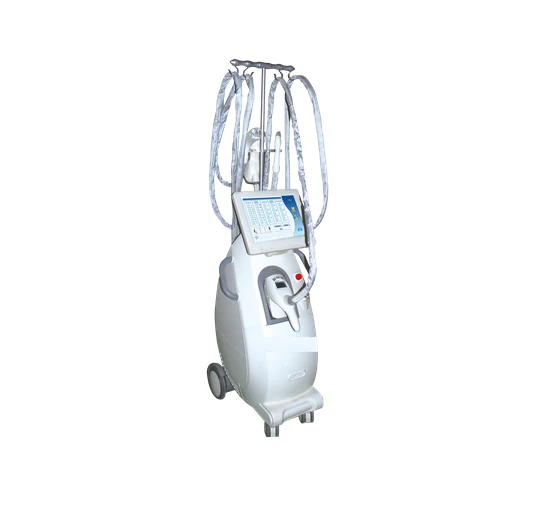
Ultrasonic Cavitation Machines
Cavitation machines buyer guide: how 40kHz ultrasonic cavitation fits a body-contouring menu, what to compare across configurations, and which claims to verify on the exact quotation.
40 kHz ultrasound↘06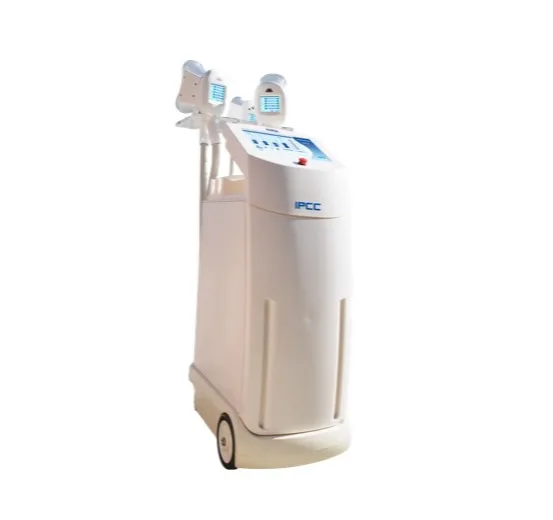
Cryolipolysis Fat Freezing Machine
Fat freezing machine buyer guide to cryolipolysis machines: a controlled-cooling equipment family for buyers planning a localized body-contouring workflow.
Controlled cooling↘Next step
Compare current configurations against the criteria in this guide.
Tell us your priority services, market, client mix and business type. Ask for the exact configuration, documents, training and service terms you need.
Describe your equipment plan ↘