Technology comparison
Cavitation, Cryolipolysis or RF: Which Body Platform First
Most treatment rooms can hold one body platform, not three. Behind every cavitation vs cryolipolysis debate sits a quieter third option, radio frequency, and the honest answer has less to do with physics than with who walks through your door. Your client mix decides this, not the brochure.
Buyer guide
Start with the room, not the mechanism
You have a budget, a room, and a diary with gaps in it. That is the real starting position, and it is why a body contouring comparison built on mechanism alone sends buyers the wrong way. All three shrink something. Only one will fit the way your business already runs.
Three questions settle most first purchase decisions. What complaint do your consultations keep ending on? How much operator time can you afford per client? What happens to your treatment menu once the device lands in the room?
Buy for the complaint you already hear, not for the loudest brochure.
Buyer guide
Three mechanisms, described without the marketing
Low-frequency ultrasonic cavitation works mechanically on the subcutaneous fat compartment. Our device manuals describe archive cavitation handpieces running at 40 kHz through a 72 mm tip at roughly 50 to 60 W, each cycle swinging local pressure positive then negative so the fat layer takes the load. Skin above it is largely left alone. That is the point of the design, and also the ceiling: nothing in that mechanism tightens anything.
Controlled cooling took a different route. Manstein and Anderson's group at the Wellman Center published the founding animal work in Lasers in Surgery and Medicine in 2008: pig skin cooled to preset temperatures for ten minutes, a lobular panniculitis developing, then a gradual loss of several millimetres of subcutaneous fat across the 3.5 month study period, with no injury to the overlying skin and no scarring. Read the word gradual twice. Slow clearance, not extraction. The client wanting a visible result before a wedding in three weeks is not your client.
Radio frequency is the odd one out, because it is not chasing volume at all. Our engineering archive's body protocol sheet has monopolar RF worked over areas of 100 to 225 square centimetres, three passes, tissue held around 41 to 43 °C on a mapped grid, sessions roughly 15 days apart and 5 to 8 of them counted as a course. The target is the dermis. Wang and colleagues, in Lasers in Surgery and Medicine in 2025, randomised a monopolar RF device against an established platform for facial tightening and found significant nasolabial fold volume change out to six months with no severe complications. That is skin work. It will not empty a fat compartment.
Someone always asks which fat technology wins. There is a direct trial. ELdesoky and colleagues randomised sixty participants with a BMI over 30 into cavitation plus diet, cryolipolysis plus diet, or diet alone, and reported in the Australasian Journal of Dermatology in 2016 that both active arms beat diet alone on waist circumference and skinfold thickness, with no significant difference between them. Stop shopping on mechanism. Shop on workflow.
Buyer guide
The three side by side
Everything above in one block. Same three columns, same order, every row: Cavitation, Cryolipolysis, RF.
Target tissue. Cavitation: the subcutaneous fat compartment, skin above largely left alone. Cryolipolysis: the same fat compartment, cleared gradually, no injury to overlying skin in the founding animal work. RF: the dermis, not the fat.
Course length and spacing. Cavitation: 10 to 12 sessions, twice a week for two weeks then weekly. Cryolipolysis: very few visits, change accruing over weeks to months, so quote a review point rather than a finish date. RF: 5 to 8 sessions about 15 days apart.
Operator hands-on time per session. Cavitation: about 20 minutes per treated area, hands on the handpiece throughout. Cryolipolysis: fit the applicator, check the client, then the cycle runs without you while that applicator stays booked. RF: three mapped passes across 100 to 225 square centimetres, more hands-on than a cooling cycle, fewer visits than a cavitation course.
Per-session consumable. Cavitation: coupling gel and a wiped tip, the transducer face being the wear item rather than a monthly reorder. Cryolipolysis: a protective membrane or gel pad every cycle. RF: coupling medium and electrode condition, plus disposable tips on some architectures.
Best-fit client complaint. Cavitation: feels heavy and soft all over, wants to be doing something every week. Cryolipolysis: lost the weight, cannot shift one pinchable localised bulge. RF: it is not the fat, it is the skin.
Principal named risk. Cavitation: treatment redness settling in three to five days, on top of the shared exclusion list. Cryolipolysis: paradoxical adipose hyperplasia, 13 of 8,658 cycles at 0.15 percent, and it does not settle by itself. RF: thermal injury where the grid is not mapped and tissue is not held around 41 to 43 °C, plus post-inflammatory hyperpigmentation in richer skin tones.
Buyer guide
Room time and course length are the honest difference
Here is where the three stop looking alike. Our device manuals put a slimming course at 10 to 12 sessions, twice a week for the first fortnight then weekly, about 20 minutes per area, with treatment redness settling in three to five days. Your operator is hands-on for every one of those minutes. High touch, high visit count.
Cooling cycles run long, but they run without you. Fit the applicator, check the client, step out. One therapist can often carry two rooms. Visit count is tiny, which sounds efficient until you notice what is scarce: the applicator is booked for the whole cycle, and applicators are what you paid for.
RF sits between the two: fewer visits than a cavitation course, more hands-on than a cooling cycle.
Cavitation fills a diary. Cooling fills an invoice. Work out which of those problems you actually have.
Buyer guide
Consumables and applicator economics
Cavitation is cheap to run. Coupling gel, a wiped tip, and a wear item that is the transducer face rather than a monthly reorder. Judge the ultrasonic cavitation machine category on exactly that basis: per-session cost sits close to your labour cost, so your margin is really a staffing question dressed up as an equipment question.
Cooling flips the picture. Each cycle typically consumes a protective membrane or gel pad, a genuine per-treatment line to price before you publish a menu. Applicator shape matters more still, since each is cut for a body region: the set you buy is the set of clients you can serve. Ask for the applicator list, the consumable pack price and the replacement cost in writing on any cryolipolysis platform quotation. A cheap console with one applicator is not a body programme.
RF carries quieter costs: electrode condition, coupling medium, and on some architectures disposable tips. Confirm whether the platform you are weighing under RF skin tightening uses consumable tips at all. Two machines at the same headline price can be thousands apart across three years, and the gap never shows on the first invoice.
Buyer guide
Match the machine to the sentence your clients say
"I lost the weight and this one bit will not shift." Pinchable, discrete, localised. That is the cooling conversation, and Ortiz and Avram made the same point in their 2015 review in Seminars in Cutaneous Medicine and Surgery: good candidates for noninvasive fat devices are relatively fit people with localised deposits, not people seeking weight loss.
"I feel heavy and soft everywhere and I want to be doing something every week." That client wants a programme, a ritual and a therapist's hands. Cavitation courses answer it, and they sit naturally inside a membership or a prepaid package.
"It is not the fat. It is the skin." Crepey texture, a post-partum abdomen, a client past forty who has already lost weight twice. RF owns that complaint, and neither fat device goes near it.
Tally your last thirty consultations by sentence. Whichever column wins is your first purchase.
Buyer guide
The second purchase is a pairing, not a set
Buying all three at once is the most common expensive mistake in this category. Two fat technologies compete for the same complaint and the same slot on your treatment menu, so the second cannibalises the first while doubling your training burden and your service exposure.
A sensible second purchase pairs a fat device with RF. Empty a compartment and the covering over it can read looser than before. RF answers what the fat device exposes, which makes it a service with its own price rather than a discount bundle.
So the order goes: fat device first, chosen by your client mix, then RF once the first is booked out and paying for itself. If your tally was mostly laxity to begin with, invert that and buy RF first, since it also earns on your facial menu from day one.
Buyer guide
What none of the three will do
None of them is a weight loss treatment, and saying so out loud in the consultation protects you far more than it costs you. A client whose weight is the real issue needs a different conversation, and sometimes a clinician.
Cooling carries one risk your consent form has to name. Nikolis and Enright reviewed 8,658 cryolipolysis cycles in 2,114 patients across Canadian centres and reported paradoxical adipose hyperplasia in 13 cycles, 0.15 percent, affecting 9 patients, 0.43 percent. Uncommon, not theoretical, and it does not settle by itself.
Pigmentation deserves real care in richer skin tones. Cold injury and heat injury can each be followed by post-inflammatory hyperpigmentation, so conservative settings, a test area and a documented skin type assessment belong in the protocol rather than in the apology afterwards.
Our device manuals list the usual exclusions: pregnancy, cardiac pacemakers and implanted defibrillators, metal implants, epilepsy, active infection and broken skin. An unexplained abdominal lump is not a contouring case. Refer it, and put the referral in the notes.
Frequently asked questions
FAQIf I can only buy one body platform this year, which one is it?
Let your consultation notes choose. Mostly discrete, pinchable bulges in clients who already lost the weight, and you want a controlled cooling platform. Mostly clients who want a weekly programme and a therapist's hands, and a cavitation course fits your diary and your pricing better. Mostly complaints about loose or crepey skin, and RF is the first purchase because it earns on your facial menu too.
Does cavitation or cryolipolysis produce the bigger reduction?
The published head-to-head does not separate them cleanly. ELdesoky and colleagues randomised sixty participants into cavitation plus diet, cryolipolysis plus diet, or diet alone, and both active arms outperformed diet alone on waist circumference and skinfold thickness with no significant difference between the modalities. Choose on workflow, consumables and the complaint you hear most, because the outcome evidence will not make the decision for you.
Why do suppliers keep bundling cavitation and RF on one console?
Because the two answer different failure modes and clients often need both. Ultrasound works the fat compartment while RF heats the dermis, so the pairing is defensible when each half is genuinely specified. It is not defensible when a strong ultrasonic section hides a weak RF section. Ask for the parameters of both halves separately and judge each against the single-purpose machines you would otherwise buy.
How many sessions should I promise a client?
Fewer promises, clearer ranges. Our device manuals set a slimming course at 10 to 12 sessions, twice weekly for the first fortnight then weekly, around 20 minutes per area. The archive RF body protocol runs 5 to 8 sessions about 15 days apart. Cooling works over weeks to months by design, so quote a review point rather than a finish date and photograph consistently at every visit.
Can one of these also serve my facial treatment menu?
RF is the only one of the three with an obvious face crossover, and that changes the payback maths for a small clinic. Confirm which handpieces ship with the platform, whether facial and body applicators are both included, how each is cleaned, and whether either uses consumable tips. Do not assume a body console covers facial work simply because the brochure lists both.
Evidence trail
Published research behind this guide
This guide is educational material for equipment selection. It is not medical advice, an operating protocol or a promise of clinical outcome.
Read the research
- Manstein D, Laubach H, Watanabe K, Farinelli W, Zurakowski D, Anderson RR. Selective cryolysis: a novel method of non-invasive fat removal. Lasers in Surgery and Medicine, 2008. ↗
- ELdesoky MTM, Abutaleb EEM, Mousa GSM. Ultrasound cavitation versus cryolipolysis for non-invasive body contouring. Australasian Journal of Dermatology, 2016. ↗
- Ortiz AE, Avram MM. Noninvasive body contouring: cryolipolysis and ultrasound. Seminars in Cutaneous Medicine and Surgery, 2015. ↗
- Nikolis A, Enright KM. A multicenter evaluation of paradoxical adipose hyperplasia following cryolipolysis: a review of 8658 cycles in 2114 patients. Aesthetic Surgery Journal, 2021. ↗
- Wang Z, Li L, Zhang X, Li Z, Yan Y. Long-term efficacy and safety of a novel monopolar radiofrequency device for skin tightening: a prospective randomized controlled study. Lasers in Surgery and Medicine, 2025. ↗
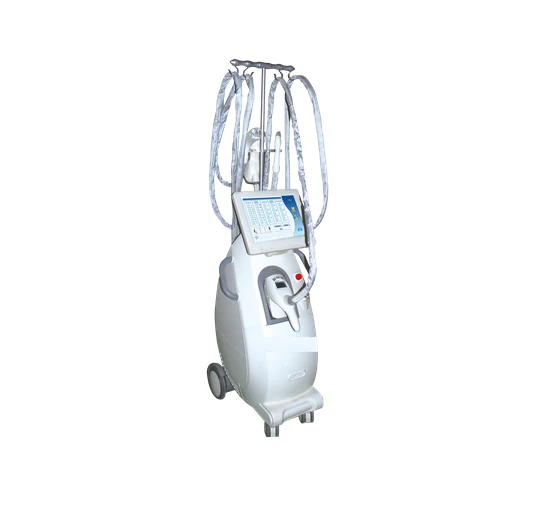
Ultrasonic Cavitation Machines
Cavitation machines buyer guide: how 40kHz ultrasonic cavitation fits a body-contouring menu, what to compare across configurations, and which claims to verify on the exact quotation.
40 kHz ultrasound↘06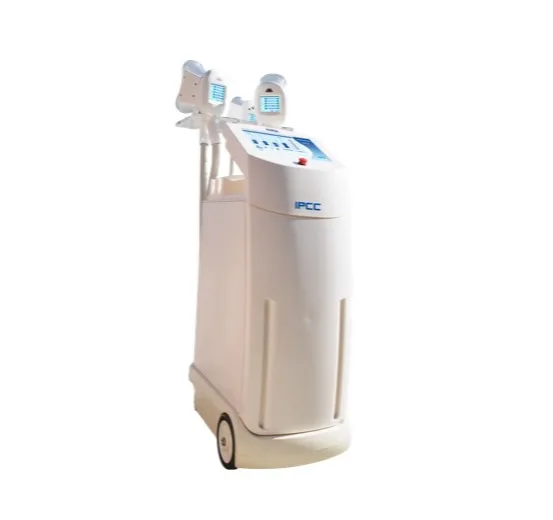
Cryolipolysis Fat Freezing Machine
Fat freezing machine buyer guide to cryolipolysis machines: a controlled-cooling equipment family for buyers planning a localized body-contouring workflow.
Controlled cooling↘Next step
Compare current configurations against the criteria in this guide.
Tell us your priority services, market, client mix and business type. Ask for the exact configuration, documents, training and service terms you need.
Describe your equipment plan ↘