Protocol design
Cavitation Session Protocols: How Many, How Far Apart
Ask ten suppliers for a cavitation session protocol and you will get ten answers, most of them rounded in the direction of a bigger package. The honest version is duller. A course is a run of visits spaced several days apart, built around how slowly a body deals with what a pass releases, and built around whether your client will still be turning up in week five.
Buyer guide
The shape of a normal course
Our device manuals put numbers on it, and the numbers are not thrilling. A whole-body session in the same archive runs sixty to ninety minutes against twenty to forty for a single area, which matters far more to your diary than to your client.
Here are the three answers side by side, because you will be asked for them. Our device manuals: 10 to 12 sessions; 3 to 7 days apart; 20 to 40 minutes per area; basis, a manufacturer treatment protocol. da Silva 2022: 4 sessions; one week apart; 15 minutes per modality; basis, a randomised trial of 36 women across three arms. Warner-Palacio 2025 review: outcomes reported after 3 sessions; interval not stated; duration not stated; basis, a review collecting results other authors published, not a schedule it recommends.
Notice what that spread means before you print a price list. The trial randomised its groups and still ran roughly a third of the course our manuals describe. A manufacturer protocol is a starting point written by people who sell machines, and that includes us. Nobody has settled the question.
So how do you choose ten, eleven or twelve? Let the case decide. One localised area, radiofrequency running as an adjunct at every visit, and a measurable change at the session five review: sit at the bottom and finish at ten. Whole body at sixty to ninety minutes, or two and three areas rotated inside one visit so each gets less time than it would alone: go to twelve, since you have spread one appointment across more tissue. Cavitation with no dermal heating pass pushes you to twelve as well, because the one trial comparing those arms found the combined arm ahead. And if the review at five or six shows nothing measurable, extending to twelve is the weakest option on the table. Re-check the landmark, the settings and the attendance record first.
Whatever you land on, pick a course length you can defend and write it into your consent form and your price list. Our category notes on ultrasonic cavitation machines cover the hardware half of the same decision. Course length is a commercial promise as much as a clinical one, and vague promises get remembered as broken ones.
Buyer guide
The gap between sessions is the protocol
Cavitation removes nothing from the body. It disturbs the fat compartment and leaves the contents where the body has to deal with them. The 2022 trial describes triglycerides from cavitated cells passing into interstitial fluid and travelling by lymphatic or venous routes to the liver. That is a scheduling instruction, not a footnote.
Now the uncomfortable part. The 2025 review states plainly that it remains unclear whether released lipids are oxidised for energy, re-esterified into new depots, or excreted, and that metabolic markers are rarely measured in these trials. Anyone quoting an exact clearance window in hours is reading from a brochure.
Which is why the interval sits at three to seven days rather than one. Two passes in two days are not double treatment. They are one treatment plus a booking decision, loading a lymphatic clearance route nobody has measured properly. Space them out. Your complaint rate will improve.
The days in between have their own script, and ours fits on one printed card. No shower and no cold draught in the first six hours. No sauna and no heavy massage inside twenty-four hours. More water, lighter food, sun protection at SPF 20 or above, no sunbeds for a week. If anything feels wrong, the client calls the clinic.
Hydration deserves a careful sentence rather than a confident one. The 2025 review describes adequate hydration as supporting lymphatic transport and possibly helping clear cellular debris, while stating that specific hydration protocols lack empirical validation in this literature. Drainage massage and post-treatment exercise get the same treatment. Plausible, cheap, unproven. Use those three words at consultation and you will never walk a claim back.
Buyer guide
Why practitioners sequence RF or drainage alongside
Few operators run cavitation on its own, and the reason is partly evidence and partly the mirror. In that 2022 trial, ultracavitation with radiofrequency beat ultracavitation alone on both skinfold caliper and ultrasound imaging, and reported satisfaction split 100 percent in the combined group against 50 percent in the cavitation-only group. Thirty-six women, four weekly sessions. Suggestive, not settled.
Order inside the visit is usually cavitation first, then the dermal heating pass over the same area, then whatever manual work you include. Our notes on RF skin tightening platforms deal with electrode size and temperature control, which is where combined trolleys cut corners.
Buyer guide
When the course ends
Twelve visits are done. Then what? Our device manuals discuss what to expect after a second course without ever stating how long to wait before starting one. The 2022 trial names the absence of follow-up analysis as its own limitation. The 2025 review offers no maintenance schedule either. There is no evidenced interval to quote here, and saying so beats inventing a number that would sit on your price list looking official.
That leaves an operational answer rather than a clinical one. Book the visit after the last treatment as a measurement appointment, not a pass. Read the tape and the photographs against baseline, in front of the client. If the numbers moved and she wants more, a repeat course is a commercial decision made with evidence in hand. If they did not, selling a second course is how a satisfied client becomes an angry one. Fat that returns because someone eats the way they always did is not a machine failure.
Buyer guide
What a course does to your diary and your margin
Run the arithmetic before you run the promotion. One area, thirty minutes of treatment, plus consultation, gel, measuring, photographs and cleandown, and you are close to forty-five minutes of room time. Twice a week. For five or six weeks. Multiply that across a full course and you have the true cost of one client, which is nothing like the cost of one session.
Price the course, not the visit. Clinics advertising a tempting single-session rate tend to notice around visit nine that the maths stopped working, then quietly shorten the programme, and that is how a decent service earns a bad reputation. Prepaid blocks. A deposit that means something. Our body programme planning notes work through room count and staffing against course length.
Ask any experienced operator where refunds come from and you hear the same answer. Not from bad passes. From half-finished courses. Someone buys twelve, attends five, sees a centimetre and a half, decides the machine does not work, and tells three friends. Client compliance is the line between a profitable body menu and a very expensive trolley.
Fix it structurally rather than with enthusiasm. Measure at a marked landmark with the same tape, same posture, same time of day, recorded every visit and photographed under identical light. Put a formal review at session five or six and read the numbers aloud together, including the dull ones. Book the whole course at the outset and rebook at the chair.
Then track completion as a number, by operator, by month. A poor ratio is rarely the ultrasound. It is session spacing that clashes with how people live, or a consultation that oversold week two.
Buyer guide
Who should not be on the schedule at all
Screening comes before scheduling. Exclusions in our device manuals are the familiar unglamorous list: pregnancy, cardiac pacemakers or implanted defibrillators, severe hypertension or heart disease, electronic implants, metal implants in the treatment field, and broken or infected skin over the area. Jewellery comes off. Anything undiagnosed, any lump you cannot explain, goes to a qualified clinician rather than onto your couch.
Two limits belong in the consultation script too. A cavitation course is not weight management and it does not substitute for surgery. Mazzoni and colleagues, reviewing non-invasive body contouring in the Australasian Journal of Dermatology in 2019, listed cryolipolysis, laser, high-intensity focused electromagnetic field, radiofrequency and high-intensity focused ultrasound as the FDA-approved modalities, and wrote that these devices do not achieve the same results as liposuction. Low-frequency non-focused cavitation of the trolley kind is not interchangeable with the focused ultrasound on that list, so ask which regulatory route your model sits in for your market.
Skin tone deserves a line as well. Cavitation itself is not pigment-selective, so it does not carry the chromophore risk profile of light-based work. That is not permission to relax. A burn or blister from a heated adjunct can leave post-inflammatory hyperpigmentation on deeper phototypes, which argues for conservative settings, a test area and a slower first visit.
Buyer guide
Where to take this next
Turn this page into two pieces of paper before you buy anything. One is your protocol sheet: chosen course length, the three to seven day interval, the review at session five or six, and the aftercare card above. The other is a specification comparison, because a protocol you cannot deliver is a wish. Our ultrasonic cavitation machine and RF skin tightening pages are laid out for that, and our own archive console is documented at 40 kHz through a 72 mm tip with a separate radiofrequency section. Demand that detail from whoever you buy from.
Frequently asked questions
FAQHow many cavitation sessions make up one course?
Our device manuals count ten to twelve treatments as one course, at twenty to forty minutes per area. Published protocols are shorter and vary: a 2022 randomised trial used four weekly fifteen-minute applications, while a 2025 review collected outcomes reported after three sessions. Within the ten to twelve range, one localised area plus a radiofrequency adjunct and visible change by session five points to ten. Whole-body work, rotated areas or cavitation alone points to twelve.
Why not run sessions closer together to finish faster?
Because the mechanism depends on the body handling what a pass releases, and that is not instant. Cavitated cell contents pass into interstitial fluid and travel by lymphatic or venous routes to the liver. A 2025 review notes the eventual fate of those lipids is still unclear and rarely measured in trials. Our manuals space treatments three to seven days apart. Stacking visits shortens the calendar without shortening the biology.
Does hydration or lymphatic drainage after a session actually help?
It is plausible and under-studied, which is exactly how you should describe it. The 2025 review states that adequate hydration supports lymphatic transport and may help clear cellular debris, while noting that specific hydration protocols lack empirical validation here. Lymphatic drainage massage and aerobic exercise are described the same way. Our aftercare notes already advise more water, light food, no sauna within twenty-four hours and sun protection for a week.
What happens after the last session of a course?
Nothing evidenced, and that is the honest answer. Our device manuals describe expectations after a second course but never state an interval between courses, the 2022 trial lists the absence of follow-up analysis among its own limitations, and the 2025 review gives no maintenance schedule. Book a measurement-only review instead of a maintenance pass, compare it against baseline photographs and tape readings, and let those numbers decide whether a repeat course is justified.
What is the single best way to raise course completion rates?
Measure and review in front of the client. Same landmark, same tape, same posture, same lighting, recorded every visit, with a formal review at session five or six where you read the numbers aloud. Book the full course upfront and rebook at the chair. Set expectations low for the first two visits. Most dropouts happen because nobody showed the client the small change that was already there.
Evidence trail
Published research behind this guide
This guide is educational material for equipment selection. It is not medical advice, an operating protocol or a promise of clinical outcome.
Read the research
- Warner-Palacio J, Paxton Z, Hassiak A, et al. Investigating the Metabolic Effects of Ultrasound-Induced Lipolysis. International Journal of Molecular Sciences, 2025;26(17):8689. ↗
- da Silva RMV, et al. Effects of Ultracavitation and Radiofrequency on Abdominal Adiposity. Journal of Clinical and Aesthetic Dermatology, 2022;15(1):E66-E71. ↗
- Mazzoni D, Lin MJ, Dubin DP, Khorasani H. Review of non-invasive body contouring devices for fat reduction, skin tightening and muscle definition. Australasian Journal of Dermatology, 2019;60(4):278-283. ↗
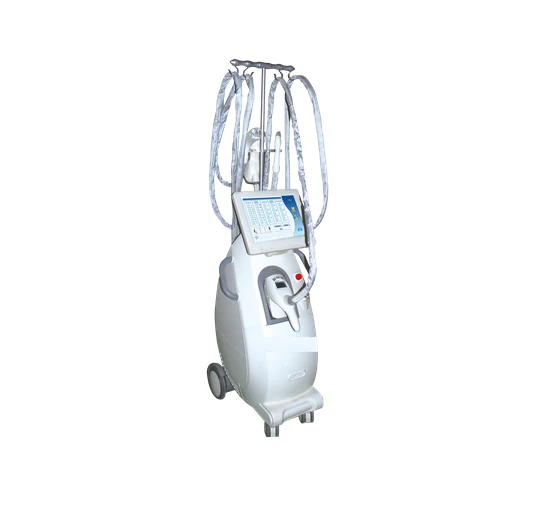
Ultrasonic Cavitation Machines
Cavitation machines buyer guide: how 40kHz ultrasonic cavitation fits a body-contouring menu, what to compare across configurations, and which claims to verify on the exact quotation.
40 kHz ultrasound↘06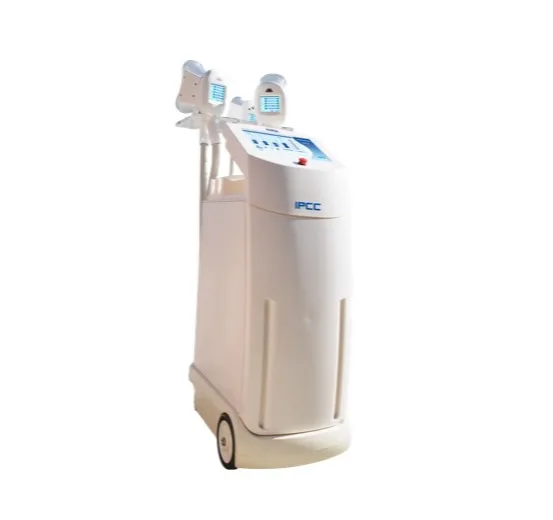
Cryolipolysis Fat Freezing Machine
Fat freezing machine buyer guide to cryolipolysis machines: a controlled-cooling equipment family for buyers planning a localized body-contouring workflow.
Controlled cooling↘Next step
Compare current configurations against the criteria in this guide.
Tell us your priority services, market, client mix and business type. Ask for the exact configuration, documents, training and service terms you need.
Describe your equipment plan ↘