Buyer criteria
How to Judge the Best Cavitation Machine
Type best cavitation machine into a search box and you'll get twenty ranked lists, and not one of them knows your room hours, your trained staff or your treatment menu. Best isn't a property of a box. It's a property of a fit, so stop hunting for a winner and build yourself a score instead.
Buyer guide
Six buying criteria, weighted for your room
A studio doing three abdomens a week and a six-bed clinic need different machines. A ranked list can't know which you are.
Write your constraints down before you open a spec sheet. Rooms, trained hands, opening hours, how much bed time a course swallows. Our manuals put one body course at ten to twelve sessions, about twenty minutes per area, twice weekly at first and weekly after.
Then measure the room, with a tape. One slimming console in our engineering archive is 50 by 41 by 80 centimetres and 38 kilos, and its manual wants 30cm of clearance behind the vents. A machine that can't breathe will throttle.
Then score. Six criteria, each weighted one to three, each quotation scored zero to three on evidence you hold. Need the category background first? Our page on ultrasonic cavitation machines covers what the technology does and where it stops.
1. Output verification. Who measured the power and the frequency, and whether that paper exists.
2. Handpiece set and cable build. Whether the heads cover your menu, and whether the cables survive it.
3. Duty cycle and cooling. How long it runs flat out, and how it sheds the heat.
4. Screen and preset control. Whether an operator can save a setting and hit a ceiling.
5. Documented service path. A named contact, a response window, a readable warranty.
6. Parts and consumables. Priced spares and honest lead times, in month nine as well as month one.
Score nothing else, and don't score price. The six measure fit; money is what you test fit against, and it gets a line of its own at the end.
Buyer guide
Output verification beats a printed wattage
A brochure number is a claim. Not a measurement. Rebadged units copy their figures off the original reference datasheet, and nobody polices the copy.
Honest specifications read dense and dull. One cavitation console in our engineering archive lists 40kHz ultrasonic frequency, 60W output power, a 72mm tip, and RF stated as 330W in against 50W out. A portable in the same archive lists 350W nominal, 50W ultrasonic, RF no higher than 120W. Wall draw and delivered energy are different numbers, and quoting only the fat one is a choice.
So ask three questions and write down what comes back. Continuous or peak? Wall draw, or energy that reaches tissue? And can you see a dated test report with a laboratory name on it?
Compliance paperwork works the same way. Electrical safety and electromagnetic compatibility are separate assessments under separate standards, IEC 60601-1 and the 60601-1-2 collateral, so they arrive as separate files. In our archive each is issued per product family and lists the model codes it covers, normal practice rather than a dodge. So don't demand a certificate naming one model alone. Find your quoted model inside the printed scope, then check the date is current.
Buyer guide
The handpiece set fails long before the console does
Consoles are boring. They mostly keep working. Handpieces, connectors and filters put a room out of action on a Tuesday morning.
Read the fault table in any manual worth the paper. Ours lists a broken power lead, a pressed emergency button, a burnt fuse, a tripped leakage protector, a handpiece screen that lost its connection, weak suction from a dirty air filter, and infrared killed by a stray wire. None of it reaches a sales deck.
Handle the thing at the demo instead of admiring the photograph. Grip the handpiece where the cable enters the shell and flex hard, a dozen times. You want a moulded strain relief boot. A bare sheath into a plastic hole is a repair booked for month eight.
Treat the set as a coverage map, not a trophy shelf. Our handpiece guide sorts heads by treatment area: wide for back and abdomen, narrower for arms and legs, small windows for face and chin, smallest around the eyes. Vacuum, RF, infrared and a roller keep recombining, which inflates head counts. Count areas, not heads.
Buyer guide
Duty cycle, heat, and what the screen will allow
Nobody volunteers a duty cycle. Ask anyway, in writing. How long does it run continuously, and what happens at the limit? A platform that derates mid-session makes your therapist look incompetent.
Cooling design is a fair proxy when no straight answer arrives. Two builds in our archive differ here: the console runs plain air cooling, the portable puts semiconductor cooling on its RF handpiece and shows accumulative RF working hours on screen. An hour counter is evidence you can read at handover.
Preset control matters more than screen size. Our slimming interface gives RF power in ten levels across a 5 to 50W range, suction in eight, infrared in five, a countdown that stops the machine at zero, saveable parameter sets, and an interlock that blocks RF unless the vacuum test is on. Bounded ladders rather than free sliders, and that constraint is the feature. IEC 62366-1 exists because interfaces hurt people.
Drive it yourself for ten minutes. Can you save a preset per body area? How many taps to change a value mid-treatment?
Buyer guide
Supplier scoring: the service path and the parts list
Ask who fixes it, then ask them to put the answer in writing. That sentence is most of supplier scoring.
A documented service path names a contact, states a response window, decides whether a failed handpiece is repaired or swapped, and says who pays freight in year one. Get warranty scope in writing, including whether handpieces sit under the console's terms.
Parts and consumables is that test with a price attached. Ask for a priced spares list before you sign, never after, and keep it: it feeds the cost line below. Then hold the quoted accessories against a real packing list. Ours itemises handles, holders, a stent, a power lead, a connection tube, two spare air filters and two keys, each with a quantity, down to a 250V/10A fuse. Lead times in weeks, not adjectives.
Price adjacent equipment on its own sheet. If your plan pairs cavitation with cold, a cryolipolysis platform brings its own applicators and consumable bill, and one blended number blurs both decisions.
Buyer guide
Run the sheet on the two quotations you already have
Build it in a spreadsheet, six rows deep. Five columns: the criterion, a weight of one to three, a score for quotation A, a score for quotation B, and a wide column headed evidence held.
That zero to three scale is the whole discipline. Zero means the claim lives only in marketing copy. One means somebody said it out loud. Two means you hold something real: a dated document, a photo of the unit, a demo you ran. Three adds a reference customer.
Now weight it. Buying for throughput? Duty cycle and service path take a three, handpiece breadth a one. Mixed menu in one room? Invert that. Multiply, total, then see where the gap came from: two points from one criterion is a different decision from two spread across six.
Then handle the money, on its own line, outside the six. A price isn't a quality, it's what you test quality against, and scoring it inside the sheet lets the cheaper quotation buy back points it never earned. Under each column write three figures: the quoted price as configured, the accessories the packing list actually includes, and the first-year spares and consumables bill off that priced list, filters on a two-to-four-week cycle included. Then read score against money. Pay the premium only where the score gap sits in a criterion you weighted three. Where it sits in a one, you're funding somebody else's clinic.
One thing the sheet can't tell you. How a machine fits a week's timetable belongs in your body programme planning, and that reshapes a decision more often than any spec line.
Buyer guide
A page that simply ranks brands is usually selling one
Read the footer before you read the table.
US law is blunt here. Under 16 CFR 255.5, a connection between endorser and seller that might materially affect the weight of the endorsement, and that the audience wouldn't reasonably expect, must be disclosed clearly and conspicuously. Commission counts. A ranking with no disclosure and no method is an advertisement with a table in it.
Be equally blunt about what the category can't do. A 2018 Dermatologic Surgery review of ultrasound in dermatology reports ultrasound lipolysis producing a two to 4.6cm decrease in abdominal circumference, complications minor and mainly procedural pain, redness and swelling. Real, modest, measurable. Not weight management, nothing like liposuction. That review found ultrasound usable in all skin types with minimal concern for post-inflammatory hyperpigmentation, but the RF and infrared beside cavitation do heat skin, so a pigment-prone client earns a cautious first session.
Screening isn't a front-desk job. Our manuals contraindicate pacemakers and implanted defibrillators, pregnancy, epilepsy, serious cardiac and coagulation conditions, and active herpes or malignant lesions in the area. A medical concern belongs in front of a clinician first.
One ask, and it's the only one here. Write to us for the blank sheet, then send both quotations. We'll fill the evidence column only: what each supplier documented, and every cell where the paper doesn't exist.
Frequently asked questions
FAQWhich of the six buying criteria matters most?
Whichever one your room breaks first. A busy multi-room clinic lives or dies on duty cycle, cooling and the service path, because a dead machine costs more per week than the machine did. A single-room studio still building a menu cares far more about handpiece coverage, cable build and preset control, since versatility pays the rent there. That gap is the whole argument for weighting the criteria yourself rather than reading somebody else's ranking.
How do I do output verification without test equipment?
Verify the paperwork and the behaviour instead. Ask whether a figure is rated continuous or peak, and whether a stated RF wattage is wall draw or delivered output, because our own spec sheets separate those two numbers explicitly. Request a dated test report naming a laboratory. Safety and EMC certificates are normally issued per product family, so confirm your quoted model appears inside the scope printed on each certificate and that the date is current. Then run a full-length demo and watch for derating.
Where does price fit into the scoring sheet?
Outside it. The six criteria measure fit, and folding price into them lets a cheap quotation score points it never earned. Keep money on a separate line under each column: the quoted price as configured, the accessories the packing list genuinely includes, and the first-year spares and consumables bill from the priced spares list. Then compare weighted score against those figures, and pay the premium only where the score gap sits in a criterion you weighted heavily.
Is a machine with more handpieces better value?
Rarely. Suppliers count heads, and area-specific heads usually rearrange the same few modules. Our handpiece guide sorts them by treatment area rather than by technology: wide heads for back and abdomen, narrower for arms and legs, small windows for face and double chin, smallest for the eye area, with vacuum, RF, infrared and roller recombined per area. Score whether your menu is covered, then score how the cables are built.
Should I trust a top ten cavitation machines page?
Look for a disclosure and a stated method before you read a single ranking. FTC endorsement rules require a material connection, commission included, to be disclosed clearly and conspicuously where a reader will see it. A page offering neither disclosure nor scoring method is advertising. Even an honest ranking can't know your opening hours, your staff training or your treatment menu, and those three variables decide the answer for you.
Evidence trail
Published research behind this guide
This guide is educational material for equipment selection. It is not medical advice, an operating protocol or a promise of clinical outcome.
Read the research
- Juhasz M, Korta D, Mesinkovska NA (2018), A Review of the Use of Ultrasound for Skin Tightening, Body Contouring, and Cellulite Reduction in Dermatology, Dermatologic Surgery 44(7):949-963 ↗
- 16 CFR 255.5, Disclosure of material connections (FTC Guides Concerning the Use of Endorsements and Testimonials in Advertising) ↗
- IEC 60601-1:2005+AMD1:2012+AMD2:2020 CSV, Medical electrical equipment, Part 1: General requirements for basic safety and essential performance ↗
- IEC 60601-1-2:2014+AMD1:2020 CSV, Medical electrical equipment, Part 1-2: Collateral standard on electromagnetic disturbances ↗
- IEC 62366-1:2015+AMD1:2020 CSV, Medical devices, Part 1: Application of usability engineering to medical devices ↗
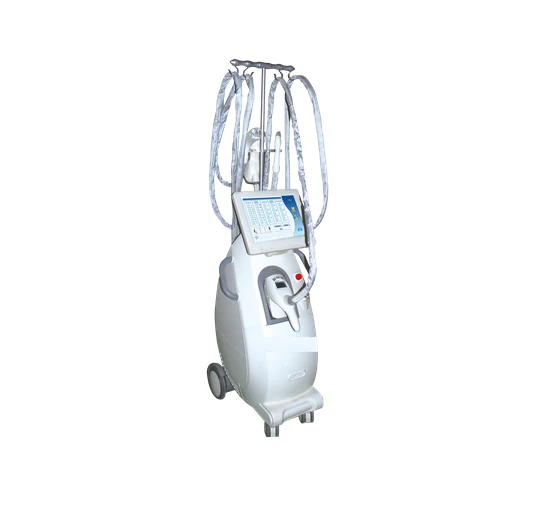
Ultrasonic Cavitation Machines
Cavitation machines buyer guide: how 40kHz ultrasonic cavitation fits a body-contouring menu, what to compare across configurations, and which claims to verify on the exact quotation.
40 kHz ultrasound↘06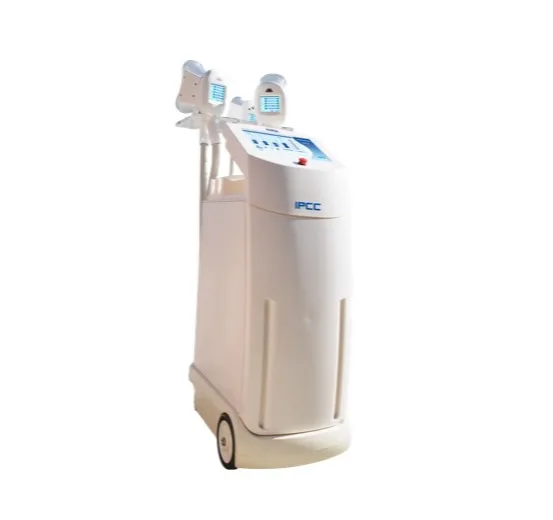
Cryolipolysis Fat Freezing Machine
Fat freezing machine buyer guide to cryolipolysis machines: a controlled-cooling equipment family for buyers planning a localized body-contouring workflow.
Controlled cooling↘Next step
Compare current configurations against the criteria in this guide.
Tell us your priority services, market, client mix and business type. Ask for the exact configuration, documents, training and service terms you need.
Describe your equipment plan ↘