Business
Building a Body Contouring Menu That Pays for the Machine
A body contouring menu is a production schedule wearing a price list. Before you sign for a platform, you should know how many hours the room can actually sell, what one pass costs you in staff time and consumables, and how many completed courses it takes to earn the invoice back. Build that model first. Then buy the machine that fits it.
Buyer guide
The room is what you sell, not the machine
Equipment does not produce revenue. A booked, staffed, cleaned room does. So the first line of your model is minutes, and the manuals give you a realistic starting point. Our device manuals for the body slimming platform set 20 to 40 minutes for one treated area, and roughly 60 to 90 minutes when the session covers the whole body. The controlled-cooling manual is blunter: its default parameter table simply sets a 30 minute work time per cycle. Those are treatment minutes, not appointment minutes, and confusing the two is how a diary quietly loses an hour a day.
Build the slot from the parts you can observe. Consultation and consent on a first visit, undressing and positioning, skin cleansing and preparation, the treatment itself, wipe-down and photography, handpiece cleaning, changeover, notes. Multiply the slot by the number of slots your opening hours genuinely allow, then apply an occupancy rate you would defend to your accountant rather than the one on the supplier's spreadsheet. If you are still choosing between formats, our ultrasonic cavitation machine buyer guide is the place to check how many handpieces and how much changeover each configuration really involves.
Buyer guide
Five lines make up the cost of one session
Room time comes first: total occupancy cost divided by the sellable hours in the month, not the calendar hours. Operator time comes second, loaded with employer costs, and charged against the whole slot rather than the treatment window. Consumables come third, counted per pass instead of per bottle. Fourth are the small recurring items nobody lists, such as laundry, disposables, aftercare leaflets and the photography storage you will need if you ever want to prove a result. Machine cost is the fifth line, and you should keep it out of the other four so you can see contribution clearly.
Consumables reward honesty. Coupling gel is applied as an even layer of roughly 2 mm, laid thicker where the handpiece cannot sit flat, and it is never reused, so the true unit is grams per body area rather than jars per year. Controlled cooling has a different bill entirely. Our device manuals require petroleum jelly and an antifreeze membrane on the skin before the applicator goes on, with the membrane bought locally, which means an item you must source, stock and price yourself. Operator cost also splits along the same line. Our engineering archive notes that a cooling cycle is not technique dependent and needs no continuous staff time once the client is set up, while an ultrasound pass keeps a trained hand on the handpiece for the whole treatment. One of those services can share an operator across rooms. The other cannot. The cryolipolysis platform guide sets out the applicator and consumable questions to ask before you assume either pattern.
Buyer guide
The course is the sellable unit, and the session is not
Non-invasive body contouring is a repeated-visit category, and the regulator says so plainly. The FDA tells consumers that results may be temporary and that more than one treatment may be needed. Our device manuals agree in operational terms: for the body slimming platform, one course is 10 to 12 treatments with a 3 to 7 day interval between them. That structure is not a sales tactic. It is what the mechanism asks for, and pricing that pretends otherwise sets the client up to be disappointed.
Sell a single session and you lose twice. Your fixed per-visit costs, the consultation, the setup, the cleaning, the notes, land on one small ticket instead of being spread across a planned series, so margin collapses. The client, meanwhile, judges the entire category on one visit and walks away calling it useless. Package the same treatments as a course and something different happens at the desk. The decision has already been made, the appointments are booked as a block, the schedule survives a holiday and a head cold, and completion stops depending on how the client feels on a Tuesday. Completion is the thing that generates the before-and-after photograph, and that photograph is what sells the next course.
Buyer guide
Count payback in courses, not in months
Here is the arithmetic in shape rather than in figures. Variable cost per session equals room time plus operator time plus consumables plus the small recurring items. Multiply by the number of sessions in the course, and you have the variable cost of one complete course. Set the course price above that by whatever gross margin your market and your rent demand. Subtract, and you have contribution per course, which is the only number that pays for anything.
Now take the full platform cost, and take all of it. Machine, freight, duty, installation, training, the spare handpiece the supplier suggested, the first stock of consumables, and any room work you had to do. Divide that total by contribution per course and you get the number of completed courses the platform owes you. Convert to calendar time only afterwards, using the courses you realistically expect to start each month rather than the ones the room could theoretically hold. Then run it again at half that booking rate. If the pessimistic case never pays back inside the working life of the equipment, the problem is the plan, not the machine.
One more pass is worth doing. Run the model a year out, when the warranty has expired, service is a line item and a replacement handpiece is a real possibility. A platform that only pays back under warranty has not paid back.
Buyer guide
Where the discount quietly eats the payback
Every unit you take off the course price comes straight out of contribution. The gel does not get cheaper. Neither does the membrane, the laundry, the wage or the hour. Cut the price by a fifth of its value and you do not lose a fifth of your profit, you lose a fifth of the price from a much smaller contribution figure, which can be most of the profit and sometimes all of it. Work that out on your own numbers before the next promotion, because it is the single most useful sum in this article.
Watch the disguised versions too. Free extra sessions carry the full variable cost of a real session. Voucher platforms take a commission on top of the discount you already gave. Front-desk discretion at the moment of closing is the quietest leak of all, because it never appears as a discount policy anywhere. If you need a lever, pull one that does not touch contribution: prepayment terms, a completion window, a referral credit that only pays out when the referred course is booked, or a maintenance visit priced as its own small service. Loyalty built on price teaches the client to wait for the sale.
Buyer guide
Fill the model with your own figures, then check the mix
Do not borrow anyone else's numbers, including ours. Pull your rent and utilities and divide by the hours you can genuinely sell. Take your loaded hourly wage from payroll, not from the job advert. Get the real pack price and the real number of passes per pack from a month of stock counting. Time your own appointments for four weeks and use the median, not the best one. Everything above is structure, and structure is portable. The figures are local, and they are yours.
Then look at what the menu does across the year. Ultrasound is reported as usable across all skin types with minimal concern for post-inflammatory hyperpigmentation, which means those slots are not seasonal in the way some light-based services are, and that stability is worth real money in a January diary. Not every enquiry converts, either. The literature describes the better candidate as relatively fit with localized areas of adiposity rather than someone seeking weight loss, and the FDA is explicit that this category does not treat obesity. Screening takes unpaid time, so budget it. Our own manuals carry a long contraindication list covering pregnancy, pacemakers and implanted electronic devices, epilepsy, active infection and metal implants in the treatment area, and a proper screen also means recognising when unexplained weight change or a suspicious skin lesion belongs with a clinician rather than in your treatment room. A menu that plans for the client you must turn away is a menu built by someone who has done this before. Our multi-treatment menu planning guide takes the same model up one level, to the point where you are deciding which services share a room at all.
Frequently asked questions
FAQHow do I price a course when I have never run the service?
Cost it from the parts you already know. Take your rent per sellable hour, your loaded wage, and a consumable figure from a supplier quotation. Use the appointment length your manual implies, add preparation and cleaning, and cost a full course rather than a session. Price above that at the gross margin your other services earn. Then re-cost everything after one month of real appointments and correct the assumptions that were wrong.
Should I ever sell a single session?
As a trial with a clear label, sometimes. Price it so it covers the full variable cost plus the consultation, and be honest that one visit is not a course and should not be judged as one. Credit it against the course if the client goes on to book. What you should not do is build the menu around single sessions, because the per-visit costs never spread and the results never accumulate into anything you can photograph.
How many courses does it take to pay back a platform?
Divide the total landed cost of the platform, including freight, duty, installation, training and starting consumables, by the contribution one completed course generates. That gives courses, not months. Convert to time using the courses you actually expect to start, then repeat the calculation at half that rate. If the pessimistic case does not pay back within the working life of the equipment, revise the plan before you sign anything.
Why does discounting hurt so much more than it looks?
Because a discount comes out of contribution, not out of cost. Room time, wages, gel and membranes stay exactly where they were. A price cut that looks modest against the headline can remove most of the margin that was supposed to repay the machine. Free extra sessions are worse, since they carry a full variable cost. Use prepayment terms, completion windows or referral credits when you need a commercial lever.
What belongs in the model that most people forget?
Unpaid consultation time for enquiries that will not convert, because this category suits localized fat rather than weight loss and a share of callers are not candidates. Also the membranes, jelly and gel counted per pass rather than per jar, laundry, photography storage, handpiece cleaning minutes, changeover between areas, and service costs in the first year after the warranty ends. Those lines are small individually and decisive together.
Evidence trail
Published research behind this guide
This guide is educational material for equipment selection. It is not medical advice, an operating protocol or a promise of clinical outcome.
Read the research
- US FDA. Non-Invasive Body Contouring Technologies: what these devices do, and that they do not treat obesity or produce weight loss ↗
- Mazzoni D, Lin MJ, Dubin DP, Khorasani H. Review of non-invasive body contouring devices for fat reduction, skin tightening and muscle definition. Australasian Journal of Dermatology, 2019 (reviews the five FDA-approved non-invasive body contouring modalities: cryolipolysis, laser, high-intensity focused electromagnetic field, radiofrequency and high-intensity focused ultrasound) ↗
- Ortiz AE, Avram MM. Noninvasive body contouring: cryolipolysis and ultrasound. Seminars in Cutaneous Medicine and Surgery, 2015 (the optimal candidate is relatively fit with localized areas of adiposity rather than an obese patient; noninvasive treatments reduce fat with little downtime and typically no anaesthesia, but lack the efficacy of liposuction) ↗
- Juhász M, Korta D, Mesinkovska NA. A Review of the Use of Ultrasound for Skin Tightening, Body Contouring, and Cellulite Reduction in Dermatology. Dermatologic Surgery, 2018 (ultrasound is safe and can be used in all skin types with minimal concern for postinflammatory hyperpigmentation) ↗
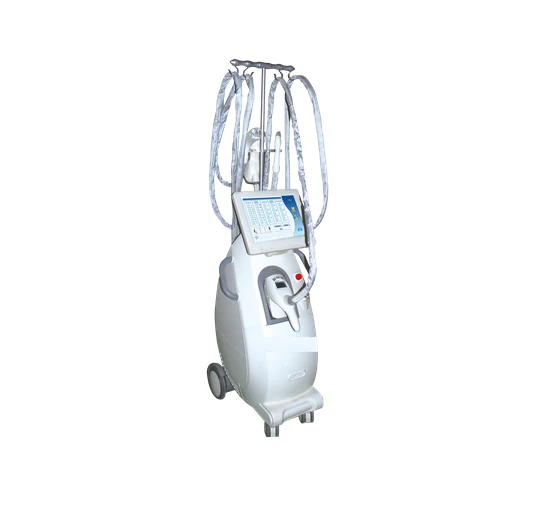
Ultrasonic Cavitation Machines
Cavitation machines buyer guide: how 40kHz ultrasonic cavitation fits a body-contouring menu, what to compare across configurations, and which claims to verify on the exact quotation.
40 kHz ultrasound↘06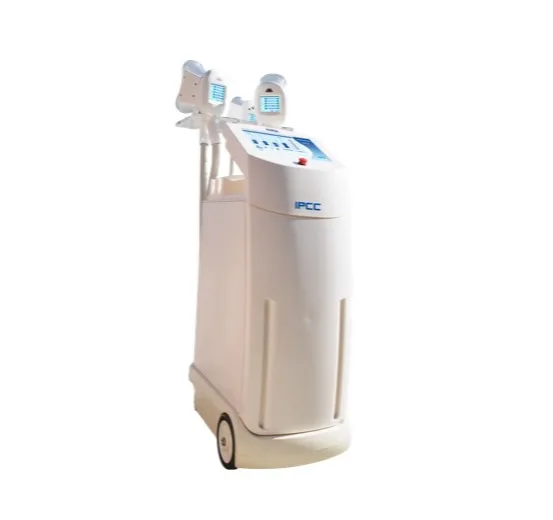
Cryolipolysis Fat Freezing Machine
Fat freezing machine buyer guide to cryolipolysis machines: a controlled-cooling equipment family for buyers planning a localized body-contouring workflow.
Controlled cooling↘Next step
Compare current configurations against the criteria in this guide.
Tell us your priority services, market, client mix and business type. Ask for the exact configuration, documents, training and service terms you need.
Describe your equipment plan ↘