Procurement
Warranty, Parts and Service for Body Platforms
Read a body contouring machine warranty the way you would read a lease, because the interesting part is the exclusions. Twelve months against defects in materials and workmanship is the standard opening line, and the applicators your therapists hold all day are usually the part it protects least. What decides your downtime isn't the length of the term. It's the parts lead time nobody wrote down.
Buyer guide
The applicator is the line nobody budgets for
You budget the cabinet, the trolley, the gel, the training. Nobody budgets the applicator. Then output cuts out when the therapist turns her wrist, and the replacement quote arrives like a tax bill.
Our engineering archive holds a spare parts price list for an older diode platform. Control board, display board, spare screen, water filter, then the treatment handle at the foot of the page. The handle was priced at close to three times those four items combined, and climbed again at every higher output tier. The costly engineering sits in the part your therapist holds.
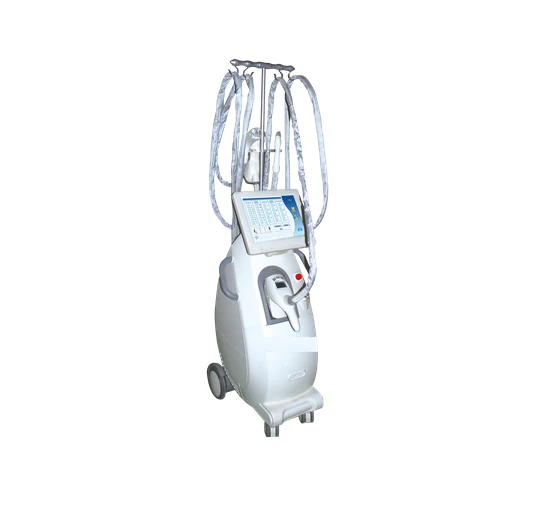
Now count how many you own. An accessory checklist in our device manuals for a body slimming platform records six handles in the crate: one large-window handle for abdomen and buttocks, five smaller ones for limbs, neck and face. Six applicators, one cabinet. Any of them can be dropped, so a document that speaks warmly about the machine and stays quiet on applicators insures the half that rarely breaks.
Read the annex backwards, handpiece clause first. Handpiece replacement is the repair you will actually buy, so if there is no clause for it, the silence is your answer.
Buyer guide
What the cover includes, and what quietly voids it
Twelve months against materials or workmanship defects is the usual shape. Our device manuals are blunt about the edges. One laser manual grants free service within a year of purchase, then names what it leaves out: the scanner, the foot switch, the articulated arm, postage either way. A second manual goes further: damage to key components such as the treatment handpiece, power cord and foot switch, caused by improper use or storage, is billed at spare part cost even inside the warranty year.
That's not sharp practice. A dropped handle is no manufacturing defect. The manuals also void cover after severe impact, after repair by an unauthorised department, and when proof of purchase is altered.
One clause runs your way, and buyers rarely ask for it. Parts fitted during a repair carry a further three months of free repair from the repair date, human damage excepted. Put it in the order.
Third-party repair deserves a straight answer too. In its 2024 final guidance on remanufacturing, the US Food and Drug Administration separates servicing, which returns a device to the safety and performance specifications its original manufacturer established, from remanufacturing, any act that significantly changes those specifications or the intended use. A workshop that rewinds a transducer and calls it fixed has not restored your specification. It invented a new one, on your clients.
Buyer guide
Parts lead time, split into three classes
"Fast" isn't a lead time. Split the parts list into three classes, make the supplier write a number beside each, then agree where the clock starts.
Class one, consumables and small hardware. Air filters, fuses, keys, holders, tubing. Ask for same-week dispatch, and stock your own shelf anyway. Our manuals make the air filter a two to four week chore, and the mains fuse sits in a fuse box in the power socket for the user to change.
Class two, sub-assemblies. Control boards, display boards, screens, power supplies, vacuum pumps. Whether these sit on a shelf depends on which regional warehouse serves you, so ask for a dispatch interval in days and the city holding stock. Continents do not ship parts. Warehouses do.
Class three, applicators. Transducer heads, radiofrequency handpieces, roller and vacuum handles. These are built and tuned to order rather than pulled off a rack, which on a cavitation and radiofrequency platform is normal, not a red flag. Demand a written build-plus-ship interval in weeks, with today's price in the same document.
Then define the clock. It starts the day the fault is agreed, never the day a box leaves a warehouse. Managing Medical Devices, the UK medicines and devices regulator's guidance for health and social care organisations, puts two questions private clinics rarely ask: are spares readily available and for how long, and is service support guaranteed and for how long? In class three, that is the negotiation.
Buyer guide
Diagnose before anyone ships a box
Plenty of what gets reported as a dead machine isn't dead. The fault table in our device manuals for a body slimming platform routes the usual panic calls to things a therapist can check before lunch. No power traces back to a damaged lead, a pressed emergency button, a blown fuse or a leakage protector nobody switched on. No suction means a dirty filter or an unseated handle.
Put diagnosis ahead of any return authorisation, in writing. Who answers, how fast, and with what? A named engineer, a video call inside a stated window, an error code list you may keep. The UK medicines and devices regulator's Managing Medical Devices guidance lists remote diagnostics over a computer network among the advantages of manufacturer service, sometimes available rather than guaranteed. Ask for it by name. Set two numbers: hours to a qualified person, hours to an RMA. Our procurement and service checklist covers the same ground.
Buyer guide
Freight, loaners and the price of an idle day
Freight is where polite agreements fall apart. Four questions, and most contracts answer one. Who pays to send the failed part back? Who ships the replacement out? Who clears customs, and who pays duty? Our manuals place mail costs outside free warranty service, ordinary enough, and negotiable before the deposit lands.
Do the sum you've been avoiding. Take a normal week's booked revenue for that room, divide by the days you open, and there's the cost of one idle day. Set that beside the price of the part. The part is usually the cheap half. That is why a hard lead time is worth paying for.
A loaner clause is the standard remedy. The UK regulator's Managing Medical Devices guidance puts loan devices beside response times in its service contract checklist, and tells buyers to ask whether alternative devices are available to cover periods when a device is being repaired. A loaner keeps the diary alive through a whole-platform failure. The commoner single-handpiece failure has a cheaper answer: a spare applicator in your cupboard, bought while your leverage is highest. Ask who pays labour and travel. A free part on a chargeable visit is no free repair.
Buyer guide
Year three, and why the cheapest quotation has the thinnest annex
Year one is lovely. New machine, warm emails, replies inside the hour. Year three is when you find out what you bought.
Three questions decide whether the platform still earns its room. Are the parts still made? Is there a price list you may see? Do current board or firmware revisions still fit your unit? IEC 60601-1, the international safety standard for medical electrical equipment, requires the manufacturer to specify an expected service life, the period during which the equipment is expected to remain safe for use, maintenance included. Every compliant maker has already fixed that number. Get it on paper.
The UK medicines and devices regulator's Managing Medical Devices guidance puts the same idea into money: it can be cheaper in the long run to buy a device lasting ten years at twice the price of one designed to last three, provided maintenance, replacement parts and consumables stay available across that lifetime. Written for hospitals, it travels intact to a treatment room.
Whole-life thinking explains why two similar-looking platforms arrive far apart on price. The gap is rarely in the transducer. Service costs money no spec sheet shows: boards in a warehouse, engineers who answer the phone, stock held for a model that stopped selling years ago. A trader assembling orders from whichever factory quoted lowest carries none of that. You are not buying a cheaper machine. You are buying a thinner annex.
Use the simplest test there is. Ask for lead times in writing, by part class, clock defined. A supplier who's warm on the call and won't put them in a document has told you what year three looks like.
Buyer guide
Clauses worth stapling to the purchase order
Keep your service terms to one numbered page. The spine comes ready-made from the UK regulator's Managing Medical Devices guidance, whose service contract checklist covers the manufacturer's written instructions, availability and traceability of spare parts, notice of any change including alternative parts, training, records, sub-contractors, response times, loan devices and disposal. For a body platform, it reads like this.
1. Handpiece cover written separately from cabinet cover, with its own term and exclusions.
2. A spare parts price list attached to the order, valid for a stated period.
3. A lead time against each of the three part classes, clock starting at fault confirmation.
4. Freight named for each leg, plus who clears customs and who pays duty.
5. A remote diagnosis window and an RMA window, quoted as two separate numbers.
6. Three months of cover on any part fitted during a repair, human damage excepted.
7. Loan cover for a whole-platform failure, and a priced spare applicator for the single-handpiece failure.
8. A written definition of spare part and consumable. The UK regulator's Managing Medical Devices guidance says a service contract should clearly define both terms, and that one line settles who pays for a worn applicator.
None of this offends a serious supplier. A real service department recognises every line. Walk the eight across each body and skin platform on your shortlist and score the answers, not the brochures. The machine is half the purchase. Whoever picks up the phone in March of year three is the other half.
Frequently asked questions
FAQIs the handpiece actually covered by the warranty?
Often not, or not fully. Our own manuals grant free service in year one against material and workmanship defects, then exclude items such as the foot switch and the articulated arm, and they charge the cost of the spare part for damage to key components like the treatment handpiece where improper use, maintenance or storage caused it, even inside the warranty year. That is normal industry practice. Get handpiece cover written as its own clause, with its own term.
What parts lead time should I accept?
A written number per class, never a general promise. Filters, fuses and holders belong on your own shelf already. Boards and screens depend on which warehouse serves your region, so ask which city that stock sits in. Applicators are frequently built and tuned to order, so a longer interval there is legitimate rather than evasive. The clause that matters most defines when the clock starts: at fault confirmation, not at dispatch.
Will a local repair shop void my warranty?
Almost certainly, and there is a second reason to pause. Our manuals void cover for repair by an unauthorised department and for self-disassembly. The US Food and Drug Administration also separates servicing, which returns a device to the original equipment manufacturer's safety and performance specifications, from remanufacturing, which significantly changes those specifications or the intended use. A rewound transducer is not a restored specification. It is an undocumented new one, used on paying clients.
Should I buy a spare handpiece with the platform?
If the room runs daily, yes. Work out the cost of one idle day by dividing a normal week's booked revenue across the days you open, then set that beside the applicator price. The spare usually costs less than a fortnight of waiting, and the moment to buy it is during the original negotiation, when your leverage on price is strongest. It also frees you from depending on a loaner promise.
How do I judge service quality before I have bought anything?
Ask for the awkward things in writing and watch what comes back. A spare parts price list. Lead times by part class. The expected service life the manufacturer has defined for the platform. The city holding regional stock. A supplier with a real service department produces these in a day, because the documents already exist. Warmth on a call that never becomes a document is your answer.
Evidence trail
Published research behind this guide
This guide is educational material for equipment selection. It is not medical advice, an operating protocol or a promise of clinical outcome.
Read the research
- Medicines and Healthcare products Regulatory Agency (UK), Managing Medical Devices: guidance for health and social care organisations, January 2021. Section 3.8 tells purchasers to ask whether response times are appropriate and guaranteed, whether alternative devices are available to cover periods when a device is being repaired, whether spares are readily available and for how long, and whether service support is guaranteed and for how long; section 3.3 states that it could be cheaper to purchase a device which will last for 10 years but costs twice as much as a device designed to last for only 3 years, as long as maintenance, replacement parts and consumables are available for the lifetime; section 8.2, in its comparison of maintenance providers, lists assured access to spares and remote diagnostics via computer network (sometimes available) among the advantages of manufacturer service, and loan equipment among the advantages of an external provider; section 8.3 lists what a service contract should specify, including the manufacturer's written instructions, availability, source and traceability of spare parts, notification of any changes including alternative spare parts, training, record keeping, sub-contractors, response times, loan devices and disposal; section 8.6.1 says the contract should clearly define the terms spare parts and consumables. ↗
- Morgan Lewis, FDA Clarifies Distinction Between Device Remanufacturing and Servicing in Final Guidance, May 2024, on the US Food and Drug Administration final guidance Remanufacturing of Medical Devices. It quotes the agency's definition of service as repair and/or preventive or routine maintenance of one or more parts in a finished device, after distribution, for purposes of returning it to the safety and performance specifications established by the original equipment manufacturer and to meet its original intended use, and remanufacture as any act done to a finished device that significantly changes the finished device's performance or safety specifications or intended use. ↗
- US Food and Drug Administration, Remanufacturing of Medical Devices: Guidance for Industry, Entities That Perform Servicing or Remanufacturing, and Food and Drug Administration Staff, final guidance issued 10 May 2024. ↗
- IEC 60601-1, Medical electrical equipment, Part 1: General requirements for basic safety and essential performance. The standard requires the manufacturer to specify an expected service life, the time period specified by the manufacturer during which the equipment or system is expected to remain safe for use, and notes that maintenance may be necessary during that period. ↗
- Qualitiso, summary of the requirements of IEC 60601-1, confirming that the manufacturer must define the essential performance and the expected service life of medical electrical equipment. ↗
Ultrasonic Cavitation Machines
Cavitation machines buyer guide: how 40kHz ultrasonic cavitation fits a body-contouring menu, what to compare across configurations, and which claims to verify on the exact quotation.
40 kHz ultrasound↘05
RF Skin Tightening
A non-laser energy family for buyers comparing thermal skin platforms.
Radio frequency↘Next step
Compare current configurations against the criteria in this guide.
Tell us your priority services, market, client mix and business type. Ask for the exact configuration, documents, training and service terms you need.
Describe your equipment plan ↘