Protocol design
Cavitation and RF in One Course: Why Clinics Pair Them
A cavitation RF pairing turns up on almost every body-contouring quotation, and most buyers never ask why the two travel together. One energy works on the fat layer. The other works on the skin sitting over it, which is a different problem with a different fix.
Buyer guide
Two targets, one body, one trolley
Fat sits in a layer. Skin sits over it. That is most of the reason these two machines end up on the same trolley, and it is a better reason than the one printed in the brochure. Low-frequency cavitation is aimed at the subcutaneous fat compartment: our device manuals describe archive cavitation handpieces running at 40 kHz through a 72 mm tip, with alternating pressure cycles stressing the fat cell membrane until it gives way. Radiofrequency does nothing of the sort. It drives heat into tissue that conducts current, which in practice means the dermis and the fibrous structure beneath it.
Now the part buyers work out late, usually after the first unhappy client. Empty a compartment and the covering over it can read looser than it did before. Not always. A thirty-year-old abdomen often re-drapes on its own. A post-partum abdomen, or a client past forty who has already lost weight twice, may not, and skin laxity becomes the complaint that arrives right when your circumference numbers finally look good.
So the pairing is not a marketing bundle, at least not when it is done properly. It is two services answering two different failure modes. Read our category notes on ultrasonic cavitation machines and on RF skin tightening platforms as separate purchases first, then decide whether one console should carry both.
Buyer guide
The order of operations, and why one visit will not do it
Inside a single appointment the usual order is cavitation first, then RF over the same area. The logic in our archive treatment notes is plain treatment sequencing: work the fat layer while the tissue is cool and untreated, then bring the heat afterwards for the dermal pass. Some clinics run the two on alternating visits instead of stacking them. That spreads the room time, and it gives you cleaner attribution when a client asks which machine did what.
There is early published work on the alternating pattern. Wu and colleagues, writing in the Journal of Cosmetic Dermatology in 2025, ran six alternating sessions of low-intensity focused ultrasound and radiofrequency across six weeks in twenty women, and reported abdominal circumference reductions of roughly 2.5 to 3.3 percent with no adverse events during the study. Read that carefully before you repeat it to a client. Twenty people is a small early evaluation, focused ultrasound is not the same technology as a non-focused 40 kHz handpiece, and a single-arm result is not evidence that the pair beats either energy alone.
Why a course rather than one visit? Because the mechanism depends on the body clearing what was released, and that takes weeks, not minutes. Our archive treatment manual sets the shape of the programme: 20 to 40 minutes per area, intervals of three to seven days, and 10 to 12 treatments counted as one course. Sell it as anything shorter and you are scheduling your own refund conversation.
Buyer guide
What a realistic combined body course looks like
Block the diary honestly. Two areas, both energies, plus consultation, notes and cleandown, and you are close to an hour of chair time per visit, roughly twice a week, for six to eight weeks. Multiply that out across 10 to 12 visits and you have the real cost of the service. Most badly priced body menus fail right there, not at the purchase order.
Measure like you mean it. Fixed anatomical landmark, same tape, same time of day, same posture, recorded every single visit, and photographs under identical lighting. Clients forget their starting point within a fortnight, and your notes are the only version anyone can argue with. Put a formal review at treatment five or six, look at the numbers together, and say out loud whether the combined body course is working.
Tell them the unexciting parts too. Hydration, activity, the fact that this is contouring of a defined area rather than weight management, and that maintenance visits are how a result is held rather than an upsell you invented afterwards. Our body programme planning notes cover how appointment length interacts with room count and staffing.
Buyer guide
Where the combination is oversold
Start with the claims to refuse. A course of cavitation and radiofrequency is not weight loss, it is not permanent, it does not replace surgery, and neither energy detoxifies anything. If a client has genuine skin excess, no amount of dermal heating will remove it. That is a surgical conversation and it belongs with a qualified clinician, not with your treatment room.
Regulatory framing gets muddled in this category as well. Mazzoni and colleagues, reviewing non-invasive body contouring in the Australasian Journal of Dermatology in 2019, listed five FDA-approved modalities: cryolipolysis, laser, high-intensity focused electromagnetic field, radiofrequency and high-intensity focused ultrasound. Low-frequency non-focused cavitation, the kind sold on trolley platforms, is not simply interchangeable with the focused ultrasound on that list. Ask every supplier which regulatory route the exact model sits in for your market, and get the answer in writing.
Screening is not optional, and the exclusions in our archive manuals are unglamorous: pregnancy, cardiac pacemakers or implanted defibrillators, metal implants in the treatment field, active infection or damaged skin over the area, epilepsy, and significant cardiac or metabolic disease. Jewellery comes off. The return electrode goes well away from the heart. On deeper phototypes, RF is not chromophore-selective, so it does not carry the pigment-targeting risk profile of light-based work, but any burn or blister can still leave post-inflammatory hyperpigmentation, which is why conservative settings and a test area are the sane path. Anything undiagnosed, any lump, any asymmetry you cannot explain: refer, do not treat.
Buyer guide
Testing whether the RF is real or a token handpiece
Plenty of platforms print both energies on the front panel and deliver only one of them properly. The tell is usually the electrode. Jia and Feng, in a 2024 Journal of Cosmetic Dermatology review of energy-based skin rejuvenation, note that monopolar RF penetrates to roughly half the electrode diameter, with a therapeutic depth in the range of 3 to 6 mm achievable. A small facial tip bolted onto a body console will not reach the tissue you are aiming at. Measure the head before you believe the spec sheet.
Then ask about heat control, because that is where the craft actually lives. The same review puts the threshold for cellular thermal damage at 43°C, while the tightening effect is most pronounced near 63°C. That gap is narrow and it is entirely a question of feedback. Our archive operating notes have the technician measuring epidermal temperature with an infrared thermometer and working around 40°C at the surface, on the understanding that the dermis runs warmer than the reading. So what does the platform give the operator? A live number on screen, a thermometer in a drawer, or nothing at all?
Three more things are worth pinning down. Whether the RF handpieces are monopolar, bipolar or both, since they behave differently at depth. Whether vacuum coupling is included, because our archive platform notes describe negative pressure of up to 8 kg drawing tissue between the bipolar tips precisely so the energy reaches the fat layer. And how the console behaves across a full session rather than a thirty-second demonstration. Ask to run a real forty-minute treatment while the sales engineer is in the room. Duty cycle problems only surface once the machine gets hot.
Buyer guide
Pricing a combined course honestly
Consumables here are modest but never zero. Coupling gel by the litre, return electrode pads if the RF is monopolar, replacement handpieces and cables on a wear cycle nobody advertises. Get per-session consumable cost in writing before you sign, and ask what a replacement handpiece costs and how long it takes to arrive, because that number decides how badly downtime hurts.
Price the course, not the session. Your true unit cost is an hour of room time, the operator, the consumables and a share of the machine, repeated 10 to 12 times. Clinics that advertise an attractive single-session price and then discover the eleventh visit loses money end up quietly shortening the programme, which is exactly how a decent service turns into a bad reputation.
Last, price against what the client will actually see. Gradual change, measured in centimetres and photographs, held with maintenance, and unimpressive if their weight moves the wrong way in the meantime. Say all of that at the consultation and your cancellation rate looks after itself. Promise a new silhouette instead, and you will spend the extra margin on refunds.
Frequently asked questions
FAQShould cavitation come before or after RF in the same appointment?
Cavitation first, RF second is the common order, and it matches the sequencing described in our archive treatment notes: work the fat layer, then run the dermal heating pass afterwards. Some clinics split the two onto alternating visits instead, which spreads room time and makes it easier to explain to a client which energy is responsible for what. Either approach is defensible. Choose one, then record it consistently.
How long should a combined body course run?
Our archive treatment manual counts 10 to 12 treatments as one course, at 20 to 40 minutes per area, with intervals of three to seven days. A 2025 clinical evaluation of alternating focused ultrasound and radiofrequency used six sessions across six weeks in twenty women. Plan for six to eight weeks of regular attendance, and treat maintenance as part of the programme rather than as the end of it.
Does RF fix the loose skin left after fat reduction?
It can support skin quality, and that is the honest ceiling. RF heats the dermis to provoke a collagen response; a 2024 review notes the tightening effect is most pronounced near 63°C while cellular thermal damage begins around 43°C, which shows how much depends on controlled delivery and monitoring. True skin excess is a different problem and heating will not remove it. That assessment belongs to a qualified clinician, not to a sales conversation.
How can I tell whether a platform's RF handpiece is serious?
Measure the electrode. Monopolar RF penetrates to roughly half the electrode diameter, so a small facial tip on a body console cannot reach the depth you are paying for. Ask whether handpieces are monopolar, bipolar or both, what temperature feedback the operator actually gets, and whether vacuum coupling is included. Then run a full-length treatment during the demonstration rather than a brief touch test.
Is the cavitation and RF combination suitable for deeper skin tones?
RF is not chromophore-selective, so it does not carry the pigment-targeting risk profile of light-based devices. That is not a licence to be casual. Any thermal injury or blistering can leave post-inflammatory hyperpigmentation on deeper phototypes, so conservative settings, a test area and careful temperature monitoring matter. Standard screening exclusions still apply, and any undiagnosed skin finding should be assessed by a clinician before treatment begins.
Evidence trail
Published research behind this guide
This guide is educational material for equipment selection. It is not medical advice, an operating protocol or a promise of clinical outcome.
Read the research
- Mazzoni D, Lin MJ, Dubin DP, Khorasani H. Review of non-invasive body contouring devices for fat reduction, skin tightening and muscle definition. Australasian Journal of Dermatology, 2019. ↗
- Wu Z, Wang Y, Li W, Zhang W, Zhu L. A Clinical Early Evaluation of the Combined Use of Low-Intensity Focused Ultrasound and Radiofrequency for Female Abdominal Contouring. Journal of Cosmetic Dermatology, 2025. ↗
- Jia X, Feng Y. Energy-Based Skin Rejuvenation: A Review of Mechanisms and Thermal Effects. Journal of Cosmetic Dermatology, 2024. ↗
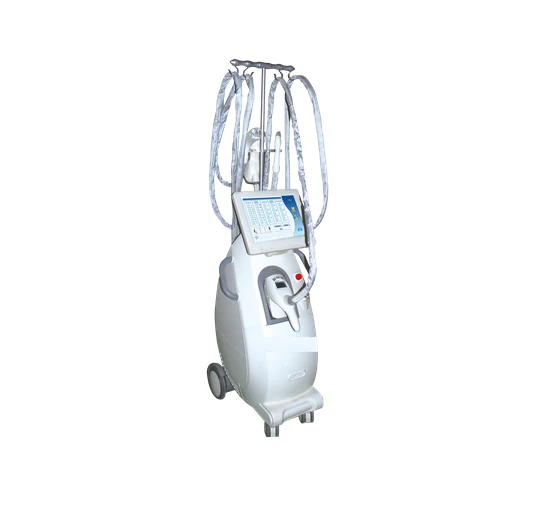
Ultrasonic Cavitation Machines
Cavitation machines buyer guide: how 40kHz ultrasonic cavitation fits a body-contouring menu, what to compare across configurations, and which claims to verify on the exact quotation.
40 kHz ultrasound↘05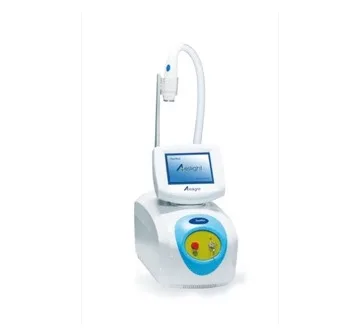
RF Skin Tightening
A non-laser energy family for buyers comparing thermal skin platforms.
Radio frequency↘Next step
Compare current configurations against the criteria in this guide.
Tell us your priority services, market, client mix and business type. Ask for the exact configuration, documents, training and service terms you need.
Describe your equipment plan ↘