Clinic operations
The Cavitation Consultation: Screening and Expectation Setting
A cavitation consultation is thirty minutes of talking that decides whether session eight ends in a rebooking or a chargeback. Most clinics run it as paperwork. Run it as the first appointment of the course instead, and your refund rate falls before you change a single treatment parameter.
Buyer guide
The half hour that decides the refund
Nobody refunds a session. They refund a story. Around week seven a client works out that what she was promised and what she is getting are two different objects, and the row that follows is about a sentence you never said.
Treat the consultation as equipment. No machine at any price rescues a client who walked in expecting two dress sizes before a wedding in April.
Consultation agenda, thirty minutes, three equal parts. Timings are ours; the paperwork and the aftercare sheet come from our device manuals and our engineering archive.
• Minutes 0 to 10, can you treat her at all. History, medications, implants, recent treatments, pregnancy status, and the contraindication checklist read out and signed.
• Minutes 10 to 20, assessment. Pinch test, tape at named landmarks written into the file, photographs under separate written permission, her goal in her own words.
• Minutes 20 to 30, what she is buying. Mechanism in plain language, the whole course booked into the diary, the printed aftercare sheet, the consent form signed in front of you.
Rush the last third and you built the refund yourself. That block is where the limits get said out loud.
Buyer guide
Candidate selection starts with a pinch
Use your hands first. A good candidate has fat you can lift between finger and thumb, outside the abdominal wall, across an area the tip can travel over. Our engineering archive records a 72 mm ultrasonic tip diameter on both cavitation units in the family. That number carries a message: this treats a region, not a spot.
Second test is the calendar. Has her weight held steady for a few months? Someone still climbing, still dropping, or three weeks into a new eating plan gives you no clean baseline.
Then ask what a good result looks like. A waistband that stops digging is workable. A scale reading is not.
Candidate checklist. Tip diameter from our engineering archive; candidate profile from the American Society of Plastic Surgeons and the Mazzoni 2019 review; screening flags from Kaleeny and Janis, 2024. Tick all five before you take a deposit.
• Fat that lifts cleanly between finger and thumb, sitting outside the abdominal wall.
• An area broad enough for a 72 mm tip to travel across, not an isolated lump.
• Weight steady for several months, with no crash diet started in the past few weeks.
• A goal stated as fit, shape or a waistband, never as a scale reading, and no event deadline the calendar cannot meet.
• No flags for body dysmorphic disorder: a defect you genuinely cannot see, hours a day spent checking it, a trail of treatments that all disappointed.
The American Society of Plastic Surgeons puts item four without hedging: nonsurgical fat reduction is not a weight loss solution, and it disappoints patients with a high BMI. Mazzoni and colleagues frame the category the same way, aimed at fat that resists diet and exercise, and no match for liposuction.
The fifth flag gets skipped most. Kaleeny and Janis pooled 65 studies and 17,107 patients in 2024 and found body dysmorphic disorder in 18.6 percent of aesthetic and reconstructive plastic surgery patients, against 0.7 to 2.4 percent in the general population. Those clients rarely feel better afterwards. Diagnosis isn't yours to make. Referral is.
Buyer guide
The stop list, and how to hand somebody back
A hard, round abdomen you cannot pinch is a different problem. Visceral fat sits beneath the muscle wall, out of reach of any hand-held tip. That belongs with a physician. Say so early, and say so kindly.
Stop list, from the operator manuals in our device manuals. Any one of these and nobody gets treated today.
• Pregnancy.
• Cardiac pacemakers or implanted defibrillators.
• Malignant lesions, active herpes, infection or broken skin anywhere in the treatment field.
• Epilepsy.
• Severe diabetes, hypertension or heart disease.
• Serious blood coagulation disorders.
• Recent fever or inflammation, or vascular surgery on the area within the past two months.
• Metal jewellery still on: a delay, not a refusal. Watches and rings come off first.
Borderline cases are where people get hurt. Work from the full checklist in our guide to ultrasonic cavitation safety and who to refuse, printed and signed, never from memory.
Every therapist dreads the honest sentence that supposedly kills the sale. It kills nothing, provided you replace rather than refuse. A client chasing 15 kilos gets a referral and an open invitation to return. One discrete pinchable bulge at a stable weight may suit a cryolipolysis platform better, where a cup sits on one spot for a fixed cycle.
Wording carries the rest. This works on fat you can pinch, inside the area we treat, and it is not a weight treatment reads as a specification, not a downgrade. I would rather you spent this money where it will show has closed more courses than any promise.
Buyer guide
Say the mechanism once, in plain words
Clients don't want the physics. They want reassurance that it's neither magic nor surgery. Sixty seconds covers it.
A version that holds up: the handpiece puts low-frequency sound into the tissue just under the skin, our archive lists 40 kHz as the operating frequency across this handpiece family, and at that frequency the energy acts mainly on the fat layer rather than on skin or muscle. Some cell contents are released, and the body clears them slowly, across weeks.
Here is what separates you from the shop down the road. Nobody can tell this client how much her body will clear. Say that before you take money, when it sounds like competence, not afterwards, when it sounds like an excuse.
Two words belong nowhere in your script: melt and detox. Neither describes anything measurable, and both are what a regulator or a one-star review quotes back at you. The language you print around an ultrasonic cavitation machine should match the language you use in the room.
Buyer guide
The timeline, in weeks and centimetres
Hand her a calendar rather than a promise. The body treatment protocol in our engineering archive runs 20 to 40 minutes per area, spaces visits 3 to 7 days apart, and builds a course of 10 to 12 treatments. Do that arithmetic out loud. Ten visits at three-day spacing is nine gaps, about four weeks. Twelve visits at weekly spacing is eleven gaps, near enough eleven weeks. Four to eleven weeks, and she picks the end by how often she turns up.
The published numbers are modest, and quoting them as modest is the whole trick. Tonucci and colleagues treated the abdomens of 20 women with a low-frequency, low-intensity ultrasound device and reported mean reductions after five sessions of 1.5 cm at the waist, 2.1 cm at the abdomen and 1.9 cm at the umbilicus, with satisfaction they called moderate. Centimetres, not dress sizes. Someone who hears that and books anyway will not ask for her money back.
That study also recorded what the women felt: mild burning or discomfort, tingling or numbness in a lower limb, pain over bony areas, soreness afterwards. Name those in advance. A sensation nobody mentioned feels like a complication. Flagged at consultation, it feels like the treatment working.
Measure as though a stranger were auditing you. Tape at fixed, written-down landmarks. Same posture, same hour, same lighting for photographs. Warn her the scale may not move. Fold the rhythm into the wider body programme she is buying.
Buyer guide
Her half of the contract
Expectation setting is only half about the machine. The rest lives in the days between visits, and if you don't ask for it, you won't get it.
Aftercare, printed and handed over. Straight from the body treatment instructions in our engineering archive.
• No shower and no cold draught on the area for six hours.
• No sauna and no heavy massage for 24 hours.
• More water than usual, and light food rather than rich or greasy meals.
• Sun protection at SPF 20 or above, with no sunbathing and no sunbeds for seven days.
Verbal aftercare evaporates in the car park. Print it. Staple it to the appointment card.
The diet conversation needs honesty without preaching. Released fat still carries energy, and if intake outruns spending it settles back. Framed as a mechanism, clients accept that. Framed as a comment on their discipline, they hear an insult and stop listening.
Attendance closes the deal. A course built on a 3-to-7-day rhythm falls apart when she vanishes for a month. Book all ten or twelve dates before she leaves.
Buyer guide
What to record, and what belongs on the consent form
Case notes have two readers: the therapist covering for you next month, and whoever reviews the file if a complaint lands. Capture a dated baseline. Measurements at named landmarks, photographs stored as your local rules require, her goal quoted verbatim, the signed contraindication checklist, and the parameters used at every visit.
Consent clauses worth printing close to verbatim. Wording suggestions, not legal advice; have your own insurer or regulator approve the final form.
• I understand this treatment aims to reduce localised fat in the treated area and is not a treatment for weight loss or obesity.
• I understand results vary between individuals and that no specific centimetre reduction has been promised to me.
• I have disclosed all medical conditions, medications, implants and recent treatments, and I will tell the clinic if any of these change.
• I understand my diet, activity and fluid intake affect my result.
• I understand the treatment may cause warmth, redness, tingling or short-lived soreness.
• I understand photographs are taken as part of my clinical record.
Put those on the face of the form, not in clause nine. And keep photo consent on its own signature. One is a clinical record, the other is advertising, and a client who feels tricked about the second will never believe you about the first.
Frequently asked questions
FAQHow long should a cavitation consultation actually take?
Thirty minutes is a sensible floor for a first course, and it splits neatly three ways. Ten minutes on history, medications and the contraindication checklist. Ten on assessment, measuring, photographs and the pinch test. Ten on mechanism, calendar, aftercare and the consent form. Rushing the last third is what generates refunds, because that is where the limits get explained.
How many weeks does a full cavitation course take?
Four to eleven weeks, and the client decides which end. The protocol in our engineering archive specifies 10 to 12 treatments spaced 3 to 7 days apart. Ten visits at three-day spacing means nine gaps, roughly four weeks. Twelve visits at weekly spacing means eleven gaps, close to eleven weeks. Book every date at the consultation so the schedule survives a busy month.
What do I say to someone who wants to lose weight?
Say it clearly, then offer somewhere to go. Nonsurgical fat reduction is not a weight loss solution, and the American Society of Plastic Surgeons notes it disappoints patients with a higher BMI. Explain that the treatment shapes an area you can pinch and cannot touch fat under the muscle wall. Suggest they see a physician or dietitian first, and keep the door open for contouring once weight is stable.
Should I ever promise a specific centimetre reduction?
No. Quote the published range and let it do the persuading. In one prospective study of 20 women, mean reductions after five low-frequency ultrasound sessions ran to roughly one and a half to two centimetres at the waist, abdomen and umbilicus, with moderate satisfaction. Individual response varies widely, and a promised number becomes the exact figure a disappointed client quotes when asking for a refund.
When does a client belong with a doctor rather than with me?
Whenever the question is diagnostic. A cancer history, an implanted electronic device, pregnancy, uncontrolled cardiovascular or metabolic disease, an abdomen that feels firm rather than pinchable, or signs suggesting body dysmorphic disorder all sit outside a therapist's remit. Kaleeny and Janis found body dysmorphic disorder in 18.6 percent of aesthetic and reconstructive plastic surgery patients. Refer, document that you referred, and treat only with written clearance.
Evidence trail
Published research behind this guide
This guide is educational material for equipment selection. It is not medical advice, an operating protocol or a promise of clinical outcome.
Read the research
- Kaleeny JD, Janis JE. Body Dysmorphic Disorder in Aesthetic and Reconstructive Plastic Surgery: A Systematic Review and Meta-Analysis. Healthcare (Basel), 2024 ↗
- Tonucci LB, Mourao DM, Ribeiro AQ, Bressan J. Noninvasive body contouring: biological and aesthetic effects of low-frequency, low-intensity ultrasound device. Aesthetic Plastic Surgery 38(5):959-967, 2014 ↗
- Mazzoni D, Lin MJ, Dubin DP, Khorasani H. Review of non-invasive body contouring devices for fat reduction, skin tightening and muscle definition. Australasian Journal of Dermatology 60(4):278-283, 2019 ↗
- American Society of Plastic Surgeons. Get the facts on nonsurgical fat reduction: From CoolSculpting to Kybella ↗
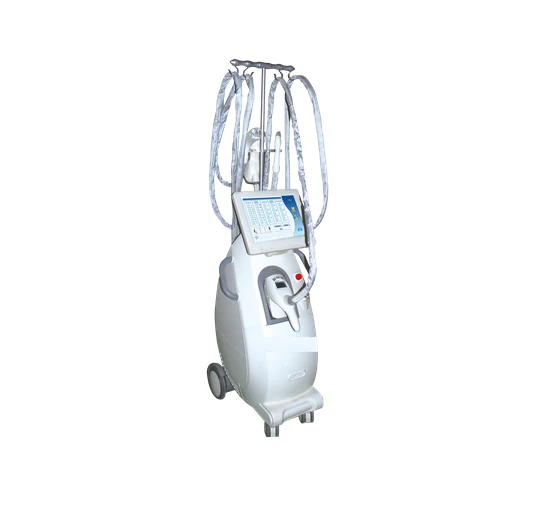
Ultrasonic Cavitation Machines
Cavitation machines buyer guide: how 40kHz ultrasonic cavitation fits a body-contouring menu, what to compare across configurations, and which claims to verify on the exact quotation.
40 kHz ultrasound↘06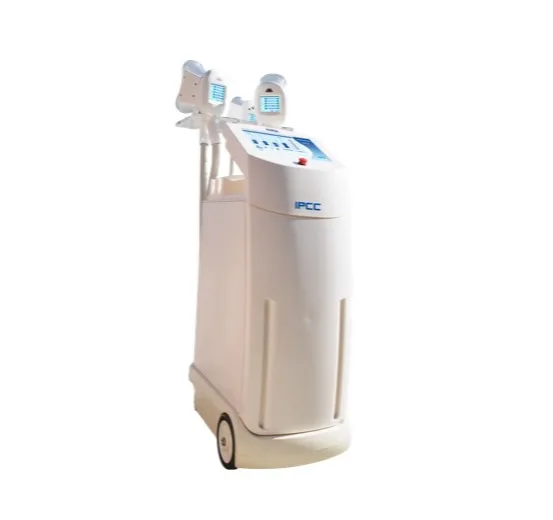
Cryolipolysis Fat Freezing Machine
Fat freezing machine buyer guide to cryolipolysis machines: a controlled-cooling equipment family for buyers planning a localized body-contouring workflow.
Controlled cooling↘Next step
Compare current configurations against the criteria in this guide.
Tell us your priority services, market, client mix and business type. Ask for the exact configuration, documents, training and service terms you need.
Describe your equipment plan ↘