Format comparison
S-Shape, 6-in-1, 9-in-1: Which Cavitation Format Fits
You are comparing an S shape cavitation machine against a 6-in-1 and a 9-in-1, and every listing reads the same. Most of those names describe a cabinet and a handpiece count, not a technology. Here is how to work out what you would actually be buying, and how many of those heads your room will ever turn on.
Buyer guide
The names describe a cabinet, not a technology
Start with the disappointing part. In this market, "S-shape" almost always refers to the housing: a curved trolley shell that many factories share and that gets sold under a long list of brand names. It is not an energy source. It is not a patent. Two machines both listed as an S shape cavitation machine can carry completely different module sets, different generators and different service parts, and the product photograph will not tell you which is which.
The counting names work the same way. A cavitation machine 6 in 1 or a 9 in 1 cavitation machine counts things you can plug in or switch on, and nobody polices the arithmetic. One vendor counts handpieces. Another counts modes on a menu screen. A third counts a pair of laser pads as two. So the honest first move is to ignore the number in the title and ask for a written list: every handpiece, what energy it delivers, and what it is meant to treat.
Buyer guide
What a 6-in-1 or 9-in-1 usually bundles
The recurring ingredients are short. Low-frequency ultrasound at 40kHz for the fat layer. Vacuum combined with RF for large body areas. A smaller bipolar or multipolar RF head for face, neck and under the chin. A motorised roller for mechanical massage. Low-level laser pads that strap around a limb or the waist. Past that, lists start padding: infrared, EMS pads, a cold hammer, a skin scrubber.
Our engineering archive shows how the count inflates. One body platform documents its handpieces by treatment area rather than by technology: the large-area heads combine vacuum, RF, infrared and a motorised roller in a single head; the smaller heads for face and under-chin work carry vacuum, RF and infrared without the roller; the massage heads carry vacuum, RF and the roller without the infrared. Six handpieces. Three technologies, rearranged.
That is not deceit, exactly. Area-specific heads are genuinely useful, and a head sized for a jawline is the wrong head for a back. Just do not read six handpieces as six capabilities. Count the technologies first, then count the heads.
Buyer guide
The trade-off is real, but it is not about wattage
The usual warning is that bundled modules are always weaker. Check that before you believe it. A dedicated cavitation console in our archive, carrying two cavitation handpieces and one RF handpiece, is rated at 60W of 40kHz ultrasound through a 72mm tip. A six-handpiece body platform in the same archive lists 100W of ultrasound at the same 40kHz. Dedicated does not automatically mean stronger, and a spec sheet will happily embarrass a rule of thumb.
The cost of a bundle shows up somewhere else. Training surface is the big one. Our device manuals for one multi-handpiece body platform describe RF power in ten steps, suction in eight, infrared in five and roller speed in four, plus a roller direction setting and a customised mode that unlocks the functions individually. That is the dial count before you multiply by the number of heads. A confident operator on two handpieces is worth more than a hesitant one on nine.
Then there is serviceability. Ask what happens when a single head dies. On some consoles the machine keeps running and you lose one service, which is survivable. On others the fault stops the platform, and one failed roller motor takes your whole body menu offline for as long as the courier needs. One room, one console, nine services, one point of failure. Do that arithmetic before the discount does your thinking for you.
A handpiece bundle nobody is trained on earns nothing. It occupies floor space and gives your marketing a list to publish.
Buyer guide
The utilisation test
Here is a blunt filter you can run in ten minutes. For every module on the quotation, answer four questions. Which line on my price list does this deliver? Who on staff will be trained and signed off on it? What does one session cost me in consumables and chair time? How many bookings a month do I honestly expect? A module that cannot answer all four is decoration.
Most buyers find that two or three modules carry the revenue and the rest ride along. Fine, if the ride is free. Less fine if the extra heads added real cost, extra training days, or a service contract you would otherwise have skipped. Ask the supplier to re-quote the same platform with only the modules you would genuinely use. The gap between the two numbers is what the extras actually cost you.
Room time deserves a mention too. One nine-headed multifunction platform serves one client at a time. Two focused machines in two rooms serve two. If your bottleneck is the diary rather than the capital budget, a bigger bundle is solving the wrong problem.
Buyer guide
Verify handpiece by handpiece, not console by console
Ask for rated output and operating frequency per handpiece, in writing, on the quotation. A single console figure hides which head gets the power. For each RF head, ask whether it is bipolar, multipolar or monopolar, and whether several heads share one generator. For the cavitation head, confirm the frequency and the tip diameter. For roller and vacuum heads, ask the suction range and whether roller speed and direction are adjustable.
Consumables come next, per head: coupling gel volume, any membranes or pad covers, what a replacement head costs and how long it takes to arrive. Ask for the electrical version and the safety documentation as well. IEC 60601-1 is the general standard for basic safety and essential performance of medical electrical equipment, and a supplier who cannot say which standards the platform was tested against has told you something useful.
Regulatory status attaches to a specific device and a specific indication, never to a module count. If you are selling into the United States, the FDA's releasable 510(k) database is public and searchable by device name and product code, and a nine-in-one console is not cleared as a bundle simply because it exists. Check what is cleared, and for what, before you repeat a claim in an advertisement.
Screening stays with a qualified clinician working to local rules and the delivered manual. Vacuum handpieces bruise when the suction is set wrong, and in richly pigmented skin an inflammatory insult can be followed by post-inflammatory hyperpigmentation, so a conservative first session and honest consent language matter more than the module count. Published reviews of non-invasive body contouring describe results that vary between individuals and between protocols. Let that be the framing your consultation uses.
Buyer guide
When two technologies beat nine
A focused pairing wins when the service is narrow and the volume is real. If body contouring is the business rather than a side menu, a proper ultrasonic cavitation platform plus one serious RF or cooling machine will beat a nine-headed console on duty cycle, on operator confidence, and on the day a part fails. Pairing cavitation with a controlled-cooling cryolipolysis platform also gives you two genuinely different mechanisms rather than six variations on vacuum and RF.
The bundle wins in a different situation, and it is a legitimate one. A new room, an unproven local market, one operator, and a real need to discover which service sells before committing more capital. Breadth is information in that case. Our multi-treatment menu planning guide works through the same decision at menu level rather than at specification level.
One last judgement, offered plainly. If a nine-in-one quotation lands below the price of a single focused platform, the saving came from somewhere: the generator, the build quality, the support, or all three. Ask where. A supplier who answers that question straight is worth more to you than the extra heads you would have gained.
Frequently asked questions
FAQIs an S-shape cavitation machine different from a 6-in-1?
Usually not in any way that matters to you. S-shape describes the console housing, a curved trolley shell used by many factories, so it can carry almost any module list at all. A 6-in-1 label counts modules instead. The two names answer different questions, and neither tells you the frequency, the rated output or which handpieces are included. Ask for the written handpiece list and compare that.
How many handpieces should a first machine have?
Fewer than you think. Pick the two or three services you can sell and staff from day one, then buy the machine that runs those well for a full working day. Extra heads only pay when a trained operator reaches for them and a client books them. You can add a second machine later. You cannot un-buy training complexity your team never absorbs.
Is a 9-in-1 cheaper than buying two focused machines?
On the invoice, often yes. Across three years it depends on repair exposure and room throughput. One console means one point of failure and one client at a time, while two machines run in parallel and keep half your menu alive when one goes in for service. Get spare-head prices and lead times in writing before you compare the two totals.
What single question exposes a weak bundle?
Ask for rated output and operating frequency for each handpiece separately, in writing, on the quotation. A serious manufacturer has that on file and sends it the same day. A reseller who only knows the console total, or who replies with a marketing sheet, has told you they never opened the machine. Follow up by asking which heads share one generator.
Evidence trail
Published research behind this guide
This guide is educational material for equipment selection. It is not medical advice, an operating protocol or a promise of clinical outcome.
Read the research
- Mulholland, Paul & Chalfoun (2011), Noninvasive body contouring with radiofrequency, ultrasound, cryolipolysis, and low-level laser therapy, Clinics in Plastic Surgery ↗
- US FDA: Search the Releasable 510(k) Database (device name, product code and cleared indication) ↗
- IEC 60601-1: Medical electrical equipment, general requirements for basic safety and essential performance ↗
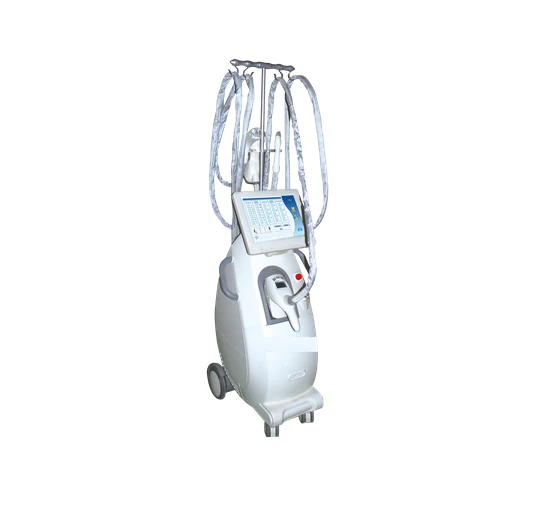
Ultrasonic Cavitation Machines
Cavitation machines buyer guide: how 40kHz ultrasonic cavitation fits a body-contouring menu, what to compare across configurations, and which claims to verify on the exact quotation.
40 kHz ultrasound↘06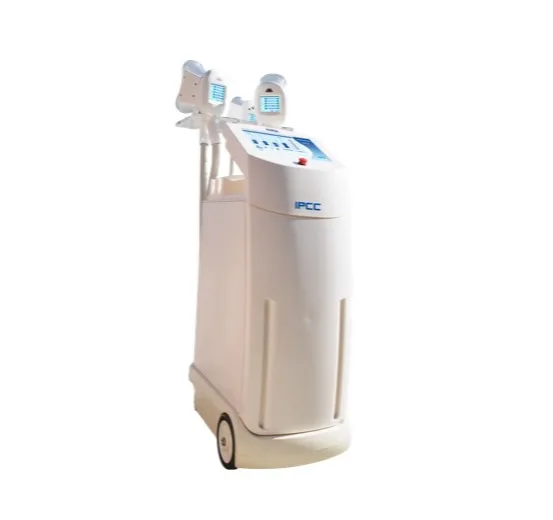
Cryolipolysis Fat Freezing Machine
Fat freezing machine buyer guide to cryolipolysis machines: a controlled-cooling equipment family for buyers planning a localized body-contouring workflow.
Controlled cooling↘Next step
Compare current configurations against the criteria in this guide.
Tell us your priority services, market, client mix and business type. Ask for the exact configuration, documents, training and service terms you need.
Describe your equipment plan ↘