Procurement
Importing a Cavitation Machine: Certificates and Paperwork
Cavitation machine certification is the least interesting part of the purchase and the part that strands a pallet in a bonded warehouse. Here is the awkward bit: the same console can be a regulated medical device in one country and an ordinary beauty appliance across the border, and that single fact decides which of your supplier's documents are worth anything. This is the paperwork half of the deal, written plainly.
Buyer guide
What is this machine, legally? Answer that first
Settle the classification before you argue about certificates. Get that backwards and you will collect weeks of documents that do not apply to you. In the European Union, products with no intended medical purpose were pulled into the medical device framework by Annex XVI of Regulation (EU) 2017/745. Section 4 of that Annex names equipment intended to reduce, remove or destroy adipose tissue, including equipment for liposuction, lipolysis and lipoplasty. Ultrasonic cavitation lands inside that wording without much of an argument.
Two implementing acts closed the loop. Regulation (EU) 2022/2346 set common specifications for those products and has applied since 22 June 2023. Regulation (EU) 2022/2347 reclassified equipment intended to reduce, remove or destroy adipose tissue as class IIb, listing ultrasound lipolysis, radiofrequency lipolysis and cryolipolysis among its examples. Class IIb is not a self-declaration class. Somebody independent has to sign off.
Now move the same box across a border. In some markets it is treated as a general electrical or cosmetic appliance, assessed for electrical safety and electromagnetic compatibility, full stop. In others it needs a national device registration in the importer's own name before a single unit clears customs. One product, three different files, three different budgets. Ask a local specialist which world you are in before the deposit leaves your account.
Buyer guide
CE marking is a claim, not a permit
CE marking is defined as the manufacturer's own statement that a product meets the EU rules applying to it. The manufacturer affixes the mark. The manufacturer drafts and signs the EU declaration of conformity and keeps it on file, typically for ten years after the product goes on the market. Nobody in Brussels inspects your machine, no EU agency approves it, and there is no such thing as a government-issued CE licence, whatever a sales deck implies.
It is not a quality mark. Nor is it a mark of origin. Where the law demands third-party assessment, a notified body gets involved, and its four-digit identification number has to sit next to the CE marking. That is the detail worth staring at. A class IIb device wearing a bare CE logo with no number beside it is a question you want answered in writing, before anything ships.
There is a near-miss version too. Suppliers sometimes send a handsome page carrying a CE logo issued by a private test house that is not a notified body at all. Genuine as a test report, worthless as conformity evidence. Real paper, wrong job.
Buyer guide
A test report proves one sample passed one test
Reports and certificates get blurred together constantly, and rarely by accident. A report says a named laboratory tested a named sample against a named standard on a named date. That is the whole of it. It says nothing about the unit crated for you nine months later, and nothing about whether the right standard was picked.
Read four things on anything you are handed.
- Applicant identity. Whose name sits on the report as the applicant, and is it the same legal entity issuing your invoice?
- Model and hardware variant. Which model and which hardware variant actually went on the bench, suffix included?
- Standard and edition. Which standard was applied, and which edition of it, because editions move?
- Test date against build generation. What date was the sample tested, since a report from a build generation you are not buying is decoration?
IEC 60601-1 is the base standard for basic safety and essential performance of medical electrical equipment, with collateral standards stacked on top for topics such as electromagnetic compatibility. If your machine is not going in as a medical device in that market, electrical safety usually runs through the general low-voltage and EMC route instead, which is a different report entirely.
Make the metal agree with the paper. Our device manuals mark the console with a dangerous-voltage symbol and a Type B applied part symbol, fit a leakage protector, a key switch and an emergency switch, and specify an installation environment of roughly 15 to 30 degrees Celsius with relative humidity no higher than 80 percent. Check the nameplate voltage, frequency and model designation against the report. If they disagree, you are holding two machines in one folder.
Buyer guide
Verify the certificate yourself, at the source
A certificate photographed on a supplier's website proves that someone owns a scanner. Logos crop beautifully. So go to the source, and do not accept a JPEG when a PDF exists.
Ask for the complete document as a PDF, every page, annexes and scope included. Read the holder name and the scope text, then confirm both cover the exact model you are buying and the company on your invoice. Look the issuing body up in NANDO, the European Commission's register of notified and designated organisations, by name or by that four-digit number, and check its designation is current and covers the relevant legislation. For a device certificate, check the status in EUDAMED's notified bodies and certificates module, where certificates issued, suspended, reinstated, withdrawn and refused are published.
Two more habits worth building. An ISO 13485 certificate covers a quality management system, not a product, and accredited ones can be validated through IAF CertSearch. And in the United States, establishment registration and device listing do not denote approval or clearance of anything, which the FDA states in those words. A quotation leaning on a registration number as though it were a clearance tells you plenty about the seller. So we make no approval claims for our own platforms here. The only version that helps you is the one you pull from a register yourself, for the market you actually ship into. Our ultrasonic cavitation platform notes describe what the hardware does; regulatory status is handled per market, in writing, per order.
Buyer guide
The document pack to demand before the crate is sealed
Ask for all of it while the machine is still on the factory floor. Once it is on the water your leverage is gone and every correction turns into a courier job.
Request all eight of these as a single list, in writing.
- Signed declaration of conformity for the destination market, naming the exact model.
- The test reports that declaration references, in full and as PDFs.
- Instructions for use in the language your operators genuinely read.
- A photograph of the rating plate and of any UDI carrier on the machine.
- Commercial invoice and packing list carrying HS code, packed dimensions and gross weight.
- Certificate of origin, if your tariff line wants one.
- Spare parts and consumables list with part numbers for every handpiece.
- Written warranty and service terms, signed by the party you are actually paying.
Then run the dull consistency check. One cavitation platform in our engineering archive is specified at 40 kHz through a 72 mm ultrasonic tip, 60 W output power, RF duration adjustable from 0.5 to 5 seconds in half-second steps, 12 kg net and 20 kg gross, packed at 615 by 545 by 525 mm. Every one of those figures should read identically on the datasheet, the invoice, the packing list, the rating plate and the test report. Customs notices when a gross weight disagrees with the crate. A regulator notices when the frequency on the brochure disagrees with the report. Our service and support notes cover what to check on arrival, and the wider platform range shows which figures shift between formats.
One more page belongs in the pack, and buyers forget it. Our manuals exclude clients with cardiac pacemakers or implanted defibrillators, pregnant clients, epilepsy, serious cardiac, hypertensive, diabetic or coagulation disease, and any treatment area carrying active herpes, dermatitis, broken skin or atypical moles. They also tell clients to remove metal jewellery before radiofrequency work. Screening against that list is clinical judgement, not reception-desk paperwork. Where a history is unclear, refer rather than treat.
Buyer guide
The obligations that land in your name
Here is the part distributors underestimate. Import, and you pick up duties in your own name. They do not bounce back to the factory because somebody sold you a bad document.
Article 13 of the EU medical device regulation makes an importer verify, before placing a device on the market, that it carries CE marking, that the EU declaration of conformity has been drawn up, that the manufacturer is identified and has designated an authorised representative where one is required, that labelling and instructions for use comply, and that a UDI has been assigned where applicable. Your own name, registered trade name or trade mark and registered place of business have to appear on the device, on its packaging or in an accompanying document. You register in EUDAMED, whose actor module becomes mandatory to use from 28 May 2026 for importers alongside manufacturers and authorised representatives. If you have reason to believe a device does not conform, you may not place it on the market at all.
The United States runs on different machinery. An initial importer, defined at 21 CFR 807.3(g) as an importer who furthers the marketing of a device from a foreign manufacturer to whoever makes the final sale, without repackaging or relabelling it, registers the establishment, pays the annual fee, lists its devices, and reports deaths, serious injuries and certain malfunctions. Registering is still not approval, and it is not the step that lets you sell.
That step has a name: premarket notification, known everywhere as the 510(k). FDA's premarket notification page states that a device may not be marketed in the United States until the submitter receives a letter finding it substantially equivalent to a legally marketed predicate, and that the submission goes in at least 90 days before the device is introduced into interstate commerce for commercial distribution. The agency's page on non-invasive body contouring technologies frames the same point from the buyer's end: before such a device is legally authorised for the market, FDA reviews its safety and effectiveness for the intended uses and for the body sites it is meant to treat, and only devices authorised by FDA for cosmetic use should be used to achieve those effects. So a fat-reduction console arriving with a tidy registration confirmation and nothing else may still have no lawful route to a US customer. Whether your exact configuration and your exact marketing claims call for a 510(k), fall under an exemption, or need a different submission altogether is a question for a US regulatory specialist, and you want that answer in writing before the deposit, not after the crate lands.
Pay someone qualified in your jurisdiction. A freight forwarder handles customs, a customs broker is not a regulatory consultant, and neither catches a classification error before it becomes yours. For a class IIb route or a labelling review, buy a few hours of a local specialist's time. Against a detained container, that is cheap.
Frequently asked questions
FAQDoes a CE mark mean the machine is approved for sale in Europe?
No. CE marking is the manufacturer's own declaration that a product met the applicable EU requirements when it was placed on the market. No EU authority approves individual machines, and CE is neither a quality mark nor a mark of origin. For a class IIb device such as adipose-tissue reduction equipment, a notified body must be involved, and its four-digit identification number appears beside the mark. A bare logo with no number deserves a written explanation before you pay.
My supplier sent a CE certificate from a private laboratory. Is it fake?
Probably not fake, and probably not what you need. Private labs issue genuine test reports showing a sample met a standard, and some print them with a CE logo on top. That is evidence of testing, not conformity assessment by a notified body. Check the issuing organisation in NANDO by name or four-digit number, confirm the designation is current and covers the relevant legislation, then check the certificate status in EUDAMED's notified bodies and certificates module.
Which documents does customs want, and which does the regulator want?
Two different piles, and people mix them up weekly. Customs wants the commercial invoice, packing list, HS code, bill of lading or air waybill, and often a certificate of origin. The regulator wants the declaration of conformity, the conformity assessment evidence behind it, labelling, instructions for use in the local language and, in some markets, a device registration in the importer's name. Missing customs paperwork delays a shipment. Missing regulatory paperwork can stop you selling at all.
What should I check the moment the crate arrives?
Photograph the crate before you open it. Compare the rating plate against the invoice and the test report: model designation, variant suffix, serial number, mains voltage and frequency. Confirm gross weight and packed dimensions match the packing list. Count handpieces and check part numbers against the spare parts list. Confirm the manual in the box is current, in your operators' language, with the contraindication list intact. Log every discrepancy in writing the same day.
Who is liable if a client is injured during treatment?
That depends on your jurisdiction and on facts a lawyer needs to see, so treat this as orientation only. In practice liability tends to follow documentation. Manufacturers answer for design, manufacture and the instructions supplied. Importers and distributors answer for what they verified, stored, transported and told the buyer. Clinics answer for screening, training and treatment decisions. Keep contraindication screening, operator training records and the service log complete, and refer unclear medical histories to a clinician.
Evidence trail
Published research behind this guide
This guide is educational material for equipment selection. It is not medical advice, an operating protocol or a promise of clinical outcome.
Read the research
- Regulation (EU) 2017/745 on medical devices, Annex XVI, Section 4: equipment intended to be used to reduce, remove or destroy adipose tissue, such as equipment for liposuction, lipolysis or lipoplasty. ↗
- Commission Implementing Regulation (EU) 2022/2346 laying down common specifications for the groups of products without an intended medical purpose listed in Annex XVI to Regulation (EU) 2017/745; applies from 22 June 2023. ↗
- Commission Implementing Regulation (EU) 2022/2347 on the reclassification of groups of certain active products without an intended medical purpose: equipment intended to reduce, remove or destroy adipose tissue is reclassified as class IIb, with ultrasound, radiofrequency and cryolipolysis among the examples. ↗
- European Commission, Your Europe. CE marking: the manufacturer is responsible for affixing the mark and drafting the EU declaration of conformity, CE is not a quality mark or mark of origin, and where a notified body is used its four-digit identification number must appear next to the CE marking. ↗
- European Commission. Notified bodies and the NANDO information system, listing each notified body's identification number and the tasks for which it has been notified. ↗
- European Commission, Public Health. EUDAMED notified bodies and certificates module, publishing certificates issued, suspended, reinstated, withdrawn and refused. ↗
- European Commission, Public Health. EUDAMED actor registration module: economic operators including importers obtain a single registration number, and use of the module becomes mandatory from 28 May 2026. ↗
- Regulation (EU) 2017/745, Article 13: general obligations of importers, covering verification before placing on the market, importer identification on the device or packaging, EUDAMED registration and action on non-conforming devices. ↗
- 21 CFR 807.3(g), definition of initial importer: an importer who furthers the marketing of a device from a foreign manufacturer to the person who makes the final delivery or sale to the ultimate consumer or user, without repackaging or otherwise changing the container, wrapper or labeling. ↗
- US Food and Drug Administration. Premarket Notification 510(k): a device may not be marketed in the United States until the submitter receives a letter from FDA finding the device substantially equivalent to a legally marketed predicate, and the 510(k) must be submitted at least 90 days before the device is introduced into interstate commerce for commercial distribution. ↗
- US Food and Drug Administration. Non-Invasive Body Contouring Technologies: before a non-invasive body contouring device is legally authorized for the market, FDA reviews the safety and effectiveness of the device for the intended uses and body sites on which it is intended for use, and only devices authorized for marketing by FDA for cosmetic use should be used to achieve these effects. ↗
- US Food and Drug Administration. Important reminders about registration and listing: an entry in the registration and listing database does not denote approval, clearance or authorization of the facility or its medical devices. ↗
- IEC 60601-1, Medical electrical equipment, Part 1: general requirements for basic safety and essential performance, with collateral standards covering topics such as electromagnetic compatibility. ↗
- International Accreditation Forum. IAF CertSearch, the global database for validating accredited management system certifications such as ISO 13485. ↗
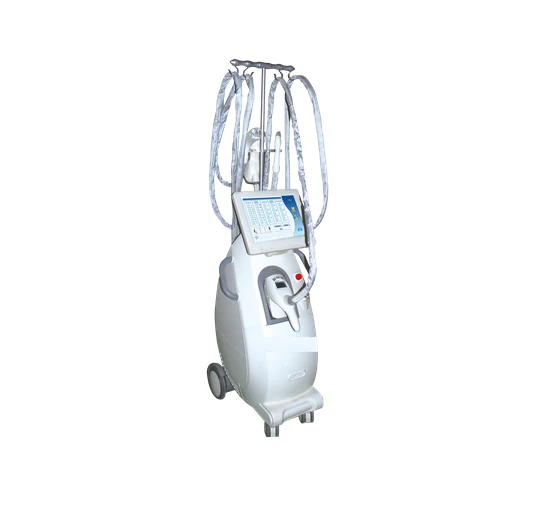
Ultrasonic Cavitation Machines
Cavitation machines buyer guide: how 40kHz ultrasonic cavitation fits a body-contouring menu, what to compare across configurations, and which claims to verify on the exact quotation.
40 kHz ultrasound↘06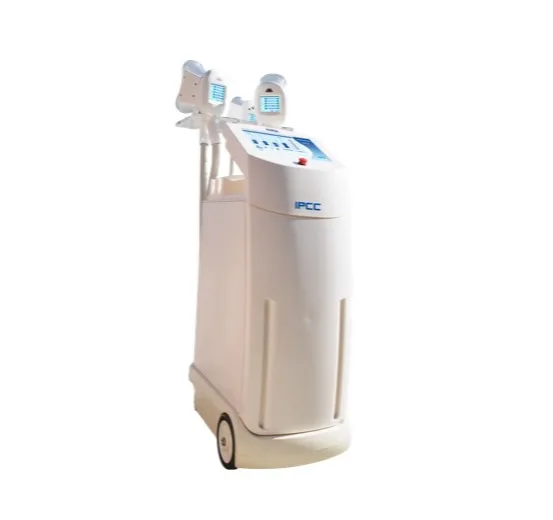
Cryolipolysis Fat Freezing Machine
Fat freezing machine buyer guide to cryolipolysis machines: a controlled-cooling equipment family for buyers planning a localized body-contouring workflow.
Controlled cooling↘Next step
Compare current configurations against the criteria in this guide.
Tell us your priority services, market, client mix and business type. Ask for the exact configuration, documents, training and service terms you need.
Describe your equipment plan ↘