Service guide
Cavitation Machine Maintenance and Handpiece Care
Cavitation machine maintenance is unglamorous work: a wipe, a coil, a filter, a look at the connector. Skip it and the machine rarely dies outright. It fades, and your clients pay for the fade months before anyone in the room notices.
Buyer guide
The two failure modes that dominate
Ask a service desk what comes back and the list is short. Two things dominate: strain where the cable leaves the handpiece and meets the plug, and damage to the transducer face itself. Boards and touchscreens are a footnote beside those two.
Cable strain collects at one spot, the short run of lead where it exits the body of the transducer handpiece, and again at the connector. That joint flexes every session. It gets worse when a therapist winds the lead around the handle to tidy up, when a trolley wheel rolls over the slack, and worst of all when a dropped handpiece swings on its own cable. Nothing looks broken from outside. You get intermittent output, then output that dies when the therapist turns their wrist, then nothing. On body contouring platforms this is what our own service correspondence hears about most, which is service desk experience rather than a measured failure rate for the category. Build the habit on it. Don't quote it as a number.
The published figures come from diagnostic imaging rather than body contouring, and they lean the other way. Mårtensson and colleagues tested 676 transducers in daily clinical use across 32 hospitals; 39.8 percent showed an error, with delamination in 26.5 percent and a break in the cable in 8.4 percent. Face and lens damage ran roughly three times as common as cable breaks in that dataset. Different probes, different duty cycle, different room. The honest reading is that both modes are common enough to plan for, and neither one gets to be waved away.
Face damage usually starts with something nobody writes down: gel. Left on a face it hardens into a crust that stops the head sitting flat on skin. Scrape that crust off in a hurry with something abrasive and you have ruined the surface you rely on. That is the same family delamination belongs to, the coupling layer coming away from the active element beneath it. The 2025 pictorial review in the Journal of Ultrasound puts improper handling, cleaning, storage and reprocessing at the top of its causes list.
Heat sits underneath both. A 40 kHz applicator turns electrical drive into mechanical motion and the conversion is never perfect, so the stack warms while it works. Cooling stops warmth becoming drift, which is why our device manuals specify a cooling system on every cavitation platform and treat blocked airflow as a fault.
Buyer guide
A service schedule you can actually run
Maintenance fails when it depends on someone remembering. Give it slots instead. Print the table below, tape it inside the trolley door, and put a name against the weekly line.
| Interval | What gets done | Why it matters |
|---|---|---|
| After each client | Wipe gel off the transducer face before it sets. Clean the client's skin. Park the handpiece on its holder. Glance along the cable as you coil it. | Our device manuals require the handpiece to be cleaned after each treatment and returned to its holder to prevent damage from falling. Wet gel wipes off. Dried gel has to be scraped, and scraping is how faces get ruined. |
| Daily | Power down and unplug before cleaning anything. Wipe cabinet and trolley. Check the handpiece connector and its socket are clean and dry. Confirm no lead is trapped under a wheel or a chair leg. | Our manuals tie a clean connector and socket directly to accurate energy output rather than to tidiness, and they insist on shutting off and disconnecting the supply before any cleaning or maintenance. |
| Weekly | Pull the air filter and look at it. Inspect the transducer face under good light for scratches, pitting or a lifting edge. Run a finger along the whole cable, hardest at the two ends. Check vent clearance has not been lost to towels or boxes. | Our manuals ask for regular filter checks and link a dirty filter to weak suction. Cable strain shows up as a kink or a soft spot weeks before output starts cutting out mid-session. |
| Annually | Book a service visit covering measured output verification, electrical safety testing, a filter change and full inspection of connector, cable, housing and face. Readings in writing, not a sticker. | AIUM guidance recommends regular interval inspection of connector, cable, housing and acoustic lens. IEC 62353 is the recognised framework for recurrent testing and testing after repair of medical electrical equipment. |
Book the annual line out of season, because a visit postponed in a busy month never gets rescheduled. If you run RF skin tightening handpieces off the same trolley, put them in the same visit and the same report. One engineer, one invoice, one document you can wave at a warranty desk later.
Buyer guide
Cleaning agents that won't cost you a handpiece
The transducer face is a coupling surface bonded over an active element. Attack the bond and you have bought a new handpiece.
The safe default is dull. Remove bulk gel with a damp soft cloth or gauze and a little mild, nonabrasive liquid soap, which is the AIUM procedure for an external transducer, then apply a low-level disinfectant if local rules require one. External transducers touching clean, intact skin are noncritical devices in that guidance, so high-level disinfection is not the bar.
The rules that save money are prohibitions. Never let any of these near a handpiece:
- Anything abrasive on the face. No scouring pad, no fingernail, no dried ridge attacked with the corner of a spatula.
- Flammable cleaning agents near the treatment head. Our device manuals forbid this outright.
- Gasoline, alcohol or chemically treated cloths on the cabinet. Same manuals, same page.
- Immersion of the connector, or a soaked cable. AIUM notes that immersion limits differ by product.
- A new bottle nobody cleared. Chemical compatibility belongs to the specific transducer, not to ultrasound in general, and the manufacturer must be consulted before a disinfectant is chosen at all.
Get that compatibility list in writing at purchase. It costs nothing then and it is impossible to obtain in a hurry on the afternoon a therapist has already wiped something down with the wrong product.
Buyer guide
Cables, holders and the room around the machine
Cable care is a habit, not a product. Coil loosely in wide loops and hang the coil. Never wind a lead tightly around the handpiece body, because that sets a permanent bend exactly where the conductors are already stressed.
Every handpiece gets a holder, used between passes rather than at the end of the session. Our manuals give the reason in one line: put the handpiece on the holder to prevent damage from falling. A drop cracks a housing, and when the head never reaches the floor it is the lead that absorbs the shock instead.
The room does more work than people credit. Our device manuals ask for a clean, low-dust space between roughly 5 and 35 degrees Celsius, relative humidity at or below 80 percent, no corrosive or conductive dust, and at least 30 cm between the vent holes and the wall, clear of radiators and heating ducts. They recommend a voltage regulator where mains supply is unstable. Carpet gets its own warning: cleaning the room blows dust into the vents.
Cut the power for a long idle period, take the handpieces off and store them properly, and keep transport and storage temperatures inside the manual's range. Buying an ultrasonic cavitation machine for a mobile or seasonal setup? That packing routine matters more than any brochure spec.
Buyer guide
How you know output has drifted
Here is the uncomfortable part. You cannot judge acoustic output by feel, and neither can your therapist. There is no in-room version of this test, no strip that changes colour, no app.
So ask in advance what the engineer will actually do, because output verification is two measurements rather than one. The electrical half sweeps the applicator across a frequency band and reads its impedance curve, which locates the resonance a 40 kHz stack is built around. A cracked stack, or one that has lost the bond behind its face, shifts that resonance or stops showing a clean one. The acoustic half drives the head into a water load and measures total acoustic power in watts, on a radiation force balance or by calorimetry. Insist both numbers land in the report.
Then you need something to compare them against, and that means two documents. First, the applicator's rated output, which already exists on the platform specification sheet: one of our cavitation spec sheets lists a 40 kHz tip rated at 50 W ultrasonic output with a 72 mm face, so the target figure is not a mystery. Second, the manufacturer's acceptance tolerance, meaning how far a measured reading may sit from that rated figure and still pass. That number is not public and not transferable between applicators. Get it from your supplier in writing before the first service, along with what a failed reading obliges them to do: recalibrate, repair or replace, and who pays freight.
Do not borrow a tolerance from the physiotherapy world, tempting as it looks. Artho and colleagues measured 83 therapeutic ultrasound units in clinical use at 1 MHz and found 32 of them, 39 percent, outside the plus or minus 20 percent calibration standard on at least one setting. Those were megahertz heads. The standards carrying that framework, IEC 61689 for physiotherapy systems and IEC 61161 for radiation force balance power measurement, both begin at 0.5 MHz, so a 40 kHz body applicator sits below them. The band your tip lives in, 20 kHz to 120 kHz, is covered by IEC 61847 for ultrasonic surgical systems, which obliges manufacturers to declare basic output characteristics. Your platform is not a surgical system, so that standard is not your compliance route. It is the shape of the answer to demand: a declared figure, and a stated tolerance around it.
Between visits, watch for drift announcing itself indirectly. Sessions run long for the same area. A therapist presses harder without being told to. Clients who used to report a faint buzz report nothing. The self-test throws a warning it did not throw last month. Our manuals carry a fault table for these moments, and several entries resolve to a connector that was never seated properly. Log what you see by date. A pattern across weeks argues for you; one bad afternoon does not.
Drift upward deserves respect. An applicator delivering more than the panel claims, or held still while a therapist chases a result, can leave a burn or a blister. Marks like that can settle into post-inflammatory hyperpigmentation, and on Fitzpatrick IV to VI skin that pigment can outlast the contouring result by months. Blistering, a mark still there the next day, or pain out of proportion to the session belongs with a clinician, and the machine stays off until it has been checked.
Buyer guide
The supplier layer: spares, downtime, and the day the crate arrives
A maintenance plan that stops at your own staff is half a plan. The other half is commercial.
Stock the cheap things. Air filters, fuses to the rating printed on the machine, a spare mains lead, spare holders, and connection tubing if your platform uses vacuum handpieces. Our manuals print the fuse specification on the unit and ship spare filters and keys in the accessory box, which tells you how routinely those items get replaced.
Judge a repair by downtime, not by invoice. The bill is rarely the expensive part. A room that cannot take bookings while a handpiece crosses a border twice is. Get four answers into the contract: where a handpiece is repaired, who pays freight each way, the typical turnaround door to door, and whether a loaner exists. A supplier who quotes a part price but will not name a turnaround has told you which number embarrasses them. Our position sits on the service and support page.
Test acceptance before the crate goes to the skip. Check every accessory against the packing list, which our manuals ask for on unpacking and which is the only moment a shortage is easy to prove. Photograph the serial numbers on the console and each handpiece. Power up, let the self-test finish, run every handpiece briefly at a mid setting, and watch for warnings and for a face hotter than it should be. Note the hour counter if the platform displays accumulated working hours, since a used machine sold as new shows itself there.
Then write down what you saw. A one-page acceptance record, dated and signed, beats any amount of remembering in a warranty conversation eight months later. Maintenance is not really about the machine. It is about being the customer who has records.
Frequently asked questions
FAQHow often should a cavitation transducer handpiece be replaced?
There is no honest interval, because the number depends on handling rather than hours. A handpiece that is wiped after every client, coiled loosely and returned to its holder can outlast several that get dropped and wrapped. Replace on evidence: a cracked or lifting face, a cable that changes output when flexed, a housing crack, or measured output that a service visit cannot bring back inside the supplier's stated tolerance. Budget for it as a consumable rather than a surprise.
What fails most often on a cavitation machine?
Two modes dominate: cable and connector strain, and damage to the transducer face. The published dataset favours the face. Mårtensson and colleagues tested 676 transducers in daily clinical use and found delamination in 26.5 percent against a cable break in 8.4 percent, roughly three to one, though those were imaging probes. Our own service correspondence on body contouring handpieces skews toward cables, which is experience rather than data. Plan spares and habits for both, not one.
Can I use alcohol wipes on the transducer face?
Check with the manufacturer before you use anything, and get the answer in writing. AIUM guidance is explicit that chemical compatibility is specific to each transducer and must be confirmed against the manufacturer's instructions. Our device manuals separately forbid flammable cleaning agents near a treatment head and warn against alcohol on cabinet surfaces. The safe default for gel removal is a damp soft cloth with mild nonabrasive liquid soap, followed by whatever low-level disinfectant your supplier has approved.
What does output verification involve, and what do I compare the reading against?
An engineer sweeps the applicator electrically to check the resonance the stack is built around, then measures total acoustic power in watts with the head driven into a water load. Compare the result against two things: the rated ultrasonic output printed on your platform's specification sheet, and the acceptance tolerance the manufacturer states for that applicator. Only the supplier holds the second number, so obtain it in writing, with the remedy for a failed reading, before your first service visit.
What should I insist on before signing a purchase order?
Four things, in writing. A parts and spares list with prices. A stated repair turnaround measured door to door, plus who pays freight each way. A chemical compatibility list for cleaning and disinfecting agents. And confirmation of what the annual service includes, specifically whether output is measured, against which rated figure, and within what tolerance. Suppliers who answer all four quickly are usually the ones with a real service operation behind them.
Evidence trail
Published research behind this guide
This guide is educational material for equipment selection. It is not medical advice, an operating protocol or a promise of clinical outcome.
Read the research
- Mårtensson M, Olsson M, Segall B, Fraser AG, Winter R, Brodin LÅ. High incidence of defective ultrasound transducers in use in routine clinical practice. European Journal of Echocardiography, volume 10, 2009 (676 transducers from 7 manufacturers in daily use at 32 hospitals; 39.8 percent showed a transducer error; delamination in 26.5 percent; break in the cable in 8.4 percent) ↗
- Catalano O, Gagliardi G, Corvino A, Basile L, Varelli C. Damage to ultrasound transducers, cables, and connectors. A pictorial guide to prevention, detection, and management. Journal of Ultrasound, 2025 (common causes of probe damage include improper handling, transport, cleaning, storage and reprocessing; proactive care, prompt response to signs of malfunction and scheduled periodic inspection and quality control are recommended) ↗
- Artho PA, Thyne JG, Warring BP, Willis CD, Brismée JM, Latman NS. A Calibration Study of Therapeutic Ultrasound Units. Physical Therapy, volume 82 issue 3, March 2002 (83 units in clinical use measured at 1 MHz; 32 units, 39 percent, outside the plus or minus 20 percent calibration standard on at least one output setting; 3 units, 4 percent, produced no output at any setting) ↗
- AIUM. Guidelines for Cleaning and Preparing External- and Internal-Use Ultrasound Transducers and Equipment Between Patients as Well as Safe Handling and Use of Ultrasound Coupling Gel, 2025 Revision (transducers are cleaned after each exam; remove bulk gel with a damp gauze pad or soft cloth and mild nonabrasive liquid soap; consult the manufacturer's guidelines on compatibility of disinfecting agents with the specific transducer; immersion limits differ by product; regular interval inspection of connector, cable, housing and acoustic lens; external transducers on clean intact skin are noncritical devices requiring low-level disinfection) ↗
- IEC 61689:2022, Ultrasonics. Physiotherapy systems. Field specifications and methods of measurement in the frequency range 0,5 MHz to 5 MHz (specifies measurement and characterisation of output, characteristics to be specified by manufacturers, and acceptance criteria for aspects of the output; scope begins at 0.5 MHz) ↗
- IEC 61161:2013, Ultrasonics. Power measurement. Radiation force balances and performance requirements (ultrasonic power up to 1 W measured on a radiation force balance in the frequency range 0,5 MHz to 25 MHz, and up to 20 W in the range 0,75 MHz to 5 MHz) ↗
- IEC 61847:2025, Ultrasonics. Surgical systems. Measurement and declaration of the basic output characteristics (applies to ultrasonic surgical systems operating in the frequency range 20 kHz to 120 kHz; specifies essential non-thermal output characteristics, methods of measurement and the characteristics to be declared by manufacturers) ↗
- IEC 62353:2014, Medical electrical equipment. Recurrent test and test after repair of medical electrical equipment (procedures for testing before putting into service, during maintenance, inspection and servicing, and after repair, to assess the safety of medical electrical equipment) ↗
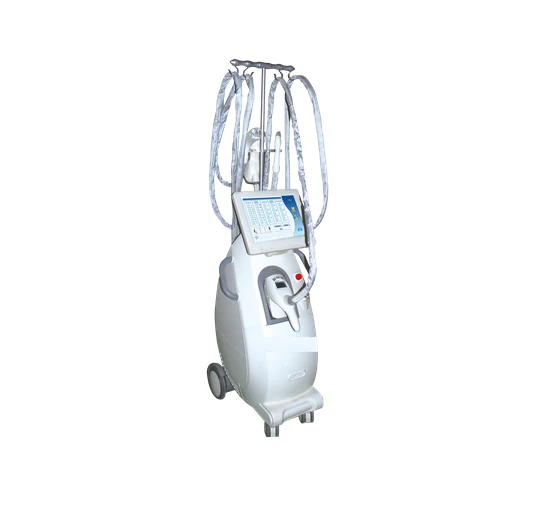
Ultrasonic Cavitation Machines
Cavitation machines buyer guide: how 40kHz ultrasonic cavitation fits a body-contouring menu, what to compare across configurations, and which claims to verify on the exact quotation.
40 kHz ultrasound↘05
RF Skin Tightening
A non-laser energy family for buyers comparing thermal skin platforms.
Radio frequency↘Next step
Compare current configurations against the criteria in this guide.
Tell us your priority services, market, client mix and business type. Ask for the exact configuration, documents, training and service terms you need.
Describe your equipment plan ↘