Procurement
A Cavitation Machine Purchase Checklist
Somewhere between the first quote and the wire transfer, a cavitation machine for sale stops being a photograph and becomes a piece of equipment standing in your room. This purchase checklist covers what has to be settled before the money moves. Skip an item and you usually find out in year two, when a handpiece dies.
Buyer guide
The twelve-point checklist
Work through these before the deposit.
1. Packing list. Request it, then confirm the handpiece count for your tier.
2. Frequencies. Confirm which ultrasound heads are included and which cost extra.
3. Output record. Ask for the per-unit test record with your serial number.
4. Safety report. Ask for the IEC 60601-1 report naming your model.
5. Conformity. Check the declaration names your model, not a brand.
6. Destination market. Confirm the classification for your market before production starts.
7. Electrics. Confirm voltage version, plug type and rated current, then measure the cable run.
8. Access. Check crated dimensions against your doorway and lift.
9. Training. Name days, language, format and recording in the contract.
10. Lead time. Separate production time from transit time, then fix a ship-by date.
11. Warranty. Split it by part, with parts lead time and freight payer named.
12. Dead on arrival. Get the remedy into the contract, not into an email.
Buyer guide
Start with the packing list, not the brochure
Ask for the packing list. Not the feature sheet, the packing list. Our device manuals show why: one archived slimming line ships different handpiece sets by tier, four heads on the entry console and six on the top one. A family name on a quotation won't tell you which arrives.
Pin the frequencies next. Where a listing advertises 30k, 40k and 80k heads, ask which are included and which carry their own price. A cavitation console in our engineering archive is rated at 60W of 40kHz ultrasound through a 72mm tip, with a separate RF handpiece fed from a 330W input. Compare the ultrasonic cavitation machine family head by head before totals.
Small items bite hardest. The accessory list in an archived slimming manual includes a holder for every head, a power cable, two air filters and two keys. Two keys, because one gets lost. Filters, because a choked console runs hot. Price a replacement set while you still have leverage.
Buyer guide
Who verified the output, and against what
Rated output is a number on a datasheet. Delivered output is a question about one serial number. Ask whether your unit is tested individually before it ships, what gets measured, and who signs the record. A factory that tests every unit answers in one sentence. Hesitation is information.
Electrical safety testing is a separate ask. IEC 60601-1 is the base standard for basic safety and essential performance of medical electrical equipment, with collateral standards covering matters such as electromagnetic disturbance and usability, plus particular standards for device types. You want the report with your model designation on it, not a certificate graphic in a slide deck.
Why be stubborn? A 2019 review in the Journal of Dermatologic Treatment worked through the FDA's 510(k) records for electromagnetic body contouring devices, then searched the MAUDE adverse event database and found 61 reports including acute skin damage, dyspigmentation, infection and scarring. Those authors noted that incomplete, unverified reporting makes the true count hard to pin down. Energy delivered into skin can injure skin.
Buyer guide
Documents that name your machine and your market
A declaration of conformity in our engineering archive names one product, one model or type, one place of manufacture, and cites separate certificate numbers for electromagnetic compatibility and electrical safety, naming the testing laboratory. Paper that names a brand rather than your configuration is not your paper.
Conformity is regional, so settle the destination market early. Inside the EU, equipment intended to reduce, remove or destroy adipose tissue sits in Section 4 of Annex XVI to Regulation (EU) 2017/745, and Implementing Regulation (EU) 2022/2347 reclassified it as class IIb, which is not a self-declaration route. Guidance from the Medical Device Coordination Group adds a point combination consoles cannot dodge: equipment that removes fat and tightens skin can fall under two groups.
An older CE mark issued under the electromagnetic compatibility and low voltage directives is not conformity under the current medical device regulation. Selling into the United States? Clearance in the FDA's 510(k) database attaches to a named device and indication, never a category. Settle label language, instructions for use in your working language, and whose name goes down as importer.
Buyer guide
Your room, and the person who will run it
Look at your socket before the console. Ask for the electrical version in writing with the rated current. One archived body platform carries a leakage protector plus a mains fuse rated 250V/10A, and ships with a three metre power lead. Three metres decides where the machine may stand.
Room conditions matter more than buyers expect. That manual specifies an installation environment of roughly 15 to 30 degrees Celsius, relative humidity no higher than 80 percent, low dust, no conductive dust or corrosive particles, no strong magnetic interference. A humid coastal summer is an engineering condition, not a footnote.
Crate size decides whether the thing reaches the room at all. A compact cavitation console in our archive lists 12kg net, 20kg gross, crated at roughly 615 by 545 by 525mm. If a cryolipolysis platform sits on the same shortlist, remember it holds one client in one room for a long quiet block.
Training is a deliverable, so give it a name. How many days? An engineer or a trainer? Which language? On site, or a video call timed to the factory clock? Recorded, so the therapist you hire next March can watch it?
Good training covers refusal, not only technique. Contraindication lists in our device manuals for vacuum and RF work exclude cardiac pacemakers or implanted defibrillators, pregnancy, active herpes, infection or damaged skin in the treatment area, and severe diabetes, hypertension, heart disease or epilepsy. Jewellery comes off before RF.
A 2025 systematic review of high-intensity focused ultrasound in Aesthetic Surgery Journal, while reporting favourable tolerability, called for standardised protocols and wider research across diverse skin types. Response varies between individuals. In richly pigmented skin, inflammatory insult carries a post-inflammatory hyperpigmentation risk, so start conservatively. Screening and referral belong to a clinician.
Buyer guide
Lead time, payment milestones and what the quotation must itemise
Lead time is two clocks, not one, and suppliers love to quote them as a single friendly number. Production lead time is how long the factory needs to build and test your configuration. Transit time is how long the crate spends moving, and it swings hard between air and sea before customs adds its own days. Ask what starts the production clock too: the deposit, the voltage decision, or sign-off on your label artwork.
Four things belong in writing before that deposit, because leverage evaporates once it clears. A named ship-by date. What progress evidence you get and when, such as photographs of the assembled unit, the serial number and the output test record. The remedy if the date slips, whether a credit, an upgraded shipping mode or a right to cancel. And how the balance payment attaches to the schedule: balance against a bill of lading behaves differently from balance against a promise.
Make the quotation itemise, or you cannot compare two suppliers at all. Separate lines for each optional frequency head, a spare handpiece and filter set, crating, freight, duty and import charges, and training. Name the Incoterm. The ICC's Incoterms rules fix where risk passes from seller to buyer and who arranges carriage and insurance, so an ex-works price and a delivered price are not the same kind of number. Our service and support terms cover the after-sale half of that timeline.
Buyer guide
Warranty, spares, and what a used machine shifts onto you
Warranty is where quotations go quiet. Split it by part, with a question against each line.
Cabinet and generator board. How many months, and is a board repaired or swapped?
Cavitation handpiece. Same term as the cabinet, a shorter one, or excluded?
RF handpiece. Asked separately, because it fails for different reasons.
Vacuum pump. Covered, or classed as a wear part?
Cables and connectors. Included, or written off as consumables?
Filters and consumables. Priced today, or priced when you are stuck?
One year on the machine can quietly mean ninety days on the part most likely to fail. Then three questions nobody asks in time. How long does a replacement part take to reach you, door to door? Who pays freight on a warranty repair, each direction? Who pays duty when it lands?
Look past the warranty period. Will this handpiece still exist in year three? Ask for part numbers, ask whether the control board is proprietary, ask what happens to spares when a model is discontinued. Dead on arrival needs its own contract clause rather than an email: repair, replacement or refund, who decides, who pays return freight.
Used equipment hands you most of these risks, which is why it is cheaper. Warranty is commonly void or non-transferable. A declaration of conformity describes an original configuration, so a unit rebuilt with a third-party handpiece has drifted from its own paperwork.
Buy used with your eyes open. Insist on the original manual, a photograph of the model plate, a demonstration of every head, and a written record of repairs. Run hours are usually unknown, so budget for a new handpiece in the first year. When a seller cannot produce documents naming the exact unit, you are buying a photograph of a machine.
Frequently asked questions
FAQWhat documents should come with a cavitation machine quotation?
Ask for a declaration of conformity naming your exact model, the electrical safety and electromagnetic compatibility test reports carrying that same designation, instructions for use in your working language with the contraindication list inside, and a packing list itemising every handpiece and accessory. Add the electrical version and plug type. Paperwork that names a brand rather than your configuration is not evidence about the machine you are actually buying.
What should I settle about lead time before paying a deposit?
Separate production time from transit time, and ask what starts the production clock: the deposit, the voltage decision, or label sign-off. Then get four things in writing. A named ship-by date. What progress evidence you receive, such as photographs, the serial number and the output test record. The remedy if the date slips. And how the balance payment attaches to a shipping milestone rather than to a verbal promise.
Is a CE mark enough to sell cavitation treatments in the EU?
No, and the distinction is worth understanding. Equipment intended to reduce, remove or destroy adipose tissue is listed in Section 4 of Annex XVI to Regulation (EU) 2017/745, and Implementing Regulation (EU) 2022/2347 reclassified it as class IIb, which is not a self-declaration route. An older mark issued under the electromagnetic compatibility and low voltage directives tells you something about electrical testing, not about conformity under the current medical device regulation.
What should a warranty clause actually specify?
Coverage per part rather than per machine, since handpieces wear first and are often covered for less time than the cabinet. Beyond that: how many days a replacement part takes to arrive door to door, who pays freight in each direction, who pays customs duty, and what happens if the unit is dead on arrival. Repair, replacement or refund should be named in the contract, not negotiated by email afterwards.
Does buying a used cavitation machine save money?
Usually on the invoice, not always overall. Warranty is commonly void or non-transferable, run hours are unknown, and the handpiece is the component that wears out. Original conformity paperwork describes an original configuration, so a rebuilt unit may no longer match its own documents. Ask for the model plate, the manual, a demonstration of every head and a written repair history, then budget for a replacement handpiece.
Evidence trail
Published research behind this guide
This guide is educational material for equipment selection. It is not medical advice, an operating protocol or a promise of clinical outcome.
Read the research
- MDCG 2023-5: Guidance on qualification and classification of Annex XVI products (European Commission, December 2023) ↗
- Commission Implementing Regulation (EU) 2022/2347 on reclassification of certain Annex XVI products (EUR-Lex) ↗
- Wang S et al., A review of the FDA's 510(k) approvals process for electromagnetic devices used in body contouring, Journal of Dermatologic Treatment 2019 ↗
- ↗
- Incoterms 2020 rules: allocation of delivery, risk and cost between seller and buyer (International Chamber of Commerce) ↗
- IEC 60601-1 overview: base, collateral and particular standards for medical electrical equipment (Intertek) ↗
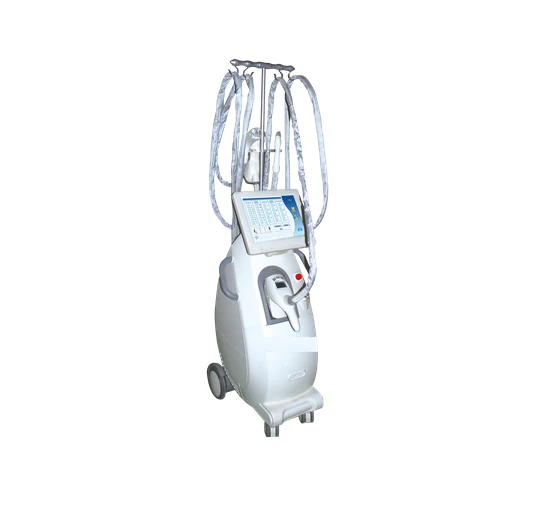
Ultrasonic Cavitation Machines
Cavitation machines buyer guide: how 40kHz ultrasonic cavitation fits a body-contouring menu, what to compare across configurations, and which claims to verify on the exact quotation.
40 kHz ultrasound↘06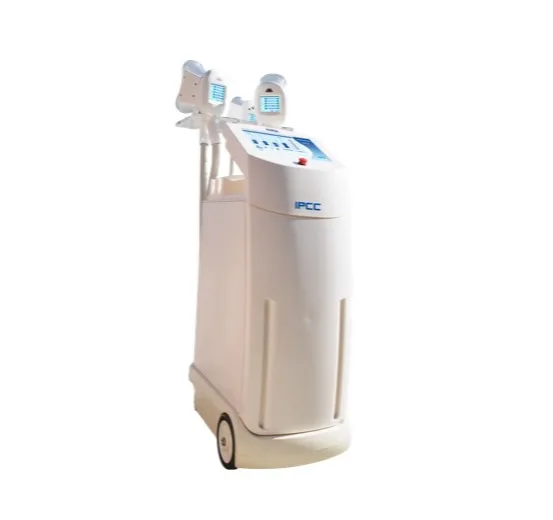
Cryolipolysis Fat Freezing Machine
Fat freezing machine buyer guide to cryolipolysis machines: a controlled-cooling equipment family for buyers planning a localized body-contouring workflow.
Controlled cooling↘Next step
Compare current configurations against the criteria in this guide.
Tell us your priority services, market, client mix and business type. Ask for the exact configuration, documents, training and service terms you need.
Describe your equipment plan ↘