Clinic operations
Cavitation Treatment Mistakes That Stall Results
Most cavitation treatment mistakes are not exotic. They are a thin smear of gel, a hand moving too fast across the abdomen, and a client who booked body contouring when what she wanted was weight loss. The machine gets blamed anyway, usually in a review.
Buyer guide
Gel runs dry mid-pass
Sound does not cross air. That is the whole rule of coupling, and it is the one your room breaks most often. Casarotto and colleagues measured four coupling media and found gel and degassed water gave the highest transmission and the lowest reflection, with acoustic impedance closest to skin. They also found that in thin layers, applied by direct contact, the differences between media were not significant. So your problem is almost never which gel you bought. It is the gel that is no longer there.
Our device manuals are blunt about the layer: spread it evenly at roughly 2 mm, add more where the skin demands it, top it up during the pass, never reuse it. They also ask for the head to be pressed properly against skin rather than skated over it. Now picture a 20 to 40 minute abdominal pass. Around minute twelve the gel at the edge of the zone has gone tacky, your therapist is still working, and the energy is going into a film of air nobody can see.
Fix it with a habit, not a lecture. Bottle within reach of the treating hand. Re-lay gel at every zone change and again halfway through a long zone. If the head drags or squeaks, you are already late. Tip size makes this harder rather than easier, worth holding in mind when you compare ultrasonic cavitation machines: our engineering archive puts the ultrasonic tip at 72 mm across on a 40 kHz handpiece. That much surface has to stay wet on a curved belly for half an hour.
Buyer guide
A pass that races, or parks
Two opposite errors of pass technique, one cause. A therapist who was never given a rhythm invents one, and it drifts. Rushed, she speeds up, so no point on the skin gets meaningful exposure and the twenty minutes on your price list becomes decoration. Distracted, she parks instead, concentrating whatever heat the platform makes and buying you a red patch and an uncomfortable client.
Good technique is dull to watch. Slow overlapping strokes inside a marked zone, head flat and in full contact, wrist loose. Mark the zones with a wax pencil at the start and give each one a share of the clock. A hand span suits a 72 mm tip. Can anyone in your room tell you how many minutes the left flank got last Tuesday? If not, neither can the client paying for a course.
Write the rhythm down. Zone size, minutes per zone, stroke direction, and the moment she stops and asks how it feels. One page is the difference between a technique and a habit.
Buyer guide
The client who came for weight loss
No amount of good technique rescues this one. She wants the scale to move. You are selling a change in shape. Nothing that happens in the room closes that gap, and by session six she is describing your clinic as a waste of money.
Say the honest number early. A 2018 review in Dermatologic Surgery, collecting the ultrasound body contouring literature, reports abdominal circumference decreases of roughly 2 to 4.6 cm. That is a tape reading, not a body weight. Mulholland and colleagues, reviewing noninvasive body contouring in Clinics in Plastic Surgery, treat candidate selection as part of each technology rather than an afterthought. Where the real goal is weight management, or where recent weight change has no explanation, that belongs with a clinician and not with your therapist.
Selection is not only about weight. A client who cannot commit to visits across five or six weeks is a poor candidate whatever her measurements say, and she may be better served by something that front-loads the appointment, which is one honest argument for a controlled cooling cryolipolysis platform sitting alongside. Our consultation guide carries the full screening script. The point here is narrower: candidate selection is a treatment step, and skipping it is an operator error like any other.
Buyer guide
Two sessions treated as a course, and aftercare said once
Two of the seven live in this section, because in most rooms they fail together. Our device manuals put one course at 10 to 12 treatments spaced 3 to 7 days apart, 20 to 40 minutes per area. A client who books two, sees little and drifts away has not tested your service. She bought a sample and drew a conclusion from it, and so, quietly, did your therapist.
Course completion is mostly a commercial repair. Book every date at the first visit rather than one at a time. Sell the course as the unit. Put a review at session five in the diary so the client has a checkpoint that is not a sales call, and so you catch a bad landmark or a wrong setting early. Room count, staffing and course length all pull on each other, which our body programme planning notes work through with the arithmetic attached.
Then there is the client's half, mentioned at the first visit and never again. Our manuals ask for more water, less fatty and high calorie food, no sauna for 24 hours, and no shower immediately after treatment. They disagree with themselves about that last window, six hours in one manual and eight in another, which tells you how much precision to claim out loud. Print it as a habit sheet rather than a promise, and hand it over every visit. Hydration and diet are the part your therapist cannot control, so she has to keep asking.
Buyer guide
The client or the area you should have handed back
Treating something you should have refused is the mistake with real consequences. Our body platform manuals carry a stop list worth pinning up: pregnancy, cardiac pacemakers and other implanted electronic devices, epilepsy, severe diabetes, hypertension and heart disease, kidney stones, recent fever or infection, radiation therapy, metal implants or recent surgery in the area, and any treatment area with damaged skin, active herpes or a lesion of unknown character.
Geography matters as much as history. The same manuals keep the handpiece off eyes, throat, the inside of the mouth, ears, mucosal surfaces, nipples and genitals. Jewellery comes off first. An unidentified lump is a referral, not a target, and your therapist needs explicit written permission to say so without feeling she has lost a sale.
One reassurance you can lean on: that 2018 review states ultrasound is safe across skin types with minimal concern for post-inflammatory hyperpigmentation. Do not let that sentence travel to the rest of your menu. Add radiofrequency heating or a light source into the same appointment and the pigment conversation comes back, especially on deeper phototypes. Our engineering archive documents post-inflammatory pigmentation as a normal sequel to inflammation, and heat supplies inflammation.
Buyer guide
No baseline, so nothing can be proved
The quietest mistake of the seven. A room treats ten clients through a full course and cannot say whether the service works, because nobody took a baseline. Every conversation about results then collapses into opinion, and opinion loses to a mirror on a bad morning.
Baseline before the first pass. Tape readings at landmarks any therapist can find again, photographs from fixed positions, and the client's goal written in her own words. Repeat at session five, at the end of the course, and once more a month or two later. Our measurement guide covers landmarks and camera setup, so this one insists only on timing: a baseline taken after treatment started is not a baseline.
It protects your therapist too. A modest change you can show turns a disappointed client into a conversation about expectations rather than a refund request.
Buyer guide
The seven mistakes on one page
Here is the whole thing as a checklist. Seven items, one line each, in the same order as the sections above. Print it, pin it by the trolley, and add a signature line to the session record.
1. Gel runs dry mid-pass. Re-lay an even layer of roughly 2 mm at every zone change and again halfway through a long zone, add more where the skin demands it, and never reuse it.
2. A pass that races, or parks. Mark the zones with a wax pencil, give each zone a fixed share of the session clock, and keep the strokes slow, overlapping and flat to the skin.
3. The client who came for weight loss. Screen the goal before you take a deposit, quote change in shape rather than change on the scale, and hand weight management or unexplained weight change to a clinician.
4. Two sessions treated as a course. Book all 10 to 12 dates at the first visit, 3 to 7 days apart, and diarise a review at session five.
5. Aftercare said once. Hand over a printed habit sheet at every visit: more water, less fatty and high calorie food, no sauna for 24 hours, no shower straight after.
6. The client or the area you should have handed back. Re-run the contraindication screen at every visit, keep the handpiece off the excluded sites, remove jewellery, and refer anything undiagnosed.
7. No baseline, so nothing can be proved. Tape, photograph and write down the goal before the first pass, then repeat at session five, at the end and a month or two later.
None of this is hard. It is unowned, which is why it keeps happening in rooms that paid real money for good equipment. Audit ten session records a month yourself, and ask your therapists which of the seven they break most often. You will get an honest answer, and it will usually be the gel.
Frequently asked questions
FAQOur therapist uses very little gel because it is tidier. Does that matter?
Yes, and it costs you more than any setting on the machine. Gel is the coupling medium, and air at the interface reflects rather than transmits. Our device manuals call for an even layer of about 2 mm, more wherever the skin demands it, topped up during the pass and never reused. Tidiness is not a clinical value here. Keep the bottle within reach of the treating hand.
A client stopped after two sessions and asked for a refund. What went wrong?
Probably the sale rather than the treatment. Our device manuals describe 10 to 12 sessions spaced 3 to 7 days apart, so two visits is a sample, not a trial. Two fixes work together: book the whole course at the first visit, and anchor expectations to a tape reading taken at baseline and again at session five. That gives you something concrete to discuss instead of opinion.
How fast should the handpiece move across the skin?
Slow, continuous and overlapping, head flat and in full contact. Speed is the wrong variable to manage on its own. Manage zones instead: mark them on the skin, give each a fixed share of the session clock, hold the rhythm steady inside each one. Parking in one spot is the opposite error and concentrates heat nobody wants. If a therapist cannot tell you the minutes per zone, the pass is not controlled.
Which clients should we hand back rather than treat?
Our device manuals list pregnancy, cardiac pacemakers and other implanted electronic devices, epilepsy, severe diabetes, hypertension and heart disease, kidney stones, recent infection or fever, and any area with broken skin, active herpes or an unidentified lesion. Metal implants and recent surgery in the area are on the list too. Anything undiagnosed goes to a clinician. Give your therapists written permission to decline a booking.
Does aftercare really change the result, or is that just something we say?
Treat it as the half of the course your therapist does not control. Our manuals ask clients to drink more water, cut fatty and high calorie food, skip the sauna for 24 hours and delay showering right after treatment. The manuals give six hours in one place and eight in another, so claim the habit rather than a precise number. Repeat it at every visit, printed, not once at the consultation.
Evidence trail
Published research behind this guide
This guide is educational material for equipment selection. It is not medical advice, an operating protocol or a promise of clinical outcome.
Read the research
- Juhasz M, Korta D, Mesinkovska NA. A Review of the Use of Ultrasound for Skin Tightening, Body Contouring, and Cellulite Reduction in Dermatology. Dermatologic Surgery 2018;44(7):949-963 (ultrasound lipolysis results in a 2 to 4.6 cm decrease in abdominal circumference; ultrasound is safe and can be used in all skin types with minimal concern for postinflammatory hyperpigmentation). ↗
- Casarotto RA, Adamowski JC, Fallopa F, Bacanelli F. Coupling agents in therapeutic ultrasound: acoustic and thermal behavior. Archives of Physical Medicine and Rehabilitation 2004;85(1):162-165 (gel and degassed water showed the highest transmission coefficient and the lowest reflection, with acoustic impedance closest to skin; with thin layers applied by direct contact the differences in attenuation between the tested media were not significant). ↗
- Mulholland RS, Paul MD, Chalfoun C. Noninvasive body contouring with radiofrequency, ultrasound, cryolipolysis, and low-level laser therapy. Clinics in Plastic Surgery 2011;38(3):503-520 (review of the noninvasive body contouring modalities covering patient selection and clinical application of each modality alongside the basic science and the economics of offering noninvasive lipolysis in office). ↗
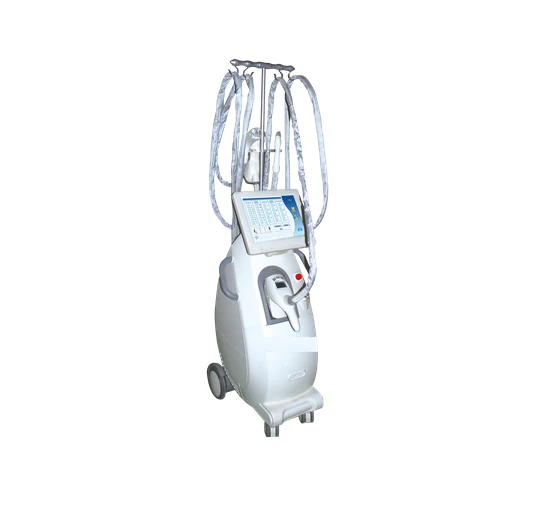
Ultrasonic Cavitation Machines
Cavitation machines buyer guide: how 40kHz ultrasonic cavitation fits a body-contouring menu, what to compare across configurations, and which claims to verify on the exact quotation.
40 kHz ultrasound↘05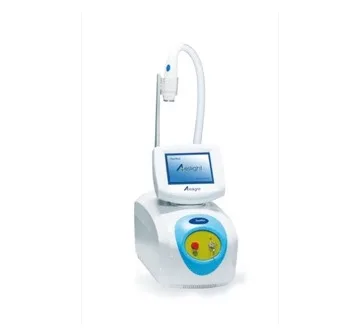
RF Skin Tightening
A non-laser energy family for buyers comparing thermal skin platforms.
Radio frequency↘Next step
Compare current configurations against the criteria in this guide.
Tell us your priority services, market, client mix and business type. Ask for the exact configuration, documents, training and service terms you need.
Describe your equipment plan ↘