Technology comparison
Cavitation or Vacuum Therapy: Two Different Jobs
Cavitation vs vacuum therapy is one of the few equipment questions where the honest answer is that you are comparing a drill with a broom. One aims mechanical energy at the fat layer. The other lifts and moves tissue, which is genuinely useful, and which is not the same job at all.
Buyer guide
Why the two turn up on the same quotation
Ask ten suppliers for a body machine and six will send back a console carrying a cavitation tip, an RF handpiece and a suction cup on one trolley. The quotation reads like a restaurant menu. It is easy to assume the items are alternatives priced against each other, and that your job is to pick one. That is not what is happening. A console with six sockets sells better than a console with two, and the bundle exists mostly for that reason.
Here is the buyer's version of the difference. Cavitation is a fat-layer service, sold as a course, measured with a tape, judged on centimetres and photographs. Vacuum therapy is a tissue-handling service, sold by the session, judged on how a client feels walking out and how the skin reads for a day or two afterwards. Different promise. Different price point. Different repeat pattern. Same trolley.
If your business plan genuinely needs both, buy both on purpose. Do not let a bundle make that decision for you.
Buyer guide
What cavitation is actually aimed at
Low-frequency ultrasonic cavitation targets the subcutaneous fat compartment. Our device manuals for the archive cavitation module describe a 40 kHz handpiece with a 72 mm tip, working through alternating pressure cycles that stress the fat cell membrane until it fails. It is a contact treatment, coupled with gel, moved continuously by the operator across a marked area. The energy is mechanical. Nothing about it is selective in the way a laser is selective, so operator technique carries more weight here than in most light-based work. See our category page on ultrasonic cavitation machines for what to compare across configurations.
So what can it honestly claim? Modest circumference change over a course, in clients who are already close to a normal weight. Barel, Amir and Ad-El published a trial in Plastic and Aesthetic Research in 2016 using a focused ultrasound device on healthy women aged 30 to 45 with a BMI of 26 or under and at least 1.5 cm of abdominal subcutaneous fat. After three sessions the higher-power group averaged 2.56 cm of abdominal circumference reduction and the lower-power group 1.49 cm, while body weight stayed within 1.6 percent of baseline throughout. Read the caveats with the numbers. That was a focused ultrasound platform rather than a non-focused 40 kHz handpiece, and the authors themselves wrote that the factors behind the contouring effect are not clear and may include skin tightening or an inflammatory response.
The honest boundary matters more than the headline. Cavitation is not weight loss, it does not reach visceral fat behind the abdominal wall, and it will not carry a client two dress sizes. A person whose real goal is significant weight reduction needs a clinician and a metabolic plan, not a body machine. Say that in the consultation and you will refund fewer courses.
Buyer guide
What vacuum therapy is actually aimed at
Negative pressure draws a fold of skin and subcutaneous tissue up into a cup, or between a pair of rollers. Our device manuals for the archive slimming platforms rate that suction at up to 8 kg of negative pressure and state its purpose without decoration: pull the tissue into the gap between the bipolar RF tips so RF energy can reach the fat layer. On those platforms the vacuum was the delivery mechanism. It was never the treatment.
Used on its own, a vacuum therapy machine is a mechanical massage device. Our archive handpiece documentation is candid about it, describing the vacuum-plus-roller heads as massage in place of massage by hand. The physiology behind that is real and it has been measured. Watson and colleagues, writing in the Aesthetic Surgery Journal in 1999, used lymphoscintigraphy to record roughly a threefold rise in lymphatic flow in a treated limb compared with the untreated side, persisting at least three hours, alongside a fourfold rise in cutaneous blood flow that peaked around ten minutes and lasted over six hours. That is a solid basis for selling lymphatic movement, comfort and post-session appearance.
Now the part that decides your marketing copy. Adcock and co-authors ran a porcine study in the same journal the year before, giving 4, 10 or 20 treatment sessions. They found changes in collagen architecture in the deeper subdermal layers, and they also found no reduction in subcutaneous tissue thickness, no evidence of fatty tissue mobilisation, and no fat breakdown products in blood or urine. Vacuum moves tissue and fluid. It does not empty a fat compartment. Any brochure that blurs those two things is telling you something about the supplier.
Buyer guide
A suction handpiece is not a dedicated vacuum system
This is where buyers get caught. On a combined platform, the vacuum is specified to hold tissue against an RF tip for a few seconds at a time. The pump is small, the duty cycle is short, and the cup geometry follows whatever the RF electrode needed. A dedicated system is built for a different shift: continuous or programmed pulsing suction for thirty to forty-five minutes, cup sets sized for buttocks and thighs rather than a jawline, and a pump rated to run that long without heat-soaking.
Ask a short list of questions and the difference surfaces fast. What is the negative pressure range, and is it continuous, pulsed or programmable? What continuous duty cycle is the pump rated for? How many cups, in which sizes, and are they included or quoted separately? Is the pump shared with other handpieces on the same console, so that only one can run at a time? What does a replacement cup, gasket and filter cost, and how are they cleaned between clients? If the reply to the duty cycle question is a pause, you already have your answer.
Suction also leaves evidence on the skin. Bruising and petechiae are ordinary consequences of aggressive settings, and in deeper skin phototypes a bruise can be followed by post-inflammatory hyperpigmentation exactly where the cup sat. Clients on anticoagulants, with fragile skin, or recently operated on need a clinician's judgement rather than a therapist's confidence. Our archive manuals list contraindications for vacuum massage that a manufacturer's brochure often omits: cardiac pacemakers or internal defibrillators, pregnancy, active infection, broken skin, herpes or malignant lesions in the area, severe diabetes, hypertension, heart disease and epilepsy. Screening against that list is clinical work, and it belongs to a qualified professional working under local rules.
Buyer guide
The buttock-lift niche, and what we do not build
The fastest-growing use of a suction handpiece is the buttock-lift service, and it deserves plain language. Repeated cupping over the gluteal area produces swelling, fluid shift and a temporary lift in how the skin sits. It photographs well. It settles. Nobody has shown that repeated suction adds tissue volume, and the porcine work above found no change in subcutaneous thickness at all after twenty sessions. Sold as an appearance service for an evening or a shoot, it is defensible. Sold as an alternative to surgery, it is not, and a dissatisfied client three months in will make that argument for you.
Now our own position, because you should hear it before the quotation rather than after. We build cavitation and controlled-cooling body platforms. We do not sell a dedicated vacuum butt-lift system, and we are not going to dress a bundled suction handpiece up as one. If that service is the centre of your business plan, buy from a manufacturer who specialises in it and who can show you a pump duty cycle and a cup range that fit the job. Where we can genuinely help is the measurable-change side of a body menu, which is cavitation and our cryolipolysis body platform.
Buyer guide
How they sequence across a course
Inside a single visit the common order is cavitation first over the marked area, then a slower vacuum or manual pass afterwards. The reasoning is that a cavitation course depends on the body processing and clearing what was released, and vacuum work raises lymphatic and cutaneous flow for a few hours. Be careful how you say that out loud. Sequencing convention is not proof that the pair outperforms either energy alone, and no published trial we can point to establishes an additive number. Comfort and client experience are honest reasons on their own.
Across a course, the two fill different weeks. Cavitation sessions sit on a spaced schedule with measurement and photographs at fixed points. Vacuum sessions are cheaper, shorter, easier to staff, and they keep a client in the diary between the appointments that actually move the tape. That is a scheduling argument and a cash-flow argument, and it is a better reason to own both machines than any physiology claim. Our body programme planning guide works through the room, staffing and menu side of that.
Decide on the primary goal and the purchase resolves itself. If you are selling measurable circumference change, buy the cavitation platform and spend the rest of the budget on measurement discipline and consultation training. If you are selling recovery, comfort and lymphatic movement at volume, buy a dedicated vacuum system from someone who builds them. If you are selling both, budget for two machines rather than one console with six sockets and one small pump.
Frequently asked questions
FAQIs vacuum therapy a fat-reduction treatment?
No, and the evidence is fairly blunt about it. A porcine study published in the Aesthetic Surgery Journal in 1998 gave up to twenty vacuum-roller sessions and found no reduction in subcutaneous tissue thickness and no sign of fat being mobilised into blood or urine. What it does deliver is measurable short-term increases in lymphatic and cutaneous flow. Sell it as massage, circulation and appearance, and keep fat-layer claims with the cavitation service.
Can I run lymphatic drainage sessions with the vacuum handpiece on my cavitation console?
For short passes over a small area, usually yes. For a paid forty-minute lymphatic circuit, probably not. The vacuum on a combined platform exists to hold tissue against an RF tip for seconds at a time, so the pump duty cycle and the cup range are built for that, not for a full-body session. Ask the supplier for the rated continuous run time before you put the service on your price list.
Which should a new body clinic buy first?
Start from what you intend to charge for. If the offer is measurable circumference change over a course, the cavitation platform comes first, because that is where your before-and-after evidence lives. If the offer is recovery, comfort and throughput, a dedicated vacuum system earns its space faster and needs less consultation time. Buying a bundle to hedge usually leaves you with a compromised version of both.
Does Pmise sell a vacuum butt-lift machine?
We do not. We build ultrasonic cavitation and controlled-cooling body platforms, and some of our consoles carry a suction handpiece as part of an RF workflow. That handpiece is not a substitute for a purpose-built vacuum system, and we will not quote it as one. If a dedicated buttock-lift service is your core business, buy from a manufacturer who specialises in that category.
Is suction safe on darker skin tones?
Suction itself is not wavelength-dependent, so it carries none of the pigment-absorption risk of a laser. The risk is mechanical. Cupping can bruise, and in deeper phototypes post-inflammatory hyperpigmentation can follow a bruise and outlast it by months. Work at conservative pressure, keep the cup moving, and test a small area first. Anyone on anticoagulants or with fragile skin needs clinical screening before a course begins.
Evidence trail
Published research behind this guide
This guide is educational material for equipment selection. It is not medical advice, an operating protocol or a promise of clinical outcome.
Read the research
- Watson J et al., Physiological Effects of Endermologie: A Preliminary Report, Aesthetic Surgery Journal 1999;19(1):27-33 ↗
- Adcock D et al., Analysis of the Cutaneous and Systemic Effects of Endermologie in the Porcine Model, Aesthetic Surgery Journal 1998;18(6):414-420 ↗
- Barel E, Amir A, Ad-El D, Non-invasive focused ultrasound for abdominal circumference reduction: does it really work? Plastic and Aesthetic Research 2016;3:368-374 ↗
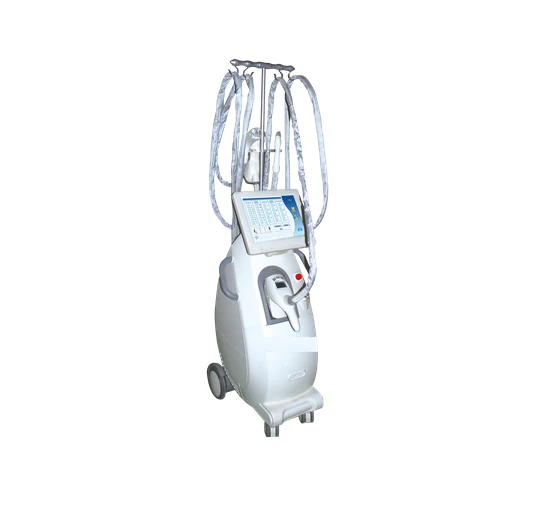
Ultrasonic Cavitation Machines
Cavitation machines buyer guide: how 40kHz ultrasonic cavitation fits a body-contouring menu, what to compare across configurations, and which claims to verify on the exact quotation.
40 kHz ultrasound↘06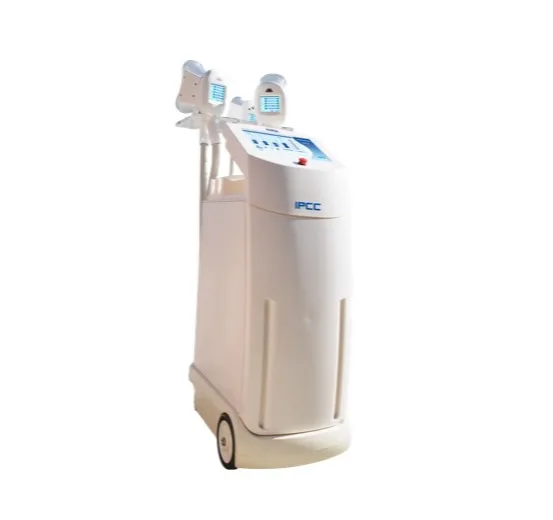
Cryolipolysis Fat Freezing Machine
Fat freezing machine buyer guide to cryolipolysis machines: a controlled-cooling equipment family for buyers planning a localized body-contouring workflow.
Controlled cooling↘Next step
Compare current configurations against the criteria in this guide.
Tell us your priority services, market, client mix and business type. Ask for the exact configuration, documents, training and service terms you need.
Describe your equipment plan ↘