Technology explainer
Cellulite Reduction Machines: What the Evidence Supports
Almost every body platform quotation carries a cellulite claim somewhere on it. Before you sign one, be clear about what a cellulite reduction machine is working against: not a fat layer, but fibrous bands, fat lobules and skin that has thinned over them. That distinction decides whether your client is pleased at week eight or asking for her money back.
Buyer guide
Cellulite is a structure, not a surplus
Here is the sentence most brochures avoid. Cellulite is not fat. Slim clients get it, athletes get it, and losing eight kilos often changes nothing about the dimples on the back of a thigh. Luebberding and colleagues, in a 2015 systematic review in the American Journal of Clinical Dermatology, describe it as a multifactorial condition present in 80 to 90 percent of post-pubertal women. You are treating a normal tissue arrangement that some clients dislike, not a defect.
The arrangement is the whole story. Our engineering archive's skin science training manual sets out the layers plainly: dermis roughly 0.5 to 4 mm thick with collagen making up about 80 percent of its fibre content, and beneath it a subcutaneous layer of loose connective tissue holding fat lobules. Bass and Kaminer, reviewing the pathophysiology in Dermatologic Surgery in 2020, concluded that the poor durability of treatments aimed at dermis or fat suggests neither is the primary cause, and that compelling clinical evidence points to the fibrous septae playing a central role. Lobules push up. Bands tether down. Skin dimpling is the tension between the two.
Which explains the disappointment. A machine that empties fat cells answers a question nobody asked; the tether stays where it was. That does not make ultrasonic cavitation machines useless on a body menu. It means the cellulite result is a side effect, not the headline.
Buyer guide
What each energy plausibly does to the appearance
Low-frequency ultrasound goes after the fat compartment. Our device manuals describe archive cavitation handpieces running at 40 kHz through a 72 mm tip at 60 W, with alternating pressure cycles stressing the fat cell membrane. Take volume out of a lobule and the bulge between the bands reads flatter. The band is untouched, so expect softened contrast rather than a released dimple.
Radiofrequency works on the layer above. Archive slimming platforms in our manuals pair 2.6 MHz RF, heating tissue at roughly 5 to 15 mm depth, with 700 to 2000 nm infrared reaching about 5 mm and vacuum of up to 8 kg drawing tissue into the gap between the bipolar tips. Warm the dermis, remodel some collagen, and shallow depressions look less defined. The 2025 systematic review by Lim and colleagues in Aesthetic Plastic Surgery reported a significant thigh circumference reduction of about 2 cm from radiofrequency. Circumference, though. Not dimple count, and clinics conflate the two constantly. Our RF skin tightening notes go deeper on depth.
Rollers and suction move fluid and lift tissue. The American Academy of Dermatology is blunt about durability here: with massage-based treatment, cellulite tends to return within a month of stopping, and it calls the radiofrequency result short lived. Acoustic wave therapy is the interesting outlier. That 2015 review found no clear evidence of good efficacy in any treatment it evaluated, and saw some evidence of potential benefit in only two, acoustic wave therapy and a minimally invasive 1440 nm laser. A low bar cleared, not a proof. Most combination body trolleys carry no true shockwave applicator anyway, whatever the tapping handpiece in the demo suggests.
Buyer guide
Temporary appearance change versus structural change
This is where clinics fool themselves. Heat, suction and massage leave a thigh flushed and slightly swollen. Shadows fill in, and the skin genuinely looks smoother walking out of the room. It's also gone by dinner. The Academy notes some salon treatments hold for roughly 12 to 18 hours.
A photograph taken at the end of a session is a photograph of swelling. Structural change would mean something happened to the septae, and the evidence for that points at mechanical, surgical or enzymatic approaches that physically interrupt the band, not at a handpiece gliding over gel.
Say it out loud in the consultation. This course changes how your skin looks, not how it is built. Clients handle that sentence far better than a surprise at week ten.
Buyer guide
Results are graded, and your scale should exist before the first session
Cellulite outcomes are not gone or not gone. Hexsel, Dal'forno and Hexsel validated a photonumeric severity scale in the Journal of the European Academy of Dermatology and Venereology in 2009, built from standardised photographs of 55 patients. It scores five features, each from 0 to 3: number of depressions, their depth, evident raised lesions, flaccidity, and grade. The total sorts into mild, moderate or severe.
Use something like it. A client who moves from severe to moderate has had a real result, and if you never fixed the starting grade together she will experience that change as failure. Flaccidity gets its own score, too. Laxity and dimpling are separate complaints living on the same thigh.
Grade at consultation. Grade again at session five. Grade at the end. Three data points beat a hundred reassurances.
Buyer guide
Photography protocol matters more here than anywhere else
Dimples are shadows. Let that govern your camera policy: a lamp moved thirty centimetres will manufacture or erase a result with nothing happening to the client. Raking side light carves depressions deeper. Flat frontal flash erases them.
Our archive RF body protocol sheet puts photography and cellulite classification into the workflow before any parameter gets chosen, and works the treated area as a 6 by 5 cm grid. The rest of that sheet is equally specific: a therapeutic temperature around 39 degrees Celsius, three passes of 20 to 30 seconds holding 41 to 43 degrees in the grid, an epidermal endpoint below 45 degrees, four to six sessions about 15 days apart. Copy the discipline even if your parameters differ. Fixed grid, fixed camera position, fixed lamp, same posture with muscles relaxed, same time of day, never straight after treatment.
When a supplier shows clinical images, ask what the lighting setup was. If nobody can tell you, you're looking at photography rather than outcomes.
Buyer guide
The honest ceiling, and how to sell without building a refund
The evidence base is thinner than the category's confidence. Luebberding's team analysed 67 articles and found only 19 that were randomised and placebo-controlled, then concluded that no clear evidence of good efficacy could be identified in any treatment they evaluated, with some evidence of potential benefit in only two, acoustic wave therapy and a minimally invasive 1440 nm laser. A decade later, Lim and colleagues screened 753 studies, kept 24 randomised controlled trials covering 2084 patients, and rated that body of work moderate quality on GRADE, with shock wave therapy, radiofrequency and subcutaneous injectables the modalities showing promise. Better. Still not proof.
Name the limits in writing. No machine on your floor removes cellulite permanently, treats obesity, or removes genuine skin excess, which is a surgical conversation belonging with a qualified clinician. Results are graded rather than complete, they need maintenance visits to hold, and they vary so widely that a proportion of clients will see nothing you can photograph. Put that last clause in the consent form and your worst month gets easier.
Safety is straightforward if you respect the contraindication list our device manuals carry: pregnancy, cardiac pacemakers or implanted defibrillators, epilepsy, serious heart disease or hypertension, severe diabetes, active infection, inflammation or broken skin in the field, serious coagulation disorders, vascular surgery in the area within the past two months, and no metal jewellery on the client. Vacuum work bruises, and in higher Fitzpatrick phototypes inflammation and injury carry a greater risk of post-inflammatory hyperpigmentation, so drop the suction and go slower on darker skin. New, painful or rapidly changing dimpling, and any dimpling on the breast, is a referral rather than a booking.
Buyer guide
Before you sign: eight things to get in writing
Most cellulite disputes start at the quotation, not the treatment couch. Send these to the supplier and make the answers part of the contract. If a line comes back vague, that is your answer.
1. List every applicator included at this price, by name, and the body indication each is for. 2. Confirm whether any included handpiece is a true acoustic or shockwave applicator, with make and mechanism, because a tapping massage head is not the same thing. 3. Send a spec sheet per handpiece: ultrasound frequency and output power, tip diameter, RF frequency and depth, infrared wavelength range, maximum vacuum force. 4. For every clinical image in your marketing, state the lighting setup, camera distance, and the interval between last treatment and photograph. 5. Send the full contraindication list and the epidermal temperature endpoint in writing, plus how it is measured. 6. State the course length your own protocol assumes per area, in sessions and in minutes, and the interval between them, so we can price room time before we buy. 7. Confirm training: hours, on-site or remote, and what certificate the operator holds at the end. 8. Confirm warranty term and cover, consumable and applicator replacement cost and expected life, lead time on a failed handpiece, and the compliance documentation for our market.
Then do one thing. Send us the quotation you are weighing up, or ask us for the applicator spec sheet on any platform we build, and we'll mark the lines that won't hold in a consultation room. Still deciding where a cellulite course sits inside a wider menu? Start with our body programme planning notes.
Frequently asked questions
FAQCan a cellulite treatment machine remove cellulite permanently?
No, and a supplier telling you otherwise is handing you a refund request. Non-invasive energy devices change how cellulite looks by acting on fat volume, dermal thickness or fluid, none of which is the fibrous septae now thought central to the condition. Improvement is graded and maintenance dependent, so agree the maintenance schedule at the point of sale.
Which energy has the best evidence for cellulite?
Acoustic or shock wave therapy, though read that carefully. The 2015 review found no clear evidence of good efficacy in any treatment it evaluated, and saw some evidence of potential benefit in only two, acoustic wave therapy and a minimally invasive 1440 nm laser. The 2025 review put shock wave therapy, radiofrequency and injectables among the promising ones, on moderate quality evidence. Cavitation targets fat, so treat any cellulite benefit as secondary.
How many sessions should we schedule, and how far apart?
It depends on the modality. Archive radiofrequency body protocols in our manuals run four to six sessions at roughly 15 day intervals. Combined slimming courses on those platforms are structured as 10 to 12 treatments of about 20 minutes per area, twice weekly for the first two weeks and weekly after that. Ask any supplier for their own figure in writing, book the whole course up front, and price the room time honestly.
A client says her cellulite got worse after losing weight. Is that possible?
It's a common report and it fits the structure. Cellulite is not simply excess fat, so weight loss shrinks the lobules while leaving the tethering bands and often leaving thinner, laxer skin over them. The contrast can read as more visible dimpling rather than less. Grade her at consultation, discuss laxity as a separate issue, and avoid promising that further volume reduction will smooth the surface.
Evidence trail
Published research behind this guide
This guide is educational material for equipment selection. It is not medical advice, an operating protocol or a promise of clinical outcome.
Read the research
- Bass LS, Kaminer MS. Insights Into the Pathophysiology of Cellulite: A Review. Dermatologic Surgery, 2020 ↗
- Luebberding S, Krueger N, Sadick NS. Cellulite: an evidence-based review. American Journal of Clinical Dermatology, 2015 ↗
- Hexsel DM, Dal'forno T, Hexsel CL. A validated photonumeric cellulite severity scale. JEADV, 2009 ↗
- Lim SK et al. Comparative Analysis of Cellulite Treatment Modalities: A Systematic Review. Aesthetic Plastic Surgery, 2025 ↗
- American Academy of Dermatology. Cellulite treatments: what really works? ↗
- StatPearls (NCBI Bookshelf). Laser Fitzpatrick Skin Type Recommendations ↗
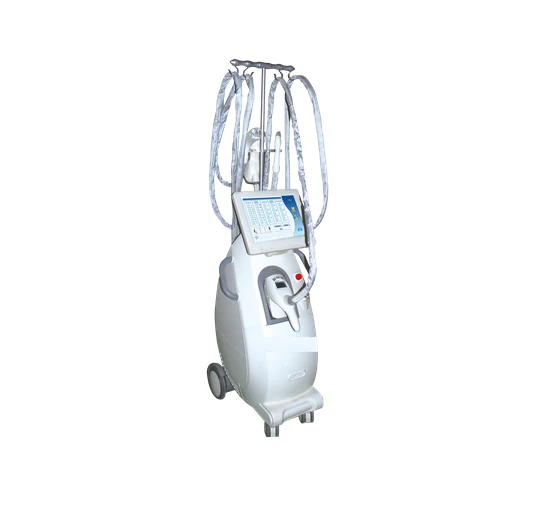
Ultrasonic Cavitation Machines
Cavitation machines buyer guide: how 40kHz ultrasonic cavitation fits a body-contouring menu, what to compare across configurations, and which claims to verify on the exact quotation.
40 kHz ultrasound↘05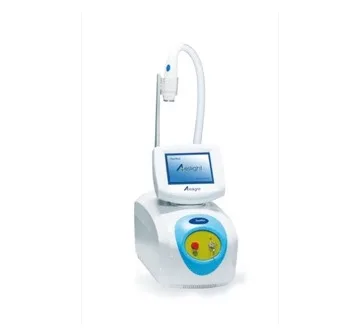
RF Skin Tightening
A non-laser energy family for buyers comparing thermal skin platforms.
Radio frequency↘Next step
Compare current configurations against the criteria in this guide.
Tell us your priority services, market, client mix and business type. Ask for the exact configuration, documents, training and service terms you need.
Describe your equipment plan ↘