Technology comparison
Cryotherapy or Cryolipolysis: Two Cold Machines, Two Different Jobs
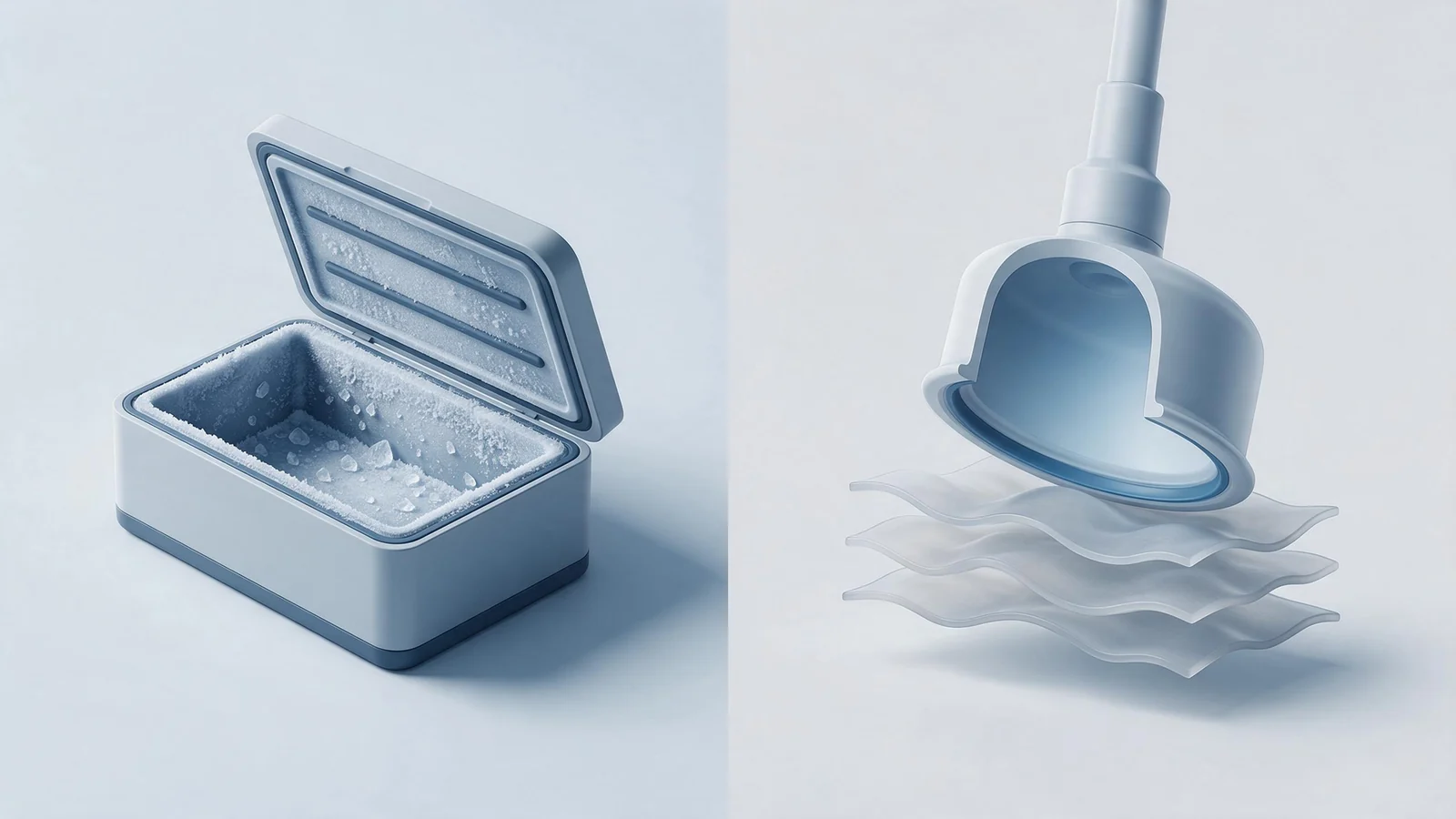
It's not fat freezing. A cryotherapy machine is a wellness chamber that blasts cold air, and that sounds close enough that buyers mix them up every week. The other is a medical device. It selectively kills fat cells, so if you're shopping for body contouring, you'll need to know the difference before you spend a cent.
Buyer guide
Two machines, one prefix
Cryotherapy means cold therapy. That's the only thing whole body cryotherapy and cryolipolysis share. A cryotherapy machine exposes skin to extreme cold for a few minutes. It does not remove fat. A cryolipolysis machine uses controlled cooling to destroy adipocytes under the skin. It is a fat reduction device. The FDA cleared cryolipolysis for love handles in 2010, then abdomen in 2012 and thighs in 2014. [1]
Whole body cryotherapy is a chamber. You stand in it, sometimes in underwear, socks, and gloves, while liquid nitrogen or refrigerated air drops the temperature around you to minus 110°C or lower. Sessions last two to four minutes. The claimed benefits are muscle recovery, reduced soreness, and a general wellness boost. No selective fat loss. No contouring.
Cryolipolysis works differently. A vacuum applicator pulls a fold of fat between two cooling plates. The machine holds that fold at a precise temperature for 35 to 60 minutes. Fat cells crystallize at a higher temperature than skin, so the cooling is tuned to kill adipocytes while sparing the dermis and epidermis. Over the following weeks, your body clears the dead cells through the lymphatic system.
So which one belongs in a body-contouring room? That's the question this guide answers.
Buyer guide
How cryolipolysis actually works
Cryolipolysis means controlled cooling of subcutaneous fat to kill adipocytes selectively, leaving the skin unharmed. That definition matters. Adipocytes die at around 4°C to -10°C, while skin cells survive that same temperature range. You get gradual fat layer reduction with no physical damage to surrounding tissue, proven clinically. [2]
The protocol's straightforward. Mark the treatment area, apply a gel pad to protect the skin, then the applicator's vacuum suction draws tissue in and cooling begins. The machine holds the target temperature for 35 to 60 minutes. Massage the area for two minutes afterwards to break up crystallized cells. That step isn't optional; it improves outcomes.
Results aren't immediate. Your patient's body takes four to twelve weeks to clear dead adipocytes. Most need two or three sessions per area for visible contouring. Patient satisfaction after cryolipolysis is high, according to clinical assessments. [2]
But you need to know the risk profile. I'll get to that in a minute.
Buyer guide
What a cryotherapy machine does instead
A cryotherapy machine is a cold exposure device. It doesn't selectively target fat. The two main types are whole body cryotherapy (WBC) chambers and localized cryotherapy units that blow cold air on a joint or muscle group. WBC temperatures range from -110°C to -160°C, but the session is so short that core temperature barely drops. The skin surface gets a cold shock, triggering vasoconstriction and then vasodilation when you step out. That's the proposed mechanism for reduced muscle soreness. There's no fat loss claim here. None. If you buy a cryotherapy machine and market it for body contouring, you're misleading your clients. It's a wellness and recovery tool. Some athletes swear by it. It's not a substitute for cryolipolysis. One thing to watch: whole body cryotherapy isn't FDA cleared for any medical indication. It's a wellness device. Cryolipolysis, by contrast, has specific FDA clearances for fat reduction in certain areas. That regulatory difference matters for your practice and your insurance.
Buyer guide
Safety and the rare adverse event you must screen for
Cryolipolysis is generally safe. But it carries one rare adverse event every buyer must know about: paradoxical adipose hyperplasia (PAH). PAH is a painless, firm, well-defined enlargement of adipose tissue localized to the treated area, appearing several weeks to months after cryolipolysis. [3]
PAH isn't fat loss. It's fat gain in the treated spot. The incidence has been reported between 0.05% and 0.39% per treatment cycle, but some estimates suggest it may occur in up to 2% of treatments or 1 in 50 cases. [4] [3]
Why does it happen? No one knows for sure. It seems more common in men and in the abdominal area. The standard treatment is surgical: liposuction or direct excision. Recent reports suggest noninvasive options like deoxycholic acid may help, but surgery remains the standard. [3]
So you must screen patients. Ask about any history of cold-induced tissue reactions. Tell them PAH exists and that if they notice a firm bulge developing weeks later, they need to come back immediately. Document that conversation. A clinic that ignores PAH risk is asking for a lawsuit.
Cryotherapy machines have their own safety layer. The main risks are cold burns if the skin is not protected, and contraindications like pregnancy, severe hypertension, or Raynaud's disease. Clients must remove all metal jewelry. The machine should have a door that can be opened from inside and a session timer that automatically shuts off. Buy a chamber with oxygen monitoring if it uses liquid nitrogen. These are standard features now.
Buyer guide
What to demand in a cryolipolysis applicator set
You're outfitting a body-contouring room, so you're not buying a cryotherapy machine. You're buying a cryolipolysis platform, and the applicator set decides your revenue. Here's what to demand. Multiple cup sizes. A large applicator for the abdomen, a medium one for love handles, a small one for the chin or knees. If the machine comes with only one cup, you'll turn away clients. Cooling precision. The machine must hold the target temperature within a tight range for the full session. Fluctuating temperature means uneven results and higher risk. Vacuum strength control. Too much suction causes bruising. Too little means poor tissue contact and less fat destruction. Look for adjustable vacuum. A built-in massage function or a separate massage tool. Post-treatment massage improves efficacy. Some platforms include vibration or massage heads. Safety interlocks. If the cup loses vacuum mid-session, the machine should stop cooling immediately. This prevents freeze burns. Serviceability. Ask about warranty, spare parts, and whether the manufacturer provides training. A body-contouring room running back-to-back sessions on a Saturday cannot afford downtime. We build cryolipolysis platforms at Pmise, not cryotherapy chambers. Our applicator sets include multiple cup sizes and adjustable vacuum. We do not manufacture whole body cryotherapy machines. That's a different market and we're honest about it.
Buyer guide
Buying implications for a body-contouring room
Buying a cryotherapy machine for fat reduction? That's the wrong purchase. It's a wellness device with no fat-loss mechanism. You need cryolipolysis. The FDA clearances back that up. [1]
But don't buy cryolipolysis alone. The best body programmes combine modalities. Cryolipolysis removes fat pockets, while ultrasonic cavitation breaks down fat cells in larger areas. Radiofrequency tightens skin after fat reduction, and that's why our body programme solutions pair cryolipolysis with other technologies. A client who loses fat but has loose skin won't be happy. A client who gets cryolipolysis on the abdomen and nothing for the flanks will see an uneven result, so plan the full journey.
Here's a practical checklist for your purchase decision:
1. Confirm the machine is FDA cleared for cryolipolysis, not just 'skin cooling'. Some devices are cleared for cooling but not for fat reduction. That distinction is critical. [5]
2. Ask for the applicator set. Count the cups. Ask for the temperature range and stability data.
3. Demand PAH training. The manufacturer should teach you how to screen and what to do if PAH occurs.
4. Check service and parts. If a cup breaks, how fast can you get a replacement?
5. Think about combination protocols. Can this machine integrate with your existing ultrasonic cavitation machines?
The market has cheap cryolipolysis copies. They fail on temperature control, which is the single most important spec. A machine that cannot hold 4°C for 45 minutes is worthless. Ask for a demo with a thermal camera or temperature probe. If the manufacturer won't show you, walk away.
Buyer guide
Frequently asked questions
Frequently asked questions
FAQCan a cryotherapy machine remove fat?
No. Cryotherapy machines use extreme cold for short sessions to reduce muscle soreness and promote recovery. They don't selectively target or destroy fat cells. Only cryolipolysis devices, which hold fat at a controlled temperature for 35-60 minutes, have FDA clearance for fat reduction.
What is paradoxical adipose hyperplasia?
Paradoxical adipose hyperplasia (PAH) is a rare cryolipolysis complication. The treated area develops a firm, painless enlargement of fat tissue months after treatment, with incidence estimates ranging from 0.05% to 2%. It's rare, but real. Surgical removal is the standard treatment, so you'll want to screen patients carefully and inform them of this risk before proceeding.
How many cryolipolysis sessions does a client need?
You'll generally book two or three sessions per area, spaced four to six weeks apart. Results appear gradually as the body clears dead fat cells. Clinical studies show high patient satisfaction after the full treatment course, but this isn't a one-time procedure.
Does Pmise manufacture cryotherapy machines?
No. Pmise builds cryolipolysis platforms and other body-contouring devices like ultrasonic cavitation and RF skin tightening. We do not manufacture whole body cryotherapy chambers or localized cryotherapy units.
Evidence trail
Published research behind this guide
This guide is educational material for equipment selection. It is not medical advice, an operating protocol or a promise of clinical outcome.
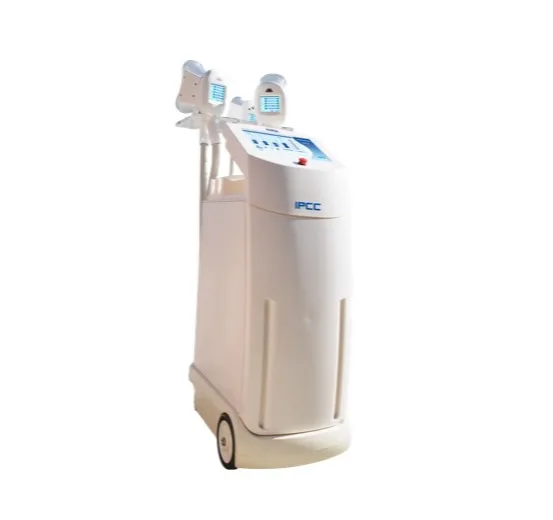
Cryolipolysis Fat Freezing Machine
Fat freezing machine buyer guide to cryolipolysis machines: a controlled-cooling equipment family for buyers planning a localized body-contouring workflow.
Controlled cooling↘07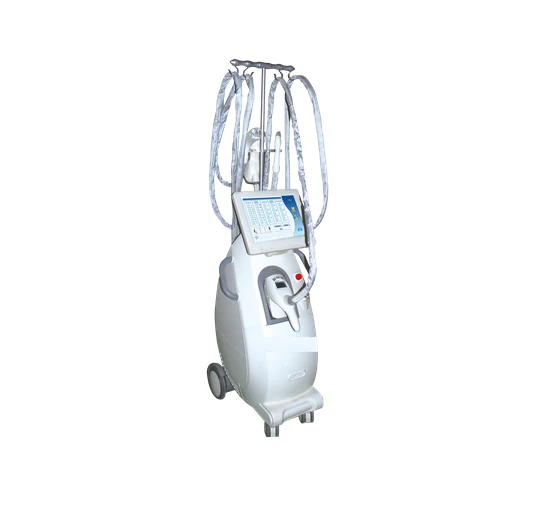
Ultrasonic Cavitation Machines
Cavitation machines buyer guide: how 40kHz ultrasonic cavitation fits a body-contouring menu, what to compare across configurations, and which claims to verify on the exact quotation.
40 kHz ultrasound↘Next step
Compare current configurations against the criteria in this guide.
Tell us your priority services, market, client mix and business type. Ask for the exact configuration, documents, training and service terms you need.
Describe your equipment plan ↘