Technology comparison
EMS Body Sculpting or Cavitation: Muscle Versus Fat
Two categories share a shelf at every trade show, and the EMS body sculpting vs cavitation question usually gets asked backwards. One machine works on muscle; the other works on the fat layer sitting above it. Your appointment book settles this, not the physics.
Buyer guide
Different tissue, different depth, different machine
Anatomy settles most of this argument. The skin science training material in our engineering archive puts the subcutaneous layer directly beneath the dermis, built from loose connective tissue and fat lobules, rich in blood vessels and lymphatics, joined on its underside to the muscle fascia. Fat above, muscle below. Neighbours, not the same tissue.
Cavitation works the upper compartment. Our device manuals document an archive console running low-frequency ultrasound at 40 kHz through a 72 mm tip at roughly 60 W, each vibration cycle swinging between positive and negative pressure so the adipocyte membrane feels a different pressure inside and out. Mechanical, not thermal. Not pigment selective.
Now the muscle side, where the shelf label misleads you. Two unrelated technologies both get sold as EMS body sculpting. Classic EMS lays electrodes or pads on the skin and pushes charge across the electrode-to-tissue surface. HIFEM, high-intensity focused electromagnetic, uses a coil: a rapidly changing magnetic field induces the current inside the tissue, no electrode contact anywhere. Silantyeva and colleagues ran the two head to head in Sexual Medicine and put the consequence plainly, a magnetic field crosses a medium without the energy being attenuated, so induced contractions reach greater depth and intensity. Their HIFEM arm beat the electrical stimulation arm.
That distinction decides which evidence you may quote. Every muscle stimulation study cited here, Kinney and Kent, Swanson, Kohan, evaluated HIFEM devices, and both systematic reviews are dominated by one manufacturer's two commercial HIFEM platforms. A pad-electrode console sold under the same banner does not inherit those MRI and CT results. Different power class, different depth of recruitment, its own far thinner evidence. Ask a supplier one question before price: coil or electrodes?
Buyer guide
The two categories side by side
Every cell traces to a study or manual named inside it.
| Buyer question | EMS platforms, HIFEM class | Ultrasonic cavitation |
|---|---|---|
| Tissue and depth | Skeletal muscle below the fascia; a coil induces current inside tissue, not across the skin (Silantyeva 2020) | Subcutaneous fat above the fascia (our engineering archive) |
| Mechanism | Induced current depolarises motor neurons; supramaximal contraction | 40 kHz, 72 mm tip, roughly 60 W; alternating pressure across the adipocyte membrane (our device manuals) |
| Same label, different box | Pad-electrode EMS, charge across the skin surface; not what these studies tested | The tip usually shares a trolley with radiofrequency and vacuum heads |
| Typical course | Four treatments over two to four weeks, range three to eight (Kohan 2024) | Ten to twelve sessions, twice weekly then weekly (our device manuals) |
| Time per session | Thirty minutes per abdominal treatment (Kinney and Kent 2020) | About twenty minutes per treated area (our device manuals) |
| What moves | Muscle thickness and abdominal separation; tone | Waist circumference and skinfold; no significant change in bodyweight or BMI (ELdesoky 2016) |
| Evidence strength | Fourteen studies, one sham arm, mean 5.5 mm fat and 2.16 mm muscle change, nearly all by manufacturer advisors (Swanson 2023) | Sparser and older; one randomised diet-controlled trial (ELdesoky 2016), little high-level evidence field-wide (Nassab 2015) |
| Contraindications | Pacemakers, defibrillators, implanted electronics, metal in the field; that list is the supplier's | Pregnancy, pacemakers and defibrillators, metal in the field, epilepsy, severe hypertension, heart disease (our device manuals) |
| Best-fit client | Stable weight, soft core, tone complaint core work missed | Stable weight, tape-measure complaint on waist, flanks or thighs |
Notice what the table cannot do. It cannot tell you whether a given electrode EMS unit performs like the HIFEM column, because nobody has published the work that would let it. One category sells circumference. The other sells tone.
Buyer guide
The complaint each one answers
Listen to how the enquiry gets phrased. "I'm three kilos off target, but my stomach has been soft since the baby and core work hasn't fixed it." That's an abdominal wall complaint, and it belongs to the HIFEM category. Kinney and Kent's one-year follow-up measured exactly those variables on MRI and CT, muscle thickness and the width of abdominal separation.
Now the other one. "The scale stopped moving and my waist measurement hasn't budged." That's a fat layer complaint. ELdesoky and colleagues set ultrasound cavitation, cryolipolysis and diet alone against each other in sixty randomised participants: both device groups beat diet alone on waist circumference and suprailiac skinfold, while bodyweight and BMI showed no significant difference. Circumference moved, the scale didn't. Read that twice, then read our ultrasonic cavitation machine buyer guide.
A third sentence belongs to neither. "I want to lose weight." That person isn't a contouring client, and anyone reporting unexplained weight change, a new lump or persistent pain belongs with a clinician before a course is booked.
So client selection separates these two, not rivalry. Most rooms serve people on both sides of the fascia: the woman finishing a flank course who still wants a stronger core, the man happy with his definition who can still pinch a roll. Complements, with a purchase order between them.
Buyer guide
Read each category's evidence with different eyes
The HIFEM literature is unusual. Swanson's systematic review in Annals of Plastic Surgery evaluated fourteen clinical studies, found only one with a sham group, reported a mean fat thickness reduction of 5.5 mm and a mean muscle thickness increase of 2.16 mm, then made the observation that should matter most to a buyer: almost all of those studies were authored by medical advisors to the device manufacturer. Safe, he concluded, on tenuous efficacy evidence. Kohan reviewed fifteen studies, again HIFEM only. No complications reported is a real finding. Independent replication is a different finding, and it isn't there yet.
Durability data is thin but not absent. Kinney and Kent rescanned twenty-one patients a mean of roughly 333 days after their series and still measured changes in fat thickness, muscle thickness and abdominal separation, with no adverse events linked to the original course. One group, no control arm. A signal worth knowing about, and none of it transfers to a pad-electrode machine.
Cavitation's evidence fails differently. Older, sparser, heavy on small trials, though ELdesoky did randomise participants and keep a diet-only control, which the HIFEM literature almost never does. Nassab's review of the whole non-invasive field found little high-level evidence supporting any of these devices, and that verdict covers both columns. Promise less than the brochure does.
Buyer guide
Room maths beats mechanism
Here's where the decision actually gets made. Our device manuals build a cavitation course at ten to twelve sessions, twice weekly for the first fortnight then weekly, around twenty minutes per treated area, with post-treatment redness settling in three to five days. Twelve sessions at twenty minutes is 240 minutes, roughly four hours of room time for one area across six or seven weeks. A second area doubles it, and the tips are handheld, so those are paid labour hours.
The HIFEM shape prices differently, and you can compute it from published protocols. Kohan reports four treatments over two to four weeks as usual, range three to eight; Kinney and Kent's patients received four to eight thirty-minute abdominal treatments. Four at thirty minutes is 120 minutes per client. Eight at thirty is 240, exactly where the cavitation course lands, so the turnover advantage exists only at the short end. Neither review says whether a therapist must stay in the room, so treat attendance as supplier-dependent and settle it in writing. Belted applicators running unattended, and those 120 minutes cost perhaps twenty minutes of labour. Attendance mandatory, and you pay for all 120. That answer swings the margin harder than the ticket price.
Ask an EMS supplier what you'd ask us. How many applicators are in the box. What wears out, and what a replacement costs three years in. Our multi-treatment menu planning guide runs that arithmetic for a whole room instead of a single console.
Buyer guide
What we make, what we don't, and what to buy first
Plain disclosure: we manufacture neither a HIFEM platform nor an electrode EMS console. We build ultrasound, controlled cooling, radiofrequency and light systems, and that's the edge of what we can stand behind. If your client base points at muscle, buy from a company that actually makes one and demand its safety file in writing, since anything that induces current in tissue carries its own contraindication list.
Skin risk splits differently. Cavitation is mechanical rather than pigment selective, so it doesn't carry the melanin-driven profile light-based work does, but any handpiece that heats tissue can provoke inflammation, and post-inflammatory hyperpigmentation stays a genuine consideration in deeper phototypes. Refer anything that looks like a skin condition rather than a contour concern.
Then count the sentences in your last hundred consultations. If most come from post-partum women describing a soft core at a stable weight, an ems sculpting machine of the HIFEM class answers more of them than cavitation will, and buying cavitation first leaves you explaining why the tape measure barely moved. If most come from clients working on waist, thighs and flanks, the cavitation console goes first: cheaper to run, often sharing a chassis with a radiofrequency section, and its long course fills a diary a four-session protocol never will. For one discrete pinchable bulge, our cryolipolysis platform guide covers the case.
One rule. Buy the machine that answers the sentence you hear most, fill its diary, and let its revenue pay for the second. Rooms that buy two consoles at once end up with one that works and one gathering dust.
Frequently asked questions
FAQIs every machine sold as EMS body sculpting the same technology?
No, and the difference decides which evidence applies. HIFEM uses a coil to induce current inside tissue with no electrode contact, and that is the technology Kinney and Kent, Swanson and Kohan all studied. Classic EMS passes charge across surface electrodes. The 5.5 mm fat and 2.16 mm muscle figures come from HIFEM studies only, so a pad-electrode console does not inherit them. Ask coil or electrodes before you ask price.
Can an EMS platform replace cavitation for fat reduction?
Not on the evidence as it stands. Swanson's review of fourteen HIFEM studies does report a mean fat thickness reduction of 5.5 mm alongside muscle gains, but almost all of those studies were written by advisors to the manufacturer and only one used a sham group. Treat muscle as the category's strong suit and the fat claim as the part still waiting for independent replication. Nothing in that file speaks for electrode EMS units.
Can I run both treatments on the same client?
Plenty of rooms do, on different areas or different days, and the two mechanisms act on different tissue compartments. Get written sequencing guidance from both suppliers before you build a combined package, since neither manufacturer's instructions cover the other's device. Keep your measurements separate too. Stack services in one visit and you lose any ability to tell the client which one produced the result.
Do you sell an EMS body sculpting machine?
No. We build ultrasound, controlled cooling, radiofrequency and light-based systems, and we manufacture neither a HIFEM platform nor an electrode EMS console. That's why this reads as a comparison rather than a pitch. If muscle stimulation suits your client base, buy it from a company whose engineers built it and whose regulatory file covers it, then hold them to the documentation standard you would hold us to.
How many sessions should each service carry on my price list?
Our device manuals build a cavitation course at ten to twelve sessions, twice weekly for two weeks then weekly, at roughly twenty minutes per treated area, so 200 to 240 minutes of room time. The HIFEM protocol Kohan reports is typically four treatments over two to four weeks, and Kinney and Kent describe thirty-minute sessions, so 120 minutes at four sessions. Different shapes need different pricing and rebooking scripts.
Evidence trail
Published research behind this guide
This guide is educational material for equipment selection. It is not medical advice, an operating protocol or a promise of clinical outcome.
Read the research
- Silantyeva E, Zarkovic D, Astafeva E, Soldatskaia R, Orazov M. Electromyographic evaluation of the pelvic muscles activity after high-intensity focused electromagnetic procedure and electrical stimulation in women with pelvic floor dysfunction. Sexual Medicine, 2020. ↗
- Kinney BM, Kent DE. MRI and CT assessment of abdominal tissue composition in patients after high-intensity focused electromagnetic therapy treatments: one-year follow-up. Aesthetic Surgery Journal, 2020. ↗
- Swanson E. A systematic review of electromagnetic treatments for body contouring. Annals of Plastic Surgery, 2023. ↗
- Kohan J, Vyas K, Erotocritou M, Khajuria A, Tehrani K. High-intensity focused electromagnetic (HIFEM) energy with and without radiofrequency for noninvasive body contouring: a systematic review. Aesthetic Plastic Surgery, 2024. ↗
- ELdesoky MTM, Abutaleb EEM, Mousa GSM. Ultrasound cavitation versus cryolipolysis for non-invasive body contouring. Australasian Journal of Dermatology, 2016. ↗
- Nassab R. The evidence behind noninvasive body contouring devices. Aesthetic Surgery Journal, 2015. ↗
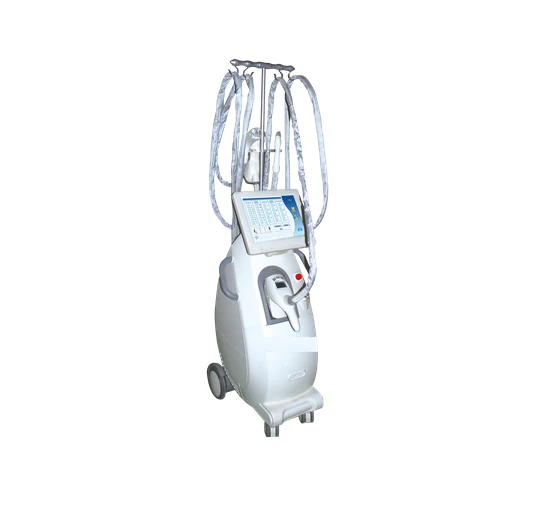
Ultrasonic Cavitation Machines
Cavitation machines buyer guide: how 40kHz ultrasonic cavitation fits a body-contouring menu, what to compare across configurations, and which claims to verify on the exact quotation.
40 kHz ultrasound↘05
RF Skin Tightening
A non-laser energy family for buyers comparing thermal skin platforms.
Radio frequency↘Next step
Compare current configurations against the criteria in this guide.
Tell us your priority services, market, client mix and business type. Ask for the exact configuration, documents, training and service terms you need.
Describe your equipment plan ↘