Buyer criteria
Home Cavitation Machines Versus Professional Platforms
A client puts her phone on your counter and says she already has one at home, so why pay you. That question is the entire reason this page exists. Whether you are looking at a home cavitation machine or a professional platform, the gap between them is measurable in hardware, in screening, and in who carries the risk when something goes wrong.
Buyer guide
Start with what she actually bought
Consumer cavitation units are real products with real transducers inside them. Light, mostly plastic, sold with a bottle of gel and a one-page leaflet. Cavitation in this trade refers to low-frequency ultrasound, usually around 40 kHz, delivered through a gel-coupled tip so that alternating pressure cycles stress the membranes of subcutaneous fat cells. Physics doesn't check the receipt. What differs is how much energy reaches tissue, how long the device sustains it, and who decided this person was a candidate.
Be fair about the small unit. Pressed on skin with gel it warms the area, feels pleasant, and gives someone a reason to drink water and watch their waistline for six weeks. Part of what people report from home devices is that attention, not the transducer. Say so out loud and you'll sound more credible than the clinic that calls the thing a toy.
One boundary applies to both. The US Food and Drug Administration states plainly that non-invasive body contouring does not treat obesity and will not result in weight loss or the health benefits associated with losing weight. That governs your platform exactly as much as her handheld. If a client's real goal is significant weight reduction, the honest move is a referral.
Buyer guide
The two side by side
Seven questions decide this, and price isn't one of them. Figures below come from our device manuals where a document states them, and every row says so when nobody does. Each is argued underneath.
| What you are comparing | Consumer home unit | Professional platform |
|---|---|---|
| Ultrasonic stage rating printed in the document, and whether a measurement point is stated | Usually one wattage on the box with no measurement point named, often the mains draw | Our leaflets rate the 40 kHz ultrasonic stage at 50 W on the portable and 60 W on the console. Neither leaflet names a measurement point, so neither figure is a measured acoustic output. Ask any seller for output at the tip, tip area and frequency together |
| Tip area and frequency | Rarely printed; you have to ask for both in writing | 72 mm tip at 40 kHz on the portable leaflet, and 72 mm at 40 kHz on the console leaflet |
| Duty cycle across a 20 to 40 minute area session | Not stated on consumer packaging | Not stated as a duty cycle figure in either leaflet either. The leaflets state the cooling hardware, air and water cooling on the console and semiconductor cooling on the portable, and our treatment protocol note separately calls for 20 to 40 minutes per area. That the hardware supports the block is our inference, so ask for a duty cycle figure in writing |
| Cooling and chassis | Palm-sized, with nowhere to put the heat | Air and water cooling and 12 kg net on our console leaflet; semiconductor cooling and 11 kg on our portable leaflet |
| Service path and stocked parts | Replaced rather than repaired, with no serial-numbered record of what changed | Accessory inventory, fuse procedure, key switch, leakage protector and emergency stop named in the operation manual |
| Screening and contraindications | A leaflet, read by the buyer, at a kitchen table | A written contraindication list worked through by a trained operator before the first session |
| Documentation and insurance position | No professional operating manual and no training record to show anyone | Operating manual, training records and a documentation trail an inspector can actually read |
Buyer guide
A wattage printed on a box is not a comparable figure
Here's the trap. Output power on consumer packaging is usually the mains draw, or a number with no stated measurement point at all. Acoustic output is a different quantity: the power radiated from the transducer face into tissue. It only means anything when you're also told the frequency and the area of the tip it leaves from. Spread the same watts across a wider face and intensity at the skin drops.
Our device manuals settle it with numbers that aren't interchangeable, and each belongs to its own document. The portable leaflet specifies a 40 kHz ultrasonic stage at 50 W through a 72 mm tip, an RF stage at 2.64 MHz with RF power held at or below 120 W, and a nominal rating of 350 W for the whole unit. The console leaflet is a different document for a different machine: same 40 kHz, same 72 mm tip, but ultrasonic output rated 60 W and RF input power 330 W. Two of those describe the ultrasound, two the radiofrequency, one what the machine draws from the wall. A box printing a single number and calling it power hasn't told you which. And hold us to our own rule: neither leaflet names the point at which its ultrasonic wattage was measured, so treat 50 W and 60 W as stage ratings, not as acoustic power delivered into tissue.
The working end of a cavitation handpiece is a piezoelectric element bonded to a radiating face, and most of the performance lives in that bond. A transducer poorly matched to tissue sends energy back into itself instead of forward. Heat builds where nobody wanted it. Output drifts as the stack warms. None of that appears on a spec sheet, which is why a full-length demonstration beats a thirty-second touch test.
That 72 mm face is a design decision, not decoration. A large rigid tip needs continuous even contact and a generous layer of gel, because ultrasound doesn't cross an air gap in any useful amount. Thin gel, a tilted tip, a bony contour: each one quietly turns a session into a warm massage. Dwell is the other habit that separates a trained hand from an untrained one. Slow overlapping passes, head always moving. Parking the tip on the spot that bothers you is exactly what an untrained user does at home, and it leaves a tender red patch rather than a result.
Ask for three things together: output at the tip, tip area, frequency. A professional cavitation machine supplier pulls all three from a manual in a minute. If a seller can only produce one, you know what kind of document you're holding.
Buyer guide
Duty cycle, heat and the standard nobody reads
Duty cycle refers to the share of a working period during which a device can actually deliver rated output before it must rest, derate or shut down. It decides whether a machine holds a full appointment book. Almost nobody prints it. Not a consumer box, and not our own leaflets either, so ask every seller for the number in writing and watch who can produce it.
What the documents do give you is the thermal hardware, and you can reason from that. Our slimming treatment protocol runs 20 to 40 minutes on a single area, so console and handpiece have to sustain output across that whole block. The leaflets name the cooling, one machine at a time. The console leaflet lists an air and water cooling system and a net weight of 12 kg. The portable leaflet lists semiconductor cooling and a weight of 11 kg. Most of that mass is cooling and power hardware. A palm-sized handheld has nowhere to put the heat.
There's a standards angle too, and it cuts differently from the way it usually gets told. IEC 60601-1-11, second edition, published on 20 January 2015, is a collateral standard for medical electrical equipment used in the home healthcare environment. Read its scope: it excludes professional healthcare facility environments where operators with medical training are continually available. Even the standard written for home-use equipment declines to cover your treatment room. Then the sharper point. Most consumer cavitation units aren't medical electrical equipment at all; they're sold as cosmetic appliances, and are typically not built to any 60601-series standard. Ask which safety standard the unit was tested to, which laboratory did it, and whether you can see the report. A shrug is an answer.
Buyer guide
What happens on the day it stops working
Ask three questions before money moves, of every seller, consumer or professional. One: who repairs this, and where do they physically sit? Two: which parts are stocked, and what's the quoted lead time on a replacement handpiece? Three: what does the warranty actually cover, and does the machine come with documentation you could hand to an inspector?
Our archive slimming manual answers all three the way a professional document should. It opens with an accessory inventory to check on unpacking, gives a fuse replacement procedure, names the key switch, leakage protector and emergency stop, and tells the operator not to open the cabinet because the voltage inside can injure you. That last line is a service model in one sentence.
Consumer units mostly have no such path. A failed one gets replaced rather than repaired, and no serial-numbered record exists of what changed. Our notes on platform service and spare parts set out what to get in writing before you sign anything.
Buyer guide
Screening does not happen at a kitchen table
Read the contraindication lists in our archive slimming manuals and the problem shows up immediately. These are the entries a trained operator works through before a first session, drawn from the vacuum and radiofrequency lists in that manual:
- Cardiac pacemakers or implanted defibrillators.
- Pregnancy.
- Epilepsy.
- Severe diabetes, hypertension or heart disease, including heart and chest disease.
- Serious blood coagulation disorders.
- Recent fever, active infection or inflammation.
- Damaged skin, dermatitis, active herpes, atypical moles or a malignant lesion in the treatment area.
- Vascular surgery on the treatment area within the past two months.
- Treatment with functional cosmetics in the past month.
- Metal accessories, which come off before anything starts.
That's a screening conversation with a form behind it, and it belongs to a trained person rather than a customer reading a leaflet. The two-month vascular surgery entry alone is not something a buyer thinks to ask.
Pigment risk deserves the same honesty. A 2018 review by Juhasz, Korta and Mesinkovska in Dermatologic Surgery, drawn from 231 identified ultrasound studies, reported that ultrasound is safe with minimal concern for postinflammatory hyperpigmentation. Reassuring for the ultrasound stage. It doesn't transfer to the heat-based handpieces that usually share the same trolley, where deeper phototypes and aggressive settings carry a real pigment risk.
One line should never blur. A lump, a hernia, an asymmetry that appeared quickly: those want a clinician's opinion before any device goes near them. Somebody working alone at home has nobody to say so.
Buyer guide
The consultation script, the price and the liability
Don't argue with her machine. Ask what she's been using it for, how often, how long per area, and whether she has measured anything at all. Then measure her properly, at written-down landmarks, with photographs under fixed conditions. You've just given her what the device never did, which is a baseline. Our body programme planning notes cover how to build that rhythm into a course.
Price against the device, not against her judgement. Our archive protocol structures a course at 20 to 40 minutes per area, 3 to 7 days between visits, and 10 to 12 treatments in one course, with the ultrasound stage paired to RF and lymphatic handling. None of that is reproducible on a kitchen table. Sell the structure, the measurement and the room, and the console specification supports the pitch instead of being it. If she wants to keep her unit for between visits, let her.
Then the part that ends the discussion. Read your own policy wording before assuming a consumer unit is fine on paying clients, because cover in this trade is normally written around equipment intended for professional use, operated to the manufacturer's instructions, with training records behind it. A device sold for personal home use sits outside that intended use. No professional manual, no service history, nothing to show anyone. Charge for a session on it and you're carrying a liability nobody priced. Compare properly instead, starting with our page on ultrasonic cavitation machines.
Frequently asked questions
FAQA client says her home cavitation machine does the same thing. What is the honest reply?
Agree with the part that's true, then move the conversation. Both work with low-frequency ultrasound around 40 kHz, so the mechanism isn't in dispute. What differs is deliverable energy at the tip, the ability to sustain a 20 to 40 minute area session without derating, and a screening process she doesn't have. Offer to measure her at fixed landmarks and photograph her under fixed conditions. Baseline data wins that argument faster than any spec sheet.
Can I run a consumer cavitation unit on paying clients if I am careful with it?
Treat that as an insurance question rather than a technique question. Read your own policy wording first, since cover in this trade is normally built around equipment intended for professional use, operated to the manufacturer's instructions, with training records behind it. A home unit brings no professional manual, no serial-numbered service history and nothing you could hand an inspector. Careful technique does not repair a missing paper trail.
How much circumference change should I promise from a cavitation course?
Promise none. Quote the published range instead. The 2018 Dermatologic Surgery review by Juhasz, Korta and Mesinkovska reports ultrasound lipolysis producing a 2 to 4.6 cm decrease in abdominal circumference across the studies examined. Those figures came from defined devices and defined protocols. Neither the FDA position nor the literature supports selling this as weight loss. Measure, photograph, let the tape speak.
Which specifications actually separate a home unit from a professional cavitation machine?
Four, in this order. Acoustic output stated at the tip alongside tip area and frequency, never a lone wattage on a box. Duty cycle, meaning sustained output across a full appointment rather than a demo burst. Cooling and chassis: our portable leaflet records semiconductor cooling at 11 kg, our console leaflet air and water cooling at 12 kg net. And a named service path with stocked parts. A seller who cannot answer all four from a manual has answered you anyway.
Evidence trail
Published research behind this guide
This guide is educational material for equipment selection. It is not medical advice, an operating protocol or a promise of clinical outcome.
Read the research
- IEC 60601-1-11:2015, Medical electrical equipment, Part 1-11: Collateral standard for medical electrical equipment and systems used in the home healthcare environment (Edition 2.0, published 20 January 2015) ↗
- US FDA, Non-Invasive Body Contouring Technologies (Aesthetic and Cosmetic Devices) ↗
- Juhasz M, Korta D, Mesinkovska NA, A Review of the Use of Ultrasound for Skin Tightening, Body Contouring, and Cellulite Reduction in Dermatology, Dermatologic Surgery 2018;44(7):949-963 ↗
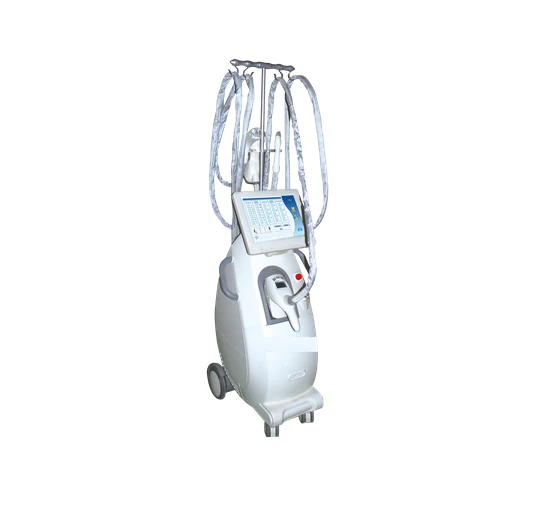
Ultrasonic Cavitation Machines
Cavitation machines buyer guide: how 40kHz ultrasonic cavitation fits a body-contouring menu, what to compare across configurations, and which claims to verify on the exact quotation.
40 kHz ultrasound↘05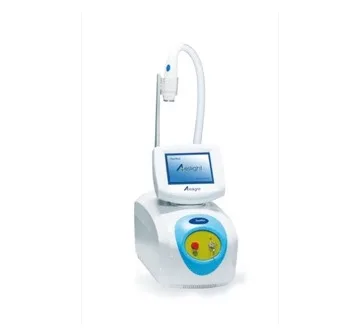
RF Skin Tightening
A non-laser energy family for buyers comparing thermal skin platforms.
Radio frequency↘Next step
Compare current configurations against the criteria in this guide.
Tell us your priority services, market, client mix and business type. Ask for the exact configuration, documents, training and service terms you need.
Describe your equipment plan ↘