Technology comparison
Laser Lipo or Ultrasonic Cavitation: Two Different Machines
Anyone weighing laser lipo vs ultrasonic cavitation is comparing a pad that rests on the skin against a transducer that pushes pressure waves into the fat layer. They are not two versions of one idea. One rests on a photochemical claim, the other on a mechanical one, and the published evidence behind them sits at different heights.
Buyer guide
Two boxes, one enquiry
You have a room, a budget, and a diary with gaps in it. One rep quotes a pad system on a two-week protocol. Another quotes a cavitation console with two handpieces. Both promise inches off a waist, both point at the same client, and both brochures reach for the same adjectives.
Short version before the detail. A lipo laser machine lies on the skin and makes a photochemical claim about fat cells. Cavitation drives low-frequency mechanical energy into the fat layer. Nothing about the two overlaps: not the physics, not the labour cost, not the strength of what has been published.
Buyer guide
Side by side, row by row
Here is the whole trade-off in one block. Every figure is sourced further down the page.
Mechanism claim. Pad-based lipo laser: light opens transient pores in the fat cell membrane and stored lipid leaves. Ultrasonic cavitation: alternating positive and negative pressure, once per cycle, loads the fat cell wall until the contents emulsify.
Energy type and typical parameters. Pad: red diodes around 635 nm, exit power measured in milliwatts, 17.5 mW per diode in the pivotal 2009 trial, no heat intended. Cavitation: 40 kHz ultrasound through a 72 mm tip at roughly 50 to 60 W, with a cooled radio frequency section near 2.64 MHz on the same console.
Contact and consumables. Pad: straps or an articulated arm, nothing between the diode and the skin. Cavitation: gel, full tip contact, continuous movement, gel replaced every session.
Session duration. Pad: fixed by the supplier's protocol rather than by the operator. Cavitation: 20 to 40 minutes per localised area in our device manuals.
Course length and spacing. Pad: the 2009 trial ran three sessions a week for two weeks. Cavitation: 10 to 12 treatments per course, 3 to 7 days apart.
Therapist involvement. Pad: unattended once the timer starts. Cavitation: hands-on from the first minute to the last.
Client sensation. Pad: nothing worth reporting. Cavitation: an audible tone most clients notice, plus a slow build of warmth.
Skin tightening. Pad: none claimed. Cavitation: none from the ultrasound itself, which is exactly why an RF handpiece rides on the same trolley.
Strongest published evidence and its outcome measure. Pad: a double-blind, sham-controlled trial reporting 3.51 inches of combined circumference reduction against 0.684 inches in the sham arm, taken with a tape. Cavitation: a 60-participant randomised trial in which cavitation and cryolipolysis both beat diet alone on waist circumference and skinfold thickness, again by surface measurement. Neither headline rests on imaging.
Main contraindication difference. Both exclude pregnancy, pacemakers and implanted defibrillators, epilepsy, metal implants in the area, active infection and broken skin. Cavitation consoles usually carry RF, and heat brings a post-inflammatory hyperpigmentation risk in richer skin tones that a cool pad does not, so a Fitzpatrick assessment belongs on the consultation form.
So which do you buy? Decide on labour first, because that is the row that changes your P and L. If you employ a therapist whose hour you can already sell, cavitation turns that hour into billable work; if you are short of staff and long on rooms, a pad system monetises a bed instead. Then weigh the evidence row: the strongest support on either side is a tape measurement taken at the end of a short course, so a buyer whose clients want imaging-grade proof should walk away from both rather than choose between them.
Buyer guide
The two mechanisms, stated fairly
Take the pad claim in its own terms. Light reaches the adipocyte, a transient pore opens, stored lipid leaves into the interstitial space, the body clears it. The pore story traces back to Neira and colleagues in 2002, working on adipose tissue taken from lipectomy samples at 635 nm and 10 mW: 80 percent of fat released after four minutes of exposure, 99 percent after six. Tissue in a dish has no blood supply, no lymphatics and nobody attached to it.
Our engineering archive is blunt about the parent category. The light and tissue interaction manual files photostimulation as a class of photochemical reaction, records that the term has never been well defined scientifically, and puts representative fluences at 1 to 10 J/cm2, doses that usually produce no measurable temperature rise at all. Decades of dispute, unclear mechanism. The same text defines penetration depth as the distance over which light falls to 37 percent of what entered the tissue, and notes that 600 to 1200 nm travels deeper because it scatters less. Red light does get past the epidermis. It arrives diffuse and weak.
Do not let one laser category borrow credibility from another. Anderson and Parrish described selective photothermolysis in Science in 1983: brief pulses of selectively absorbed radiation damaging pigmented targets in place, demonstrated on cutaneous microvessels at 577 nm and on melanosomes at 351 nm. That principle governs hair and vascular lasers. A pad system is not doing it, and it confirms as much every time it promises no heat.
Cavitation's weak point is cruder. Energy lands where the tip is held, so the operator's hand sets the dose, and skipping the gel just warms coupling medium. Our ultrasonic cavitation machine buyer notes work through console layouts and handpiece sets if you need the format comparison. One naming trap before you shop: search laser liposuction equipment and two unrelated things come back. Surgical laser-assisted lipolysis puts a fibre under the skin, in a theatre, with a surgeon. A laser lipolysis machine sold into a beauty room never breaks the skin.
Buyer guide
Sorting the evidence, and naming who paid
Pile one is peer-reviewed and positive. Jackson and colleagues ran a double-blind, randomised, sham-controlled trial across several private practices in the United States and published it in Lasers in Surgery and Medicine in 2009. Sixty-seven volunteers, BMI between 25 and 30, three sessions a week for two weeks. The treated group lost 3.51 inches of combined circumference across waist, hips and both thighs, against 0.684 inches in the sham group. It was run on a specific commercial multi-diode laser at 635 nm and 17.5 mW exit power per diode, not on the category in general.
Our own Step 4 tells you to ask who funded a study, so here is that standard applied to our headline citation. We could not verify the 2009 paper's printed funding or conflict-of-interest declaration from the record available to us, and we would rather say that than leave the line blank. Treat its sponsorship as unverified, not as absent. What is verifiable: a later trial of a commercial six-diode 635 nm scanner, published in the Journal of Clinical and Aesthetic Dermatology in 2016, prints its disclosure plainly as funding by Erchonia Corporation of McKinney, Texas. Industry money is ordinary in this field. Quiet industry money is not.
Pile two holds the awkward follow-up. Jankowski and colleagues, in Lasers in Medical Science in 2017, treated one side of the abdomen with 650 nm light over six sessions, kept the other side as an untreated control, and measured subcutaneous fat thickness by ultrasound imaging rather than by tape. Across the 17 participants with post-treatment scans, the irradiated side showed no statistically significant difference from the control side, and in 8 of them the treated side had thickened once the control side was accounted for. The authors put any reduction that does occur down to modulation of systemic lipid metabolism rather than local injury to fat cells. Funding was a young researchers' grant from Nicolaus Copernicus University, with no device maker involved.
Cavitation's own record is modest, and honest people describe it that way. ELdesoky, Abutaleb and Mousa randomised sixty participants with a BMI over 30 into cavitation, cryolipolysis or diet alone, reporting in the Australasian Journal of Dermatology in 2016 that both active arms beat diet alone on waist circumference and skinfold thickness, with no meaningful difference between the two devices. The paper prints its declaration as conflict of interest: none. A real result. Also a small one, in one population, on soft endpoints.
Pile three is manufacturer material, and it is usually the pile your quotation came from. Ask which pile a claim belongs in, out loud, before you sign.
Buyer guide
What a tape measure is really telling you
Nearly every headline number in this comparison, on both sides, is a tape reading. Regulators built the category that way. In the United States these pad systems fall under 21 CFR 878.5400, class II, product code OLI. One 2019 clearance we read in full, K192544, is indicated for reduction of body circumference in individuals with a body mass index up to 40. Cleared by substantial equivalence, not approved, and the endpoint is inches.
A tape is not a neutral instrument. Tension, landmark, time of day, hydration and what your client ate at lunch will move a waist reading by a centimetre without a single fat cell changing. So standardise it: same therapist, landmarks marked from a bony reference, same time of day, taken before the session rather than after, photographs under fixed lighting from marked floor positions.
The most useful line in the 2009 paper is not the headline. Two weeks after treatment stopped, the treated group had gained 0.31 inches back across the three sites. Read that as the category's honest ceiling and set client review points accordingly. Our body programme planning notes cover how to write those review points into a course. Neither route is a weight treatment, and anything that might be a hernia, a mass or unexplained swelling belongs with a clinician before it goes on a couch.
Buyer guide
Running cost, staffing, and the maintenance trap
The two rooms look nothing alike. Cavitation is hands-on: gel, tip in contact, continuous movement, 20 to 40 minutes per area in our device manuals, a course of 10 to 12 treatments spaced 3 to 7 days apart, and aftercare that is unglamorous but matters. More water, less greasy food, no sauna for 24 hours. A pad session is the mirror image. Straps on, timer running, client on her phone, no therapist hand required. One format eats an hour of trained labour. The other eats a bed.
We do not publish prices, and you should not accept one you cannot take apart. Acquisition cost on either side is driven by four things: handpiece or applicator count, generator power rating, the quality of the regulatory file behind the indication, and whether training, a spare tip and a first gel supply are inside the quoted number or outside it. Ask for those four as separate line items and half the price gap usually explains itself.
Then run the sums yourself, on both quotations, with your own inputs. Step 1, labour per course: therapist hourly rate multiplied by session length in hours multiplied by sessions per course. For a 10 to 12 session cavitation course at 20 to 40 minutes an area that is a real recurring number; for an unattended pad course it falls close to zero once setup is counted. Step 2, consumables per course: gel cost per session multiplied by sessions, plus any disposable pad cover the laser supplier specifies. Step 3, wear per year: your projected treatment hours divided by the quoted service life in hours of the transducer or diode array, multiplied by the quoted replacement part price. Make the supplier write both of those figures down before you sign, because neither belongs in your model as a guess. Step 4, five-year cost: labour plus consumables per course, multiplied by courses per year, multiplied by five, plus five years of wear, plus any annual service contract fee. Do that on both machines and the cheaper console often stops being the cheaper machine.
Warranty is where the difference bites. Require a stated service life in hours for the transducer or the diode array, a written replacement price held for a fixed term, and a clause that covers output drift rather than only total failure. A tip that still lights up while delivering less energy is the failure mode you will actually meet, and it is the one a thin warranty quietly excludes.
Buyer guide
We do not build a lipo laser. Here is what to demand from one
Plain disclosure, since it should change how you read everything above. We manufacture cavitation, cryolipolysis and RF platforms. We do not build a pad-based lipo laser system, we do not resell one, and we earn nothing whichever way you go. This page exists so you can decide, not so you can be steered. If the honest answer for your room turns out to be a cooling applicator, our cryolipolysis platform notes set out that trade instead.
Taking the pad route? Buy it like an engineer. Step 1: request wavelength, rated exit power per diode, diode count, and total optical power at the treatment surface measured with a calibrated power meter rather than calculated on a spreadsheet. Step 2: request treatment distance and covered area, because irradiance without geometry is a marketing number. Step 3: request the clearance or certification number and the exact indication wording, then read the indication instead of the headline. Step 4: ask which published study was run on this device rather than on a predicate, get the citation, and ask in the same breath who funded it. Step 5: ask how that study measured results, tape or imaging, and at what interval after the final session. Step 6: ask diode lifetime in hours, replacement cost, and what the warranty covers once output drifts.
A supplier who answers six questions in writing is a supplier. One who answers with before and after photographs is a reseller.
Frequently asked questions
FAQIs laser lipo the same thing as laser liposuction?
No, and the confusion is profitable for some suppliers. Laser liposuction, or laser-assisted lipolysis, is surgery: a fibre goes under the skin, in a theatre, with a surgeon. The pad systems marketed as laser lipo never break the skin and deliver milliwatts through the surface. Clinical literature on the surgical procedure tells you nothing about the pads. Ask which one you are being quoted, and get the regulatory indication wording in writing.
Does a lipo laser machine have real published evidence behind it?
Some, and it is mixed rather than settled. A 2009 double-blind, sham-controlled trial reported 3.51 inches of combined circumference reduction against 0.684 inches in sham controls, measured with a tape. A 2017 split-abdomen study using ultrasound imaging found no statistically significant difference between the irradiated side and the untreated control side, and its authors attributed any reduction to systemic lipid metabolism rather than local adipocyte injury. Both are genuine papers. Weigh outcome measure, follow-up interval and funding before treating either as settled.
Which one suits a client with a soft, generalised abdomen?
Cavitation, usually, provided she will commit to the schedule. Our device manuals structure it as 10 to 12 sessions, 20 to 40 minutes per area, spaced 3 to 7 days apart, which fits a client who wants to feel she is doing something weekly. One discrete pinchable bulge on someone already near target weight is applicator territory instead. Neither answer changes if the underlying goal is weight loss.
Who should not be treated with either technology?
Our device manuals exclude pregnancy, cardiac pacemakers and implanted defibrillators, epilepsy, metal implants in the treatment area, active viral or bacterial infection, malignant or atypical lesions and broken skin. Add caution wherever heat is introduced, since richer skin tones carry a post-inflammatory hyperpigmentation risk. Anything that might be a hernia, a mass or unexplained swelling belongs with a clinician first, and no consent form substitutes for that referral.
Evidence trail
Published research behind this guide
This guide is educational material for equipment selection. It is not medical advice, an operating protocol or a promise of clinical outcome.
Read the research
- Jackson RF, Dedo DD, Roche GC, Turok DI, Maloney RJ. Low-level laser therapy as a non-invasive approach for body contouring: a randomized, controlled study. Lasers in Surgery and Medicine, 2009;41(10):799-809. ↗
- Jankowski M, Gawrych M, Adamska U, Ciescinski J, Serafin Z, Czajkowski R. Low-level laser therapy (LLLT) does not reduce subcutaneous adipose tissue by local adipocyte injury but rather by modulation of systemic lipid metabolism. Lasers in Medical Science, 2017;32(2):475-479 (funding: Grant for Young Researchers MN-3/WL/2015, Nicolaus Copernicus University). ↗
- Thornfeldt CR, Thaxton PM, Hornfeldt CS. A six-week low-level laser therapy protocol is effective for reducing waist, hip, thigh and upper abdomen circumference. Journal of Clinical and Aesthetic Dermatology, 2016;9(6):31-35 (disclosure: study funded by Erchonia Corporation, McKinney, Texas). ↗
- Neira R, Arroyave J, Ramirez H, et al. Fat liquefaction: effect of low-level laser energy on adipose tissue. Plastic and Reconstructive Surgery, 2002;110(3):912-922. ↗
- US FDA 510(k) clearance K192544, low level laser system for aesthetic use, 21 CFR 878.5400, product code OLI, indicated for reduction of body circumference. ↗
- ELdesoky MTM, Abutaleb EEM, Mousa GSM. Ultrasound cavitation versus cryolipolysis for non-invasive body contouring. Australasian Journal of Dermatology, 2016;57:288-293 (declaration: conflict of interest, none). ↗
- Anderson RR, Parrish JA. Selective photothermolysis: precise microsurgery by selective absorption of pulsed radiation. Science, 1983;220(4596):524-527. ↗
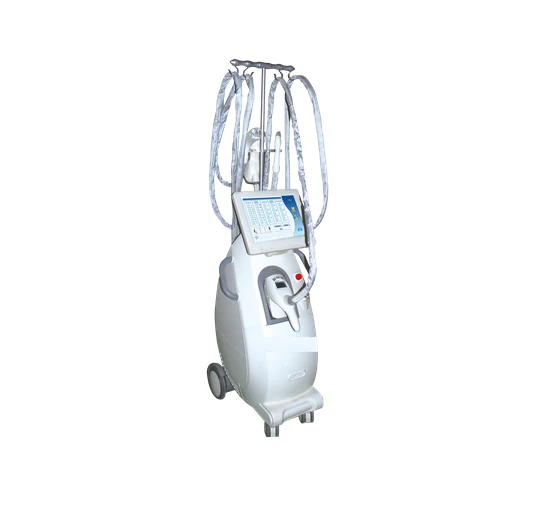
Ultrasonic Cavitation Machines
Cavitation machines buyer guide: how 40kHz ultrasonic cavitation fits a body-contouring menu, what to compare across configurations, and which claims to verify on the exact quotation.
40 kHz ultrasound↘06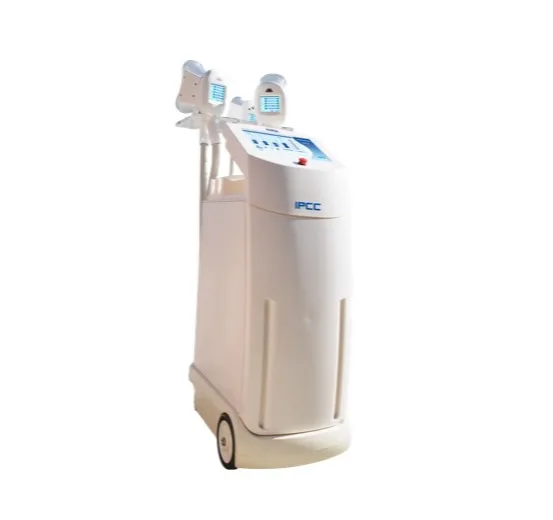
Cryolipolysis Fat Freezing Machine
Fat freezing machine buyer guide to cryolipolysis machines: a controlled-cooling equipment family for buyers planning a localized body-contouring workflow.
Controlled cooling↘Next step
Compare current configurations against the criteria in this guide.
Tell us your priority services, market, client mix and business type. Ask for the exact configuration, documents, training and service terms you need.
Describe your equipment plan ↘