Protocol design
Lymphatic Drainage After Cavitation: Why Practitioners Add It
Buy a cavitation platform and somebody hands you a protocol with lymphatic drainage after cavitation already bolted onto the end. The reasoning sounds airtight when a trainer says it out loud. Pull it apart before you build a price list around it, because the argument and the evidence are not the same size.
Buyer guide
What the clearance argument actually claims
A cavitation pass removes nothing from the body. Our engineering archive describes a 40 kHz handpiece running 60 W through a 72 mm tip, driving alternating pressure cycles that stress the fat cell wall until it fails; the contents end up in the space between cells, still inside your client. What happens next belongs to her circulation, not to your console. That is the whole basis for the add-on. Disrupted lipid has to be carried and processed, and lymphatic and venous return are the roads it travels.
Something measurable does move. Honda and colleagues sampled blood from ten subjects through a thirty-minute nonfocused ultrasonic body contouring treatment and for ninety minutes after it. Non-esterified fatty acids climbed and stayed up, peaking at ninety minutes. Triglycerides dropped at ten, twenty and thirty minutes. Cholesterol, LDL and HDL did not shift. A ten-person study says nothing about contour. The tissue is clearly handing something to the bloodstream.
Now watch where the argument gets ahead of itself. A transport route exists, therefore hurrying it along must help. Nobody has shown that. Our notes on ultrasonic cavitation machines cover what the hardware can be held responsible for, and clearance sits outside that boundary. Half the supplier pitch rests on a documented route, the other half on an assumption about speed.
Buyer guide
Where the evidence gets thin
A 2025 review in the International Journal of Molecular Sciences looked at what happens to lipid after ultrasound-induced lipolysis. It reports that lymphatic massage and manual drainage are widely applied in cosmetic protocols and have been proposed to accelerate lipid mobilisation and reduce redeposition into ectopic depots. Proposed. That is the review's own word, and it is doing a lot of work.
The same authors are blunter later. Adjunctive therapies including exercise, diet and lymphatic drainage are used often and standardised rarely, and their contributions stay hard to isolate without controlled comparative trials. They then describe the trial that ought to be run. When a review is still asking for the study, you do not get to hand a client the answer.
So where does drainage get its confident reputation? Borrowed, mostly, from lymphoedema care. The 2015 Cochrane review pooled six trials; adding manual drainage to compression bandaging gave an extra 7.11 per cent reduction in swelling across two randomised trials and eighty-three participants, and the authors asked for more high-quality work. A later multicentre randomised trial in the British Journal of Cancer ran seventy-three completers with and without manual drainage, and found no additional volume reduction at all.
Two things fall out of that. Even on home ground the technique is contested. And that home ground is a damaged lymphatic system shifting protein-rich fluid out of a swollen arm, not a healthy one clearing fatty acids from an abdomen. Carrying the result across that gap is an extrapolation.
Buyer guide
What it costs you in room time
Here the decision stops being academic. Our device manuals put a single area at twenty to forty minutes, whole-body work at sixty to ninety, visits three to seven days apart, ten to twelve treatments to a course. Bolt fifteen minutes of drainage onto a thirty-minute booking and four clients a morning becomes three. That is not a rounding error.
Who performs it decides whether that hurts. Manual drainage spends your most expensive resource, a trained pair of hands. Mechanical drainage spends machine time, cheap once the machine is bought. Our device manuals name the infrared plus roller plus suction mode as the setting for relaxation and lymphatic work rather than fat disruption, so the platform was built expecting to cover this itself.
There is a trap in your own aftercare card. Ours bars sauna and heavy massage for twenty-four hours. A light drainage pass is not deep tissue work, and that difference has to be taught out loud, or a therapist kneads the area you just treated and your client bruises. Bruising over inflamed skin is where post-inflammatory hyperpigmentation begins, and deeper skin types hold that mark longest. Light pressure is the setting.
Work the whole booking out on paper first. Our body programme structures exist because session sequencing decisions compound, and every add-on that looks small alone turns a menu into a timetable you cannot staff.
Buyer guide
Pricing it without overselling it
Three ways to handle the money, three risks. Bundle drainage into the session price and nobody asks what it costs, because it has no line of its own. Sell it as a paid add-on and you have invited the question directly: what does this do for me? Give it away and you have set an expectation you will struggle to withdraw. Bundling is usually defensible.
Now the part suppliers skip. Drainage does deliver something real, just not the thing on the brochure. Your client is warmed, touched, attended to, and she leaves feeling the appointment was worth paying for. The genuine problem in a ten to twelve visit course is not clearance rate. It is whether she books visit seven.
What you should not build is a premium tier resting entirely on faster fat clearance. That is a claim, it is priced, and a disappointed client will read it back to you. If you want a second modality that earns its own menu line, RF skin tightening platforms arrive with a better-documented rationale.
Buyer guide
How to describe it without making a claim
Describe the action, not the outcome. "We finish with a light drainage pass, and we will ask you to keep your water up today" is accurate, meetable, and contains nothing you have to walk back. Compare it with "this flushes the fat out of your system", a mechanism claim you cannot support and a result you cannot measure.
Retire detox, flush, melts the fat away and speeds up your metabolism. Retire the numbers too. Any figure for how many hours clearance takes is invented, because the study that would produce it has not been run.
Hydration advice survives the same test if you keep the verbs soft. That 2025 review says adequate hydration supports lymphatic transport and may help clear cellular debris. Supports and may. Our aftercare card already tells clients to drink more water, skip the sauna for a day and stay out of strong sun. Give that advice. Do not attach a litre count to it.
Some clients should not be having this conversation with you at all. One-sided swelling, a limb that stays swollen, diagnosed lymphoedema, or a history of node surgery or radiotherapy belongs to a clinician. Heart and kidney disease sit in the same box. Our device manuals already exclude pregnancy, cardiac pacemakers and implanted defibrillators, coagulation disorders and kidney stones.
Buyer guide
So should you add it
Add it when it is cheap. Mechanical drainage on a platform you already own, five to ten minutes, bundled into the price, described in plain language. That costs almost nothing and gives the client a better visit. Nobody is harmed and nobody is misled.
Think twice when it is expensive: a second staff member, an extension that deletes a slot from every day, or a premium tier standing on a claim you cannot evidence. Those are commercial decisions dressed as clinical ones. A good ritual with a weak evidence base is neither fraud nor proof.
Frequently asked questions
FAQDoes lymphatic drainage after cavitation make results appear faster?
No study has isolated it, so nobody can honestly tell you it does. The 2025 review of ultrasound-induced lipolysis calls manual drainage widely applied and proposed to speed lipid mobilisation, then states that adjunct contributions cannot be separated without controlled comparative trials. Until somebody runs that trial, faster clearance stays a hypothesis you do not sell.
Manual drainage or the machine's own drainage mode?
No head-to-head trial exists, so decide it on cost. Manual work uses a trained therapist, the most expensive fifteen minutes in your building. Our device manuals name the infrared plus roller plus suction mode as the setting for relaxation and lymphatic work, so the platform was built to cover this. If it is already paid for, its own mode is cheaper.
How soon after cavitation should drainage happen?
Most rooms run it in the same appointment, straight after the cavitation pass, and no evidence names a better window. What our aftercare does specify is that sauna and heavy massage are out for twenty-four hours. A light pass is not heavy massage, but the line between them lives in your therapist's hands, so train the pressure.
Can I charge extra for the drainage add-on?
You can, and then you must answer what the client is buying. That answer is weaker than a separate line item implies, because the strongest research on manual drainage comes from lymphoedema care and even there the findings conflict. Bundling into the session price is safer: it describes the visit without pricing an outcome you cannot demonstrate.
Is a drainage add-on safe for every client?
Treat it as part of the treatment, not a harmless extra. Our device manuals rule out pregnancy, cardiac pacemakers and implanted defibrillators, coagulation disorders and kidney stones, and drainage changes none of that. Send anyone with one-sided swelling, diagnosed lymphoedema, previous node surgery or heart or kidney disease to a clinician. Keep pressure light, since bruising is where post-inflammatory pigmentation starts.
Evidence trail
Published research behind this guide
This guide is educational material for equipment selection. It is not medical advice, an operating protocol or a promise of clinical outcome.
Read the research
- Warner-Palacio J, Paxton Z, Hassiak A, et al. Investigating the Metabolic Effects of Ultrasound-Induced Lipolysis. International Journal of Molecular Sciences, 2025;26(17):8689. ↗
- Ezzo J, Manheimer E, McNeely ML, et al. Manual lymphatic drainage for lymphedema following breast cancer treatment. Cochrane Database of Systematic Reviews, 2015, Issue 5, CD003475. ↗
- Tambour M, Holt M, Speyer A, Christensen R, Gram B. Manual lymphatic drainage adds no further volume reduction to Complete Decongestive Therapy on breast cancer-related lymphoedema: a multicentre, randomised, single-blind trial. British Journal of Cancer, 2018;119(10):1215-1222. ↗
- Honda T, Kure K, Isago T. Blood lipid profiles following nonfocused ultrasonic treatment for noninvasive body contouring. Plastic and Aesthetic Research, 2016;3:107-110. ↗
- American Society for Laser Medicine and Surgery. Non-Invasive Body Contouring (public information page). ↗
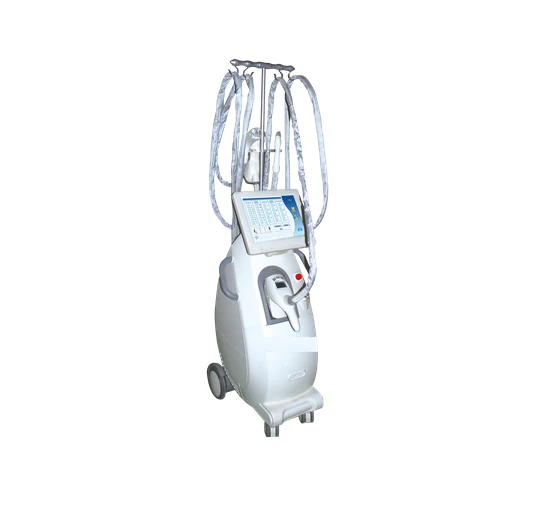
Ultrasonic Cavitation Machines
Cavitation machines buyer guide: how 40kHz ultrasonic cavitation fits a body-contouring menu, what to compare across configurations, and which claims to verify on the exact quotation.
40 kHz ultrasound↘06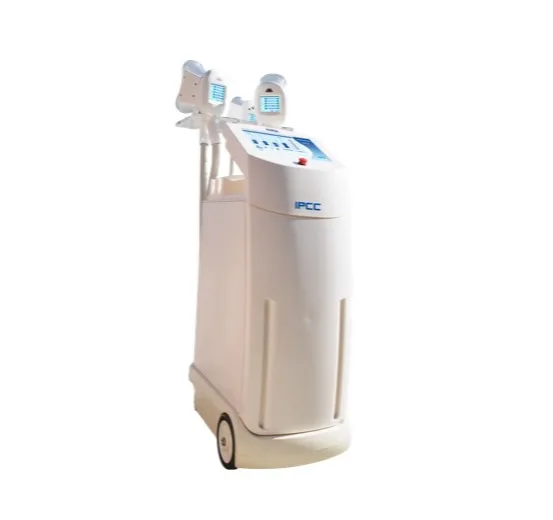
Cryolipolysis Fat Freezing Machine
Fat freezing machine buyer guide to cryolipolysis machines: a controlled-cooling equipment family for buyers planning a localized body-contouring workflow.
Controlled cooling↘Next step
Compare current configurations against the criteria in this guide.
Tell us your priority services, market, client mix and business type. Ask for the exact configuration, documents, training and service terms you need.
Describe your equipment plan ↘