Technology comparison
Lymphatic Drainage Machines: What Pressotherapy Adds to a Body Room
A lymphatic drainage machine moves fluid. It doesn't melt fat. That distinction matters more than any spec sheet. If you're buying one for your body room, you need to know what the sleeves and chambers are actually doing to the limb, which clients benefit, and where the medical line sits. Because the moment you promise lymphoedema treatment to a client with a swollen arm after breast surgery, you're not selling a wellness session anymore. You're practising medicine without a licence.
Buyer guide
What the machine actually does
Pressotherapy. Intermittent pneumatic compression. Sequential compression. The marketing names blur together, but the mechanism is the same: a pump inflates chambers inside a garment, one after another, squeezing the limb from distal to proximal. The pressure wave pushes fluid upward, assisting venous and lymphatic return. That's circulation support. That's comfort. It is not fat reduction.
One study measured tissue fluid pressures under a sleeve. Inflation to 50 mmHg generated pressures from 50 mmHg in the calf down to 10 mmHg in the groin. To 80 mmHg, the range was 80 to 20. To 120, it reached 40 in the upper thigh but still dropped off. Short inflation times produced mean tissue fluid pressure similar to a one-chamber sleeve. Twenty seconds of sequential inflation only managed 10-20 mmHg, regardless of whether the chamber pressure was 50, 80, or 120. Those numbers matter if you're trying to compare devices: a higher pump pressure does not automatically mean a higher pressure at the groin.
The border value for mobilising tissue fluid is 30 mmHg. Below that, you're mostly moving superficial fluid. Above it, you start to engage deeper lymphatics, but only if the inflation time is long enough to build threshold pressure. Five-second deflation periods are too short for tissue fluid pressure to drop back to zero. That means the next cycle starts from a compressed baseline. Quality of the cycle matters more than the maximum pressure printed on the pump.
Buyer guide
The medical background and the boundary you must respect
Manual lymphatic drainage is a real technique with a clinical history. Combined physical therapy, which includes manual drainage, multilayer bandaging, exercise and skin care, is recognised as an effective treatment for lymphoedema. Intermittent pneumatic compression can be used as an adjunct to that therapy, particularly for patients with compromised mobility. Some studies show it reduces limb volume, but once the treatment stops, the volume increases again. There is no cure for lymphoedema.
So if a client walks in with a swollen arm after axillary lymph node dissection for breast cancer, that's not a spa add-on. That's a medical condition with its own protocols, contraindications and a need for proper diagnosis. You do not sell them a pressotherapy session. You refer them to a lymphoedema specialist. Full stop.
Even in a medical context, the use of intermittent pneumatic compression remains controversial. High pressures can damage lymphatic structures. Residual proteins left in the interstitial space can cause rebound oedema. The same systematic review that found IPC effective also noted there is no consensus on frequency or treatment parameters. That's not a blank cheque for a beauty therapist to improvise. It's a warning that the device is not a toy.
Buyer guide
Why body rooms bundle it after cavitation
You already know the logic. A client books a cavitation session. You break down some fat cells. The triglycerides and cellular debris have to go somewhere. They enter the lymphatic system. So you put the client in a pressotherapy suit for 30 minutes to help move that fluid. It feels good. It looks like you're doing something extra. It gives you a reason to book the next session, because the client leaves feeling lighter and less bloated.
Does it improve fat loss outcomes? There is no study in our archive that proves that. What it improves is perceived value and retention. A salon running back-to-back sessions on a Saturday can keep a room turning over while the client does something passive. That's real revenue. Just don't pretend the machine is melting anything.
If you're building a body programme, the sequence matters. Our body programme guide walks through how to structure a course of cavitation, RF and cryolipolysis with appropriate intervals. Adding a pressotherapy session at the end of a cavitation treatment is a common pattern, but it's not mandatory. What is mandatory is that you explain to the client what the machine is doing: helping circulation and temporary fluid movement, not fat removal.
And if you're still shopping for the primary fat reduction device, look at our ultrasonic cavitation machines. We build those. We build cryolipolysis platforms and RF skin tightening too. We do not build a pressotherapy system. More on that in a moment.
Buyer guide
Evaluating the hardware: chambers, garments, hygiene
A pressotherapy machine is a pump plus a set of garments. The pump is usually simple: a compressor, valves, a control unit. The garment is where the money goes. Chambers are the individual air cells inside the garment. More chambers mean finer pressure gradation, but only if the pump can inflate them independently and in sequence. A cheap system with eight chambers but a pump that inflates them all at once is just a squeeze.
Chamber count matters, but so does chamber shape. Overlapping chambers reduce gaps in pressure. Look for a garment that covers the limb without pinching at the joints. A sleeve that ends mid-thigh leaves the inguinal nodes uncompressed, which defeats the purpose. Full-leg garments with a separate abdominal section are standard for body work. Check the material: it needs to be cleanable. Sweat, oil and dead skin accumulate inside those sleeves. If you can't wipe it down between clients, you have a hygiene problem.
Pressure range is the next spec. Low-level evidence of moderate quality shows significant outcomes with 45-60 minute sessions at 30-60 mmHg in sequential programmes. That's a useful benchmark. A pump that maxes out at 50 mmHg is probably fine for wellness use. One that goes to 200 mmHg is a medical device hunting for a medical indication. Ask the supplier what the minimum and maximum pressures are, how many chambers can be controlled independently, and what the inflation and deflation times are. If they can't answer, walk away.
One more thing: the garment itself is a consumable. Zips break. Seams leak. The supplier should stock replacements and sell them at a reasonable margin. Ask about that before you buy the pump, not after.
Buyer guide
Contraindications that matter in a body room
You need a screening checklist. Here's the minimum:
Acute deep vein thrombosis or phlebitis. Untreated or uncontrolled congestive heart failure. Severe peripheral arterial disease. Active skin infection, cellulitis or open wounds on the limb. Known or suspected pulmonary embolism. Acute inflammatory conditions of the limb. Malignant disease in the treatment area without medical clearance. Pregnancy. Severe pain or numbness of unknown cause.
That list is not exhaustive. If a client has any of those, no pressotherapy. If they have a history of lymphoedema, no pressotherapy without a medical referral. If they have varicose veins, use low pressure and avoid areas of visible bulging veins. If you're not sure, ask their doctor.
The same caution applies to compression garments worn after the session. A compression garment is not a substitute for medical compression stockings in lymphoedema management. It's a support garment. If a client needs medical compression, they need a prescription and a professional fitting. Selling them a one-size-fits-all sleeve from your retail shelf is not the same thing.
Post-treatment care matters too. Encourage hydration. Tell them to move around gently. No hot baths for a few hours. No alcohol. If they feel dizzy or nauseous during the session, stop and reassess. A pressotherapy session should be comfortable. If it hurts, something is wrong.
Buyer guide
What to ask the supplier who does build one
We don't build pressotherapy machines. We build cavitation, cryolipolysis and RF platforms. So this is not a sales pitch. It's a checklist for when you talk to someone who does build them.
First, ask for the technical manual. Not the brochure. The manual should give you the pressure range, chamber count per garment, inflation time range, deflation time range, and whether chambers inflate sequentially or in groups. If it doesn't, that's a red flag.
Second, ask about safety certifications. The machine should have an electrical safety mark for your region: CE in Europe, FDA 510(k) clearance in the US, TGA in Australia, or the equivalent. Ask for the certificate number and verify it on the regulator's database. A supplier who won't give you the number is hiding something.
Third, ask about training. Who trains your staff? Is there a clinical protocol document? Does the supplier provide a contraindication list and a client screening form? If the answer is 'it's easy, you just put it on and press start', that's not training. That's an accident waiting to happen.
Fourth, ask about spare parts and warranty. How long is the pump warranty? How long is the garment life expectancy? Can you buy replacement garments as a separate SKU? What's the lead time? If the supplier can't answer these, you're buying a disposable.
Finally, ask about the evidence. The supplier should be able to point you to published studies on their specific device, not just on intermittent pneumatic compression in general. If they quote a figure like 'increases lymphatic flow by 400%', ask for the source. There is no consensus on optimal parameters, so any supplier who claims their device is the only one that works is lying.
For more on how to vet any body-contouring equipment supplier, see our buyer guides.
Buyer guide
FAQ
Frequently asked questions
FAQIs a lymphatic drainage machine the same as a massage machine?
No. A lymphatic drainage massage machine usually refers to a handheld device with rollers or suction that mimics manual lymphatic drainage strokes. A pressotherapy machine uses inflatable chambers to apply sequential pressure. Both are considered circulation aids, but pressotherapy is more passive and can cover larger areas more consistently. Neither is a substitute for manual lymphatic drainage performed by a trained therapist in a medical context.
Can a pressotherapy machine reduce cellulite?
It can temporarily reduce the appearance of cellulite by moving excess fluid out of the tissue, making the skin look smoother for a few hours or a day. It does not break down fat cells or restructure connective tissue. For longer-lasting cellulite improvement, you need treatments that target fat and collagen, such as cavitation, radiofrequency or laser. Pressotherapy is best used as a complementary therapy to enhance comfort and perceived results.
How many chambers should a good pressotherapy garment have?
There is no single ideal number, but more chambers generally allow finer pressure gradation. A full-leg garment typically has 4 to 8 chambers. The critical factor is independent sequential inflation: each chamber must inflate after the previous one has reached its set pressure, then deflate completely before the next cycle. A lower chamber count with proper sequencing is better than many chambers inflated simultaneously.
Can I use a pressotherapy machine on a client with lymphoedema?
Not without medical supervision. Lymphoedema is a chronic medical condition that requires diagnosis and a treatment plan from a healthcare professional. Intermittent pneumatic compression can be an adjunct to complex decongestive therapy, but it has specific protocols and contraindications. Using it inappropriately can cause harm, including rebound swelling or damage to lymphatic vessels. In a spa or aesthetic setting, you should not treat known lymphoedema. Refer the client to a lymphoedema specialist.
Evidence trail
Published research behind this guide
This guide is educational material for equipment selection. It is not medical advice, an operating protocol or a promise of clinical outcome.
Read the research
- Intermittent pneumatic compression therapy: a systematic review - PubMed ↗
- Different physical treatment modalities for lymphoedema developing after axillary lymph node dissection for breast cancer: a review - PubMed ↗
- Intermittent Pneumatic Compression Dosage for Adults and ... ↗
- Intermittent Pneumatic Compression Devices for the Management of Lymphedema: A Review of Clinical Effectiveness and Guidelines - NCBI Bookshelf ↗
- Pressures and Timing of Intermittent Pneumatic Compression Devices for Efficient Tissue Fluid and Lymph Flow in Limbs with Lymphedema - PMC ↗
- Compression Devices for Treatment of Lymphedema and Peripheral Vascular Disease ↗
Ultrasonic Cavitation Machines
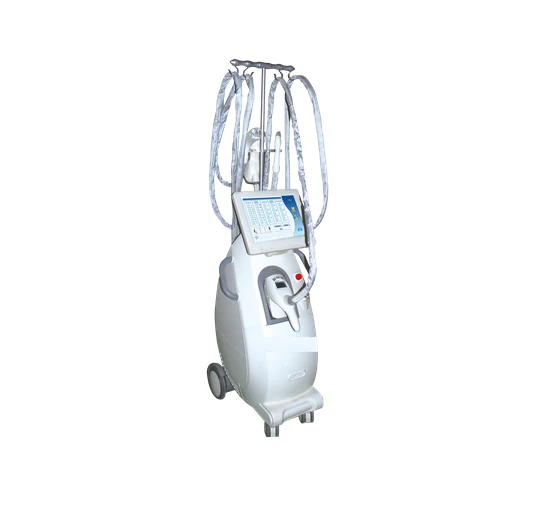
Cavitation machines buyer guide: how 40kHz ultrasonic cavitation fits a body-contouring menu, what to compare across configurations, and which claims to verify on the exact quotation.
40 kHz ultrasound↘06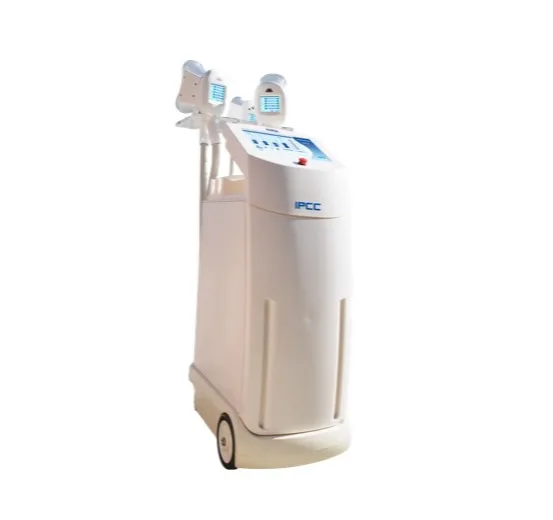
Cryolipolysis Fat Freezing Machine
Fat freezing machine buyer guide to cryolipolysis machines: a controlled-cooling equipment family for buyers planning a localized body-contouring workflow.
Controlled cooling↘Next step
Compare current configurations against the criteria in this guide.
Tell us your priority services, market, client mix and business type. Ask for the exact configuration, documents, training and service terms you need.
Describe your equipment plan ↘