Technology explainer
Does Non-Invasive Fat Reduction Work? Reading the Evidence Honestly
You've seen the before-and-after photos. The laser paddles, the freezing cups, the ultrasonic wands. Does any of it actually work? The answer is yes, but not the way the marketing often claims. Here's how to separate signal from noise in published studies, and what that means for your clinic.

Buyer guide
The evidence problem: what gets measured matters
Most buyers start by asking does non-invasive fat reduction work. The honest answer starts with another question: work for what? A device could shrink a waist circumference by 2.48 cm in a study, and still fail to show meaningful fat loss on MRI. Or it could reduce fat volume by 22.59 percent on imaging, but leave the client's jeans fitting the same.
Outcome measures in this field fall into three groups. Circumference reduction is the cheapest and most common. It's also the most confounded. Bloating, water retention, and even the measuring tape's tension can shift a number. Imaging studies, using MRI or ultrasound, show actual fat thickness changes. Weight is almost useless here: these technologies remove grams of fat, not kilograms, and a single salty meal can mask that on a scale.
Then there's time. A study measuring at one week captures swelling, not results. At one month, you might see real change. At six months, you see whether it lasted. Subject count matters too: a 12-patient pilot can be suggestive, but it's not proof. Who funded the study matters just as much. Every study in this guide is cited from public databases so you can check that yourself.
None of this is to say the studies are worthless. It's to say you have to read them like a clinician, not a consumer.
Buyer guide
What the published record actually supports, by modality
Cryolipolysis. The freezing approach has the strongest imaging evidence in the non-invasive category. A study with MRI evaluation at one month showed an average fat reduction of 22.59 percent (–8.39±1.50mm) on the inner thigh. That's a hard number, with a unit, from a peer-reviewed source. The same study used high-intensity focused ultrasound simultaneously, so the effect isn't isolated to cryolipolysis alone, but the imaging delta is real.
Low-level laser therapy. This is the classic "laser lipo" that clients ask about. What is i lipo laser? It's a low-level laser therapy (LLLT) device that uses red or near-infrared light to create temporary pores in fat cell membranes, letting lipid contents leak out. The evidence: a published study found LLLT significantly lowered waist circumference by 2.48 cm compared with 0.635 cm in the control group. Does laser light lipo work? Yes, for circumference reduction, but the effect size is modest and the mechanism doesn't destroy fat cells.
Radiofrequency. RF heats tissue to contract collagen and disrupt fat. A novel noninvasive radiofrequency technology significantly reduced submental fat thickness and circumference, with effectiveness maintained for 6 months after treatment. That's a strong durability finding for an area notoriously hard to treat. A separate selective-field RF study reduced abdominal circumference in 10 of 12 patients and reduced abdominal subcutaneous fat volume. Twelve patients is a small sample, but the binary result (10 of 12) is easy to explain to a client.
Ultrasound. Focused ultrasound is often combined with other modalities, as in the cryolipolysis study above. Isolated ultrasound evidence is thinner. Our ultrasonic cavitation machines are built for clinics that want to offer the treatment, but the published support for cavitation alone is less robust than for cryolipolysis or RF. That doesn't mean it doesn't work; it means you should set expectations lower and measure more carefully.
Topical additives. One randomized trial found that a topical body treatment with TriHex Technology® significantly increased adipose volume loss compared to placebo when combined with abdomen cryolipolysis or radiofrequency. The P values were .0238 at week 8 and .0078 at week 12. That's a real adjunct, but it's an adjunct, not a standalone.
Buyer guide
The confounders that inflate every result
Here's the part most marketing glosses over: in almost every clinical trial of non-invasive fat reduction, participants are told to maintain their usual diet and exercise. But they don't. They change. They drink more water. They skip dessert because they're paying for a treatment. Three weeks into a six-week course, many are eating cleaner without thinking about it.
That's a confounder, and it's massive. A 2.48 cm waist reduction in a laser study might be 30% lifestyle change, 30% measurement variability, and 40% actual device effect. We can't know. What we can know is that no published study controls for motivation-driven behavior change perfectly.
The second confounder is the placebo effect of touch and attention. Lying on a treatment bed for 30 minutes while a clinician palpates your abdomen is not a neutral experience. Control groups in these studies often get sham treatments, but the sham still involves the same ritual. That ritual has an effect.
Third: regression to the mean. Clients book treatments when they feel at their worst. Some improvement would happen anyway. Any study without a proper control group is measuring that too.
This is not a reason to dismiss the category. It's a reason to be precise in your advertising and honest in your consultation.
Buyer guide
What a clinic can honestly advertise
You cannot promise weight loss. None of these technologies are weight-loss treatments. A cryolipolysis cycle removes a volume of fat roughly the size of a tablespoon. On a scale, that's grams. What you can promise is localised fat reduction, measured in centimetres or millimetres, not kilograms.
You can promise circumference reduction, because the studies measure it. You can promise durability for RF submental treatments, because a study tracked it for six months. You can promise that results vary by individual, because they always do.
What wording invites a refund? "Lose 2 inches in 2 weeks." "Melt fat while you relax." "Permanent fat removal." None of those are supported by the published evidence. A client who comes in expecting a dress size drop will be disappointed, and disappointment leads to chargebacks.
The safer claim: "Clinical studies show an average waist circumference reduction of 2.48 cm after a course of low-level laser therapy, compared to 0.635 cm in a control group." That's true, sourceable, and sets a realistic expectation. If you want to quote the 22.59% inner thigh fat reduction from the cryolipolysis study, quote it exactly, and note that it was measured by MRI at one month and included simultaneous high-intensity focused ultrasound.
For clinics using our cryolipolysis platform, the imaging evidence is the strongest asset. For RF body contouring, the six-month durability data for submental treatment is a differentiator. For cavitation, be more conservative: "circumference reduction in published studies is modest and variable," and measure every client carefully.
Buyer guide
Setting up the consultation so everyone measures the same thing
The single most important procedure in your clinic is not the treatment. It's the baseline measurement. If you don't take it, you can't prove anything. Here's a protocol that works:
Measure circumference at fixed anatomical points, using a tension-controlled tape, at the same time of day, after voiding, before any thermal treatment. Take three measurements and record the average. For abdominal treatments, measure at the umbilicus, 5 cm above, and 5 cm below. For thighs, measure at the midpoint between the inguinal crease and the patella. Record to the nearest 0.1 cm.
Take a baseline photograph. Same lighting, same angle, same distance. A photograph is not a measurement, but it's evidence of change that a client can see.
Set the expectation in writing: "Based on published studies, you can expect a reduction of 1–3 cm in circumference after a full course, depending on your starting point, adherence, and lifestyle. Some clients see more; some see less. We will re-measure at session 4 and session 6."
Then re-measure at every session, and show the client the trend. If the trend is flat after three sessions, have a conversation: is the device not working for this client, or is the client's lifestyle offsetting the effect? Either way, you've built trust.
Do not let the client measure themselves at home with a fabric tape. That's a recipe for a refund request. You control the measurement, you control the narrative.
This is not bureaucracy. It's the difference between a clinic that sells a result and a clinic that sells a treatment.
Buyer guide
Checklist: evidence quality questions before you buy a device
Ask the manufacturer for published, peer-reviewed studies on their exact device. Not a competitor's device, not a different wavelength, not an animal model.
Check the outcome measure: circumference, imaging, weight, or something else?
Check the time point: one month, three months, six months?
Check the sample size: a 12-patient study is a pilot, not proof.
Check the control group: was there a sham treatment, or just a before-and-after?
Check the funding source: manufacturer-funded studies are not invalid, but they deserve extra scrutiny.
Ask for the raw data if you can get it. The mean reduction hides the spread. You want to know how many patients saw no change.
If a manufacturer cannot provide any of this, the device may still work, but you are buying on faith, not evidence.
Buyer guide
FAQ
Frequently asked questions
FAQDoes non-invasive fat reduction actually work?
Yes, but modestly. Published studies show average circumference reductions of around 2.48 cm for low-level laser therapy, and imaging-confirmed fat reduction of 22.59% for cryolipolysis combined with ultrasound. These are localised fat reductions, not weight loss. Results vary widely between individuals, and lifestyle changes during treatment can inflate the apparent effect. It works best for clients with localised pockets of fat who are already near their target weight.
What is i lipo laser, and is it different from liposuction?
i-lipo is a brand of low-level laser therapy (LLLT) device. It uses red or near-infrared light to create temporary pores in fat cell membranes, releasing lipid contents that are then metabolised by the body. It is completely non-invasive, unlike liposuction which surgically removes fat. LLLT is not a weight-loss treatment; it reduces circumference by a few centimetres over a course of sessions. The effect is not permanent if diet and exercise are not maintained.
How should I measure success for my clients?
Measure circumference at fixed anatomical points with a tension-controlled tape, at the same time of day, after voiding, before any treatment. Take three measurements and average them. Record to 0.1 cm. Do not rely on weight; the changes are too small to register on a scale. Take baseline photographs under identical lighting. Re-measure at every session and show the client the trend. This prevents disputes and sets realistic expectations.
Can I claim permanent fat reduction?
No. Cryolipolysis destroys some fat cells, and those cells do not return, but remaining fat cells can enlarge if the client gains weight. The published evidence for cryolipolysis shows fat reduction at one month, but long-term permanence beyond six months is less well documented. RF and laser treatments do not destroy fat cells; they shrink them temporarily. Advertising 'permanent fat removal' is unsupported and invites refunds.
Evidence trail
Published research behind this guide
This guide is educational material for equipment selection. It is not medical advice, an operating protocol or a promise of clinical outcome.
Read the research
- Low-level laser therapy for reducing body circumferences - PubMed ↗
- Safety and Efficacy of Simultaneous Application of High-intensity ... ↗
- A randomized double‐blind trial evaluating the efficacy and tolerability of topical body treatment with TriHex Technology® combined with abdomen cryolipolysis or radiofrequency procedures ↗
- Evaluation of safety and efficacy of noninvasive radiofrequency technology for submental rejuvenation - PubMed ↗
- Safety and efficacy of a non-contact radiofrequency device for body contouring in Asians - PubMed ↗
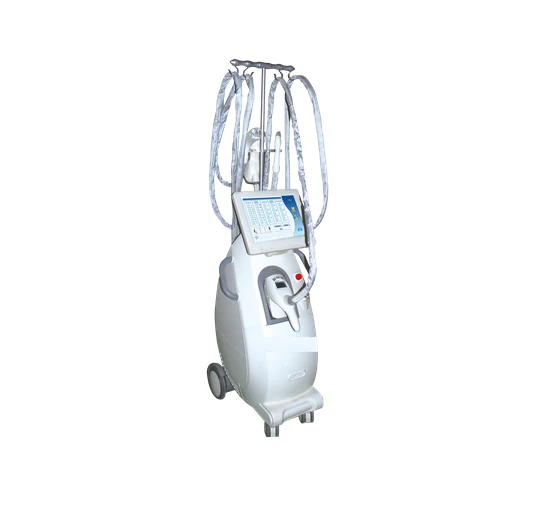
Ultrasonic Cavitation Machines
Cavitation machines buyer guide: how 40kHz ultrasonic cavitation fits a body-contouring menu, what to compare across configurations, and which claims to verify on the exact quotation.
40 kHz ultrasound↘06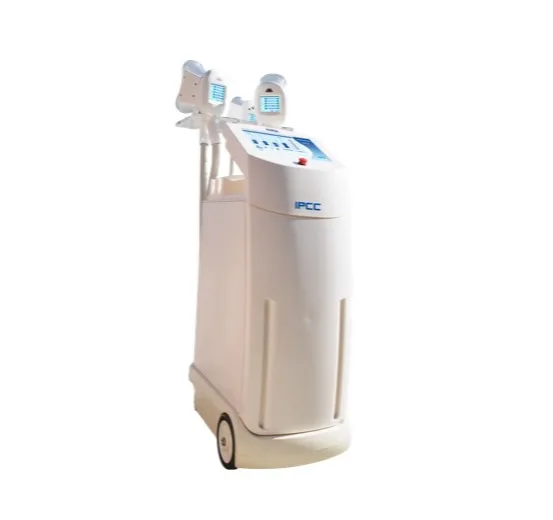
Cryolipolysis Fat Freezing Machine
Fat freezing machine buyer guide to cryolipolysis machines: a controlled-cooling equipment family for buyers planning a localized body-contouring workflow.
Controlled cooling↘Next step
Compare current configurations against the criteria in this guide.
Tell us your priority services, market, client mix and business type. Ask for the exact configuration, documents, training and service terms you need.
Describe your equipment plan ↘