Buyer criteria
How to Read a Cavitation Machine Spec Sheet
Two quotations, two spec tables, and the columns refuse to line up. Most cavitation machine specifications are written to be admired rather than compared, which is the opposite of what a buyer with a room to fill needs. Read the sheet line by line and decide which figures earn a column.
Buyer guide
Frequency tells you where, not how hard
A cavitation tip runs in kilohertz. The radiofrequency head on the same trolley runs in megahertz. Different physics, different job, and a sheet that blurs the two is counting on you being tired.
Our device manuals put 40 kHz on the ultrasonic tip and 2.64 MHz on the RF handpiece of one platform; a second offers variable RF from 1 to 4 MHz. Kilohertz is kilohertz, so ultrasound frequency compares honestly between quotations. What it buys is working depth. Lower reaches further into subcutaneous tissue, higher stays nearer the surface, and neither is a grade. The figure belongs on the sheet once per handpiece, never once for the console.
Keep expectations where the literature puts them. A review of ultrasound for skin tightening, body contouring and cellulite reduction found the modality reasonable for skin laxity, lipolysis and the appearance of cellulite, with adverse effects reported as pain, redness and swelling (Juhasz and colleagues, Dermatologic Surgery, 2018). Our ultrasonic cavitation equipment pages stay in that register.
Buyer guide
Output power: one word doing three jobs
One archived portable prints three power figures on a single page. Nominal power 350 W. Ultrasonic power 50 W. RF power no higher than 120 W. All three are real. Only one describes what leaves the head.
A second console in our engineering archive states 60 W of ultrasonic output beside 330 W of RF input power. Read that gap slowly. Input is what the machine draws, output is what the client receives, and a supplier quoting their input against a rival's output has won a comparison you never agreed to.
Ask for a method, not a bigger number. Measured where, into what load, at which level. Physiotherapy ultrasound settled this in public: IEC 61689 sets out how such a system's output is measured and what the manufacturer should specify, and IEC 60601-2-5 is the particular safety standard for the class. The catch is yours. IEC 61689 covers 0.5 MHz to 5 MHz, so a 40 kHz body tip sits outside it, which leaves the supplier's own written method as your only evidence.
Buyer guide
Duty cycle, and what happens between the pulses
Duty cycle is the share of the treatment period when energy is actually on, written as a percentage or as on-time against off-time. Continuous means the head never stops. Pulsed means it rests.
One six-handpiece platform in our engineering archive prints pulse width in ten steps up to 10 s beside a pulse delay in eight steps up to 8 s. Another console lists RF duration from 1 to 20 s. Longest delay against shortest pulse and the head is idle for most of the minute. Those lines set session length, room throughput, and how warm the handpiece feels by the fifth client.
No duty cycle line anywhere? Assume continuous, then ask what stops the head overheating. Nobody who engineered the power stage forgets to mention it.
Buyer guide
Handpiece count only means something with a job list
Handpiece count is the easiest number on the sheet to inflate. Six heads beat two on a comparison table and a tired buyer nods along. Six heads with no stated job each is a bag of parts.
That archived platform names an area for every head: wide heads for back and abdomen, narrower ones for arms and legs, small ones for face and double chin, plus a 40 kHz ultrasound head rated at 100 W. Tip diameter is a fit specification, not a strength claim, listed as 72 mm on the body tips of two sheets. Get the area list in writing, then the packing list, which our device manuals itemise down to handles, holders, filters and keys by quantity.
One line deserves a hard look. A head sold for a body area where nothing is cleared should end the meeting, and the FDA states plainly that no non-invasive body contouring device is cleared or approved for treating the breasts. If radiofrequency shares the trolley, score it against RF skin tightening criteria on its own terms.
Buyer guide
The screen, and the lines your electrician reads
Screen size is on the sheet because it photographs well. Control is what you buy. One platform in our device manuals runs a 12.1 inch touch screen with a key switch and an emergency button, and the interface instructions matter more: parameters save as presets, the working time counts down and stops the machine at zero, and suction intensity self-tests. That hard stop keeps a newer therapist inside your protocol. RF power in ten levels, by the way, means nothing until the manual prints the span behind it, 5 to 50 W.
Then the boring block at the bottom. One archived platform prints two mains lines, AC 200-240 V and AC 100-120 V, both at 50-60 Hz, each with its own maximum current. Another states AC 200-240 V 50-60 Hz at a maximum of 4 A. Fuses appear as a 250 V/10 A replacement part in one manual, a 10 A maximum in another. Cooling reads as air and water on one console, semiconductor on a portable.
Environmental lines are the ones buyers skim and installers curse. One manual specifies a room between 15 and 30 degrees Celsius, humidity no higher than 80 percent, and clearance between the vent holes and the wall. Measure before you sign. Where a quotation says nothing about cooling, ambient range or fuse rating, our service and support view is blunt: you are buying a shell and a hope.
Buyer guide
The comparison block: verdict, unit, question, line by line
Rule two columns on a page, one quotation each, then work down this list. A cell stays blank unless the sheet gives you the unit and measurement point named here.
Ultrasound frequency. Comparable. Needs kHz per handpiece, not per console. Ask which head it describes.
RF frequency. Comparable. Needs MHz per handpiece. Ask whether it is fixed at 2.64 MHz or variable from 1 to 4 MHz.
Ultrasonic output power. Comparable only with a method. Needs watts at the tip, load and level stated. Ask for that method in writing.
RF input against RF output. Not comparable as printed. One archive sheet shows 330 W input beside 50 W output. Ask for both, labelled.
Nominal or console power. Not a dose. Watts at the plug, like that 350 W portable. Hand it to your electrician.
Level scales. Comparable only with the span printed. Ten RF levels mean nothing until 5 to 50 W sits beside them.
Duty cycle. Comparable. Needs on-time against off-time in seconds. Ask what the manual says about rest intervals.
Handpiece count. Not comparable alone. Needs a body area per head. Ask for the area list and packing list.
Tip diameter. Comparable as fit, never as strength. Millimetres, like those 72 mm body tips. Ask what one pass covers.
Mains supply. Comparable. Volts, hertz and maximum current for the band you receive. Ask which band leaves the factory.
Fuse rating. Comparable. Volts and amps of the replaceable fuse, as in 250 V/10 A. Ask who may change it.
Cooling method. Comparable in kind. Air, air and water, or semiconductor. Ask what run time it supports.
Safety standard and certification. Comparable in kind. Needs the standard the machine is built and tested to, IEC 60601-1 for basic safety of medical electrical equipment with IEC 60601-2-5 as the particular standard, plus certificate number, issuing body and stated scope. Ask which document covers the exact model you are quoted. A certificate naming a different model, or a group listing, is not evidence for the unit in your quotation.
Ambient range. Comparable. Celsius, humidity, vent clearance to the wall. Measure your room before you answer it.
Net weight and cabinet size. Not performance. Kilograms and centimetres. Use them for the doorway and the trolley.
Buyer guide
Three lines that give away a rebadged shell
Three fields together catch most machines that were assembled rather than engineered. First: output stated only at the console. A factory that built the transducer can tell you what leaves the tip and how the figure was taken. An assembler who bought the module in a box reads the plate on the power supply and hopes you stop there.
Second: a handpiece list with no job per head and no packing list behind it. Counts get copied between brochures in an afternoon. Quantities, filters, spare keys and a three-metre supply lead do not travel that easily. Third: a thin electrical and thermal block. No fuse rating, no cooling method, no ambient range, one voltage band.
So put seven things in the email before any deposit leaves your account. 1. The written measurement method behind every output figure. 2. Frequency restated per handpiece, kilohertz and megahertz kept apart. 3. The body area each head is built for. 4. The packing list, itemised by quantity, down to filters and keys. 5. The electrical block for your voltage band: mains, maximum current, fuse rating, cooling, ambient range. 6. The safety certificate as a document: standard, number, issuing body, and the scope printed on it, with your model named inside that scope. 7. The operation manual for the exact model you are quoted.
Either that manual matches the spec sheet line for line or it does not. That comparison teaches you more than any factory photograph.
Frequently asked questions
FAQIs a higher wattage cavitation machine a better machine?
Not on its own. A wattage means something only once you know where it was measured. One archived unit prints 350 W of nominal power, 50 W of ultrasonic power and RF power no higher than 120 W on one page. Only the tip figure describes what reaches a client. Ask where the number was taken.
Which specifications can I compare directly between two quotations?
Frequency per handpiece, ultrasonic output at the tip with a measurement method attached, duty cycle as on-time against off-time, handpiece count paired with a job for each head, and the mains, fuse, cooling and ambient lines. Console rated power, unlabelled level scales and net weight are packaging. Where a figure lacks a unit or measurement point, leave the cell blank.
The spec sheet has no duty cycle line. Should I worry?
Enough to ask, yes. Duty cycle sets how long the head works against how long it rests, which drives session length, room throughput and heat build-up. One archived platform gives pulse width in ten steps up to 10 s beside a pulse delay in eight steps up to 8 s. The figure exists whenever a factory has done the work.
Do the specifications tell me who I can safely treat?
No, and that is not their job. The contraindication list lives in the operation manual, and archived manuals rule out cardiac pacemakers or implanted defibrillators, pregnancy, epilepsy, severe diabetes, hypertension and heart disease, active herpes, and damaged skin or malignant lesions in the treatment area. Heat-based handpieces carry burn and hyperpigmentation risk, higher in deeper skin tones. Screening belongs with a clinician.
Evidence trail
Published research behind this guide
This guide is educational material for equipment selection. It is not medical advice, an operating protocol or a promise of clinical outcome.
Read the research
- Juhasz M, Korta D, Mesinkovska NA (2018), A Review of the Use of Ultrasound for Skin Tightening, Body Contouring, and Cellulite Reduction in Dermatology, Dermatologic Surgery 44(7):949-963 ↗
- IEC 61689:2022 (Edition 4.0), Ultrasonics, Physiotherapy systems, Field specifications and methods of measurement in the frequency range 0,5 MHz to 5 MHz ↗
- IEC 60601-2-5:2009 (Edition 3.0), Medical electrical equipment, Part 2-5: Particular requirements for the basic safety and essential performance of ultrasonic physiotherapy equipment ↗
- IEC 60601-1:2005+AMD1:2012+AMD2:2020 CSV (Edition 3.2), Medical electrical equipment, Part 1: General requirements for basic safety and essential performance ↗
- U.S. Food and Drug Administration, Non-Invasive Body Contouring Technologies ↗
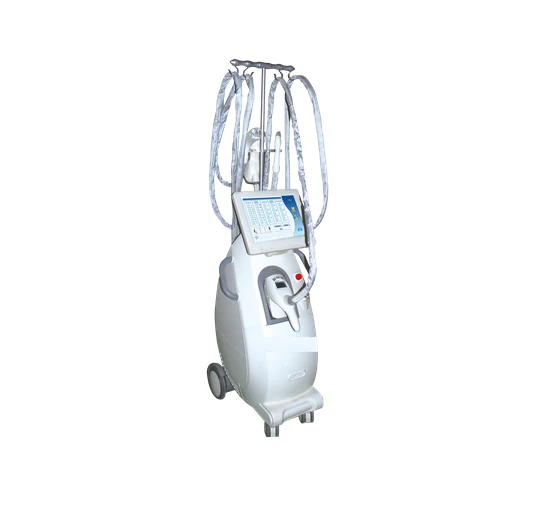
Ultrasonic Cavitation Machines
Cavitation machines buyer guide: how 40kHz ultrasonic cavitation fits a body-contouring menu, what to compare across configurations, and which claims to verify on the exact quotation.
40 kHz ultrasound↘05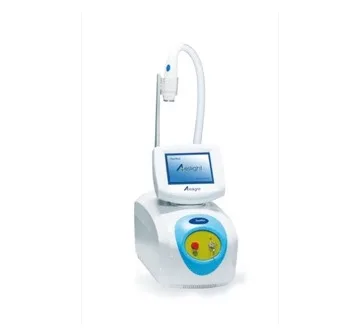
RF Skin Tightening
A non-laser energy family for buyers comparing thermal skin platforms.
Radio frequency↘Next step
Compare current configurations against the criteria in this guide.
Tell us your priority services, market, client mix and business type. Ask for the exact configuration, documents, training and service terms you need.
Describe your equipment plan ↘