Clinic operations
Training a Body Contouring Therapist
Body contouring therapist training is usually sold as two days in a hotel room and a certificate at the end. That proves she turned up. It does not prove she can screen a client, refuse one, run a clean pass and know the exact moment to stop, which is what your insurer and your first complaint will care about.
Buyer guide
A certificate only proves attendance
Ask an owner how her therapist was trained and you get a date, never a demonstration.
Split the work in two. Judgement comes first: who gets treated, who gets sent home, what gets promised out loud. Hands come second. Owners over-invest in the second half because it looks like the skill, and the complaints arrive from the first. So write a competence checklist. Eight items, each signed off by watching her, the pass criterion phrased as something you saw.
- Screening and refusal. Pass: she caught a planted contraindication inside a full history and turned that client away, unprompted.
- Expectation setting. Pass: she said what the category does and does not do, in her own words, before any consent form appeared.
- Coupling and pass technique. Pass: medium applied evenly and topped up as it dried, head pressed flat, trigger released before the head lifted.
- Recognising an adverse response and stopping. Pass: she stopped a rehearsed session on the trigger itself, not two passes later.
- Baseline measurement and photography. Pass: she reproduced the protocol from the written sheet alone, and her second set matched her first.
- Aftercare instruction. Pass: same content, same order as yesterday, sheet handed over rather than promised.
- Documentation. Pass: the file she wrote matched the session you had just watched.
- Escalation. Pass: she named the person, the number and the deadline without looking any of them up.
A therapist who explains cavitation beautifully and can't say no to a friendly client isn't ready.
Scope of practice is a local question, so settle it first. England sits mid-reform: the Department of Health and Social Care confirmed in August 2025 that a licensing scheme is coming, with green, amber and red risk tiers, nationally recognised standards for education, training and qualifications, and the top tier restricted to regulated healthcare professionals. Not in force yet. Elsewhere it runs from strict restriction to nothing, so get your position in writing.
Buyer guide
Refusal, and the honest consultation
Screening is usually taught as a form to hand over. It isn't a form. It's a conversation where she hears something inconvenient and acts on it.
Start from your own machine's stop list. Our device manuals for the body slimming and radiofrequency platforms exclude cardiac pacemakers and implanted defibrillators, pregnancy, epilepsy, serious heart disease, severe hypertension and severe diabetes, serious blood coagulation disorders, and recent fever, infection or inflammatory illness. Then the local picture: damaged or infected skin, active herpes, dermatitis, atypical moles or malignant lesions in the field, vascular surgery on that area inside the past two months. Jewellery comes off before a radiofrequency pass. The same manuals fence off eyes, throat, mouth, ears, mucosa, nipples and genitals.
Test her on the awkward version, because the tidy version never happens. A pacemaker mentioned halfway through undressing. A client who says the mole on her flank looks different lately, which ends in a referral, since diagnosing a skin lesion belongs to a clinician and never to a therapist holding a transducer. Refusal costs nothing if she replaces rather than declines: one pinchable bulge on a stable-weight client may suit a cryolipolysis platform better than any handpiece pass.
Every unhappy client was promised something, usually in the last two minutes, by a therapist trying to be encouraging. Give her three plain sentences to own. What the category does: localised deposits, in named areas. What it doesn't: weight loss, and no substitute for surgery. How long: a course, then patience.
Skin matters as much as fat. Our skin science training material grades pigmentation in four bands, and at the heavier two it records that inflammation or trauma readily leaves pigment behind, clearing slowly. A parallel sensitivity scale runs from skin that barely reacts up to skin that flares at cosmetics, heat, alcohol, spicy food and exercise. Both belong in the consultation, not at pass three. Said early, that's consent. Said afterwards, it's an excuse.
Buyer guide
Coupling, contact and pass discipline
Three dull habits separate a competent operator from a nervous one. Coupling first. Our device manuals ask for the medium to go on evenly and be topped up as it dries, and for the head to sit pressed flat rather than skate across skin, because a partly lifted head is where discomfort starts. A 40 kHz body tip with a 72 mm face, the configuration in our cavitation specification sheets, needs that whole face in contact to do anything. Our guide to ultrasonic cavitation machines covers how handpiece format changes a pass.
Second, the trigger. Our manuals are blunt: released before the head leaves the skin, never after. Ten minutes fixes that habit on day one, and nothing fixes it on day two hundred.
Third is energy discipline. Parameters drop over bony ground. They start low, with a test area, on anyone who has had injectable work. Our manuals tell her to ask how it feels as she goes, to stop increasing energy once warmth is reported, and to stop treating outright if the client is uncomfortable. That last one outranks everything else.
Monopolar radiofrequency needs its own warning. Our manuals note that the distance between the return patch and the handpiece sets how hot the pass feels, nearer being hotter, and comfort adjustment is easy to abuse. Cut the output or stop, check the skin, then move the patch and resume lower. Repositioning happens from a stopped state, never to push through discomfort. Cooling has its own prep: our cryolipolysis manual requires petroleum jelly and then an antifreeze membrane before the applicator seats, at a set temperature of 1 to 4 degrees Celsius across a thirty minute working time. Skip the membrane and you've produced a cold injury, not a treatment.
Buyer guide
The stop reflex, and the name she calls
Stopping is a trained reflex, not an instinct. With a chatty client and a full afternoon behind her, a therapist talks past a warning sign unless the alternative has been rehearsed.
Give her the reported pattern first. An analysis of the FDA device experience database covering January 2011 to June 2021 identified 1,325 reports across six non-invasive body contouring modalities. Cryolipolysis accounted for 507 of them, from 28 countries, with paradoxical adipose hyperplasia the commonest event at 380 of those reports. The FDA's public guidance is blunt about the tail: some complications are brief, others become permanent or need surgery to correct.
Then the triggers, and none of them is negotiable.
- Pain that climbs instead of settling.
- Blanching, mottling, or a sharply edged patch of colour change.
- A blister anywhere in the field.
- A client who goes faint, nauseated or clammy.
- A client who asks her to stop, or who simply reports discomfort, which our manuals treat as a stop instruction in its own right.
What follows is fixed too, in this order every time.
- End the pass and put the console on standby.
- Photograph the skin before it settles or changes.
- Write the incident up the same day, in that client's file.
- Call the named escalation contact inside the deadline you set.
Escalation needs a named person, not a policy document. Cryolipolysis shows why. Nikolis and Enright reviewed 8,658 cycles in 2,114 patients across eight Canadian centres and found paradoxical adipose hyperplasia in nine patients across 13 anatomic regions. Per cycle, incidence ran at 0.39% on the older units and 0.05% on the newer ones, against the 0.025% quoted by the manufacturer of the system studied. Rare, not theoretical. It surfaces weeks to months later, usually inside a year, and six of those nine needed corrective liposuction. Spotting a firm, enlarging mass and referring it promptly is the job. Booking another cycle is not.
Buyer guide
Baseline, photographs and the file
You can't demonstrate a result you never measured, and you can't defend a complaint with a memory. Fix the protocol before the first paying client and keep it identical. Same tape, same written landmarks, same time of day. Camera, distance, background, lighting, underwear, posture: pin all six and never move them. If the after photo needed better light to look good, you already know what it shows.
Then the part owners skip and lawyers enjoy. Every session file carries the same seven things.
- Screening answers, dated, proving the question came before treatment rather than after it.
- Consent that records what it actually covered, because a signature on a blank form proves nothing.
- Areas treated, marked on a body map, which ends the argument about which flank.
- Parameters and duration per area, showing the session sat inside the manual's range.
- What the client said mid-pass, in her words.
- Confirmation that the aftercare sheet was handed over, because the day-three phone call turns on whether she followed it.
- Before and after photographs under the fixed conditions above, filed with the session rather than in a marketing folder.
That's the documentation standard. Four minutes a session, and the only version of events that survives a year.
Buyer guide
What to demand from a supplier, and from a course
Most equipment training is an unboxing video with a sales manager narrating. Ask for better while the quotation is still open, because your leverage vanishes the day you pay. Put these in the order, not the email thread.
- The operating manual in your working language, delivered before the money moves.
- Contraindications and forbidden zones for the handpieces you are actually buying, not a generic category list.
- Parameter starting points by area and client type, with the reasoning attached.
- Supervised hands-on time, with a trainer correcting your therapist's grip and her trigger habit rather than demonstrating on a model.
- A dated training record naming who was trained on what, since that is the document an insurer asks to see.
- The adverse event reporting route, and the name of whoever answers it.
- The price of retraining when your therapist leaves in fourteen months.
The last two are rarely offered unless you push. Our service and support commitments set out what we put in writing on installation, training and parts.
Supplier training teaches your machine, not anatomy, skin behaviour or consultation, which is why most owners also buy an outside course or hire someone holding a certificate. Course names tell you nothing. Ask whether the qualification is regulated where you operate and at what level in the national framework, whether the course includes supervised practice on real bodies rather than demonstration plus a paper, whether it is device-specific or generic, and whether anyone assesses by observation.
Then the question nobody asks until the claim arrives. Before you hire, email your insurance broker three facts: the device category you are buying, the exact qualification your candidate holds, and the treatments you intend to sell. Ask for written confirmation of cover on those three, and keep the reply. England's consultation response lists appropriate indemnity and insurance among the scheme's aims but sets no threshold, and nothing is in force, so your insurer sets your hiring bar rather than a regulator.
Run your own sign-off anyway. Eight competences, watched instead of asked about, on a colleague before anyone paying gets near the couch. It takes an afternoon.
Frequently asked questions
FAQWhat should a body contouring therapist competence checklist contain?
Eight items, every one signed off by observation: screening and refusal, expectation setting, coupling and pass technique, recognising an adverse response and stopping, baseline measurement and photography, aftercare instruction, documentation, and escalation. Write a pass criterion beside each, phrased as something you watched her do rather than something she told you she knows. An attendance certificate substitutes for none of the eight.
How do I judge a body contouring training course before paying for it?
Four checks. Whether the qualification is regulated where you operate, and at what level. Whether the course includes supervised practice on real bodies rather than demonstration only. Whether it is device-specific or generic, since a generic certificate will not cover a cooling applicator. Whether assessment happens by observation. Then confirm in writing with your insurance broker that they accept that qualification for the modality you are buying.
Does my therapist need a medical qualification to run these devices?
That depends on your market, and the rules are moving. England's Department of Health and Social Care confirmed in August 2025 that a licensing scheme with nationally recognised education, training and qualification standards is coming, sorting procedures into green, amber and red risk tiers, with the highest tier restricted to regulated healthcare professionals. It is not yet in force. Until your own jurisdiction settles, your insurer sets the practical bar, so get that confirmed in writing before you hire.
What should stop a session immediately?
Pain that climbs rather than settles, blanching or a sharply edged colour change, blistering, a client who feels faint or nauseated, or a client who asks you to stop. Our device manuals also instruct the operator to stop when a client simply reports discomfort. End the pass, put the console on standby, photograph the skin and write the incident up the same day. A therapist who negotiates with a warning sign generates your first claim.
What is the most common training gap?
Refusal. Therapists are trained to deliver treatments and rewarded for booking them, so saying no feels like failure, and then a contraindicated client gets treated because she was pleasant and insistent. Fix it by rehearsing the script until it sounds comfortable, and by giving her something to offer every time: a different area, a different modality, or a referral with an open invitation to come back.
Evidence trail
Published research behind this guide
This guide is educational material for equipment selection. It is not medical advice, an operating protocol or a promise of clinical outcome.
Read the research
- Department of Health and Social Care. The licensing of non-surgical cosmetic procedures in England: consultation response. GOV.UK, 7 August 2025. Sets out a three-tier green, amber and red risk model with nationally recognised requirements and standards for education, training and qualifications, highest-risk procedures restricted to qualified healthcare professionals under CQC regulation, and appropriate indemnity and insurance among the scheme's aims; further consultation still to come and the scheme not yet in force. ↗
- Nguyen CN, Nguyen QD, Hebert AA, Gold MH. Adverse Events of Non-Invasive Body Contouring: Analysis of the Food and Drug Administration Manufacturer and User Facility Device Experience Database. Dermatologic Surgery, 2022;48(9):943-948. 1,325 device reports across six modalities for January 2011 to June 2021; cryolipolysis accounted for 507 reports from 28 countries, with paradoxical adipose hyperplasia the most common event at 380 of those reports. ↗
- Nikolis A, Enright KM. A Multicenter Evaluation of Paradoxical Adipose Hyperplasia Following Cryolipolysis for Fat Reduction and Body Contouring: A Review of 8658 Cycles in 2114 Patients. Aesthetic Surgery Journal, 2021;41(8):932-941. Nine affected patients across 13 anatomic regions at eight Canadian centres; per-cycle incidence 0.39% on 2015-2016 units and 0.05% on 2017-2019 units against the manufacturer-quoted 0.025%; six of the nine required corrective liposuction. ↗
- US Food and Drug Administration. Non-Invasive Body Contouring Technologies. Consumer guidance on radiofrequency and other body contouring devices, noting that only devices authorised for cosmetic use should be used for these effects, and that while some complications are short-lived, others may last a long time, become permanent or require surgery to correct. ↗
- Franzoni A, Goldman A. Paradoxical Adipose Hyperplasia. StatPearls, NCBI Bookshelf NBK606530, updated August 2024. Onset several weeks to months after cryolipolysis and generally within twelve months; no documented cases of spontaneous resolution; surgical management, with repeat cryolipolysis reported to aggravate the condition. ↗
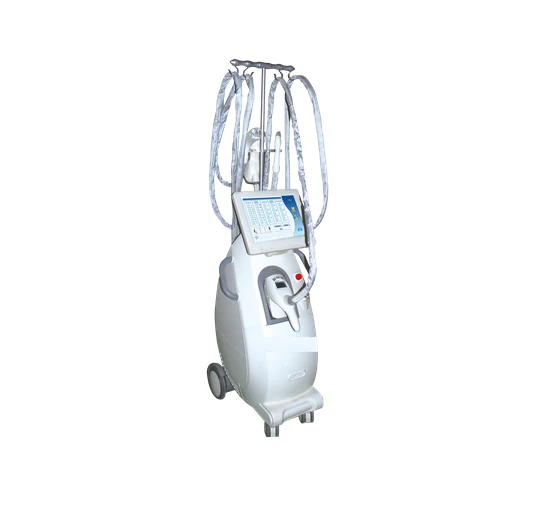
Ultrasonic Cavitation Machines
Cavitation machines buyer guide: how 40kHz ultrasonic cavitation fits a body-contouring menu, what to compare across configurations, and which claims to verify on the exact quotation.
40 kHz ultrasound↘06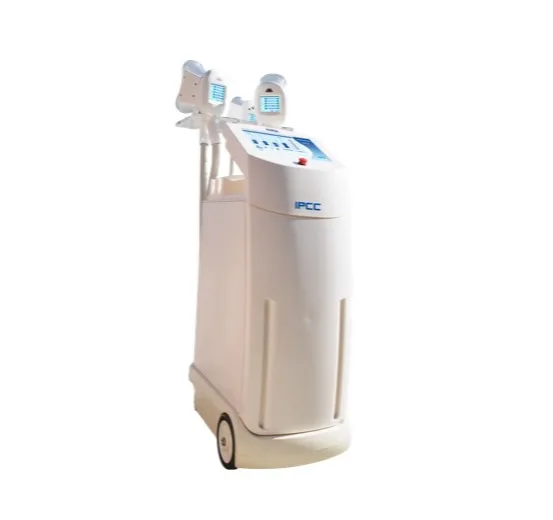
Cryolipolysis Fat Freezing Machine
Fat freezing machine buyer guide to cryolipolysis machines: a controlled-cooling equipment family for buyers planning a localized body-contouring workflow.
Controlled cooling↘Next step
Compare current configurations against the criteria in this guide.
Tell us your priority services, market, client mix and business type. Ask for the exact configuration, documents, training and service terms you need.
Describe your equipment plan ↘