Safety and contraindications
Ultrasonic Cavitation Safety: Warnings and Who to Refuse
Search for an ultrasonic cavitation warning and you get clinic pages promising a flat stomach, then a frightened forum thread about cancer. Here's the buyer's version: what the category does to a body, and who your room should turn away at the door.
Buyer guide
The cancer question, answered without the flinch
Can ultrasonic cavitation cause cancer? The question exists for an honest reason. Brochures say the treatment ruptures fat cells, and anything that disrupts tissue invites the thought that it might disrupt the wrong tissue.
Here's the physics, briefly. Ultrasound isn't radiation in the X-ray sense. The International Commission on Non-Ionizing Radiation Protection describes it as mechanical, acoustic waves, and sound carries none of the photon energy that breaks chemical bonds. On the published evidence, no authority we can cite establishes a causal link. ICNIRP's 2020 cosmetic statement inventories what does go wrong with cosmetic ultrasound: pain, oedema, bruising, erythema, burns, eye injury. Its 2024 airborne statement works through hearing loss and non-specific symptoms. Carcinogenesis is an endpoint in neither.
None of that makes the treatment appropriate for someone who has cancer. Active malignancy is a standard contraindication, and our device manuals put malignant lesions in the field on the do-not-treat list beside infection, damaged skin and herpes. A cancer history isn't a therapist's call either. It goes to the treating physician for written clearance. Refer, don't screen.
Buyer guide
Refusals your front desk shouldn't be negotiating
Some conditions are a conversation. These are not. Print this, laminate it, keep it at the desk.
| Condition | Handling rule | Basis |
|---|---|---|
| Pregnancy, and breastfeeding with it | Absolute refusal | Our device manuals; ICNIRP 2020, which recommends no cosmetic non-ionising procedures in pregnancy |
| Active malignancy, or a malignant lesion in the treatment area | Absolute refusal | Do-not-treat list in our device manuals |
| Cancer history, remission, past radiotherapy | Written physician clearance | Our treatment protocol; remission sits outside a therapist's scope |
| Pacemaker, implantable defibrillator, any active implanted electronic device | Absolute refusal | Our device manuals; ICNIRP 2020, risks for wearers unless precautions are taken |
| Metal implants, plates, pins, past bone surgery in or near the field | Written clearance, jewellery off regardless | Our treatment protocol and device manuals |
| Coagulation or bleeding disorder | Absolute refusal, with no clearance route | Serious blood coagulation disease sits on the do-not-treat list in our device manuals |
| Anticoagulant therapy | Absolute refusal while on therapy and for two weeks after the last dose | Our device manuals contraindicate treatment for anyone who has had anticoagulant therapy within the past two weeks |
| Vascular or other surgery in the treatment area within the past two months | Postpone until two months have passed, then written physician clearance before the first session | Listed in our device manuals |
| Severe diabetes, uncontrolled hypertension, heart disease, epilepsy | Absolute refusal | Our device manuals; ICNIRP 2020 also names diabetes |
| Autoimmune, liver or kidney disease, kidney stones, oral retinoid within 12 months | Written clearance | Our treatment protocol; ICNIRP 2020 cites guidance to consult a practitioner |
| Fever, infection, broken skin, active herpes, dermatitis or atypical moles in the area | Absolute refusal until it clears | Listed in our device manuals |
| Fitzpatrick IV to VI, or any client who pigments after inflammation | Caution and modify | ICNIRP 2020 on hyperpigmentation risk in darker skin from light-based treatments; our skin training manual |
| Throat, eyes and orbit, chest over the heart, spine, reproductive organs | Absolute refusal as treatment sites | Our protocol scopes body handpieces to abdomen, legs, buttocks, back; ICNIRP 2020 on eye injury |
One rule about the rules. When a client matches more than one row, the strictest row wins. A bleeding disorder whose surgery was three months ago is still a refusal. And nobody in your room suggests pausing a blood thinner to qualify for a booking.
Pregnancy is flat at any stage, and breastfeeding sits in the same grey zone because nobody has the data. Implanted electronics are just as flat: your therapist can't define what a cardiologist would call a precaution.
Liver and kidney disease need care in the other direction, because the internet is confident here and the evidence is thin. A prospective trial of low-frequency, low-intensity ultrasound in twenty women, published in Aesthetic Plastic Surgery in 2014, found no significant change in liver enzymes, lipids, free fatty acids or insulin over five abdominal sessions. Fasting glucose did rise significantly. Not alarming, not nothing. A compromised liver sends the client to a doctor, not to your reassurance.
Buyer guide
Where the applicator does not go
Regions before parameters. Keep the head off the throat, away from the eyes and orbital rim, off the chest over the heart, off the spine, clear of the reproductive organs. ICNIRP records an eye injury, an acute rise in intraocular pressure with accommodation spasm, after cosmetic ultrasound tightening of the eyelid.
Bone gets underestimated. That 2014 trial logged pain around bony areas, mild burning, and tingling or unilateral numbness in the lower limbs. Thin tissue over a bony prominence gives energy nowhere useful to go.
Burns are avoidable and they still happen. Our treatment protocol is blunt about contact: the handpiece has to sit properly on the skin, because poor contact is what produces sudden localised heating. Clean the area, prepare it, couple it, then move. Of 152 volunteers treated for abdominal adiposity with focused ultrasound in a study ICNIRP summarises, two sustained skin burns and one was second degree. Coupling isn't a comfort detail. It's burn control.
Pigment deserves a briefing even though cavitation targets no chromophore. ICNIRP records higher postinflammatory hyperpigmentation risk in darker skin from light-based cosmetic treatments, and our skin training manual keeps heat off a treated area for three days in clients who pigment easily. Cavitation is almost always sold beside radiofrequency and vacuum, and both inflame skin. Build protocol aggression around observed response, and write that into your body programme design.
Buyer guide
Client screening and consent that survives a complaint
A form that asks whether the client has any medical conditions collects nothing. Name them, one line at a time, with a rule beside each answer.
- Pregnant or breastfeeding? Absolute refusal.
- Cancer now, or a malignant lesion in the area? Absolute refusal.
- Cancer before, remission, radiotherapy ever? Written physician clearance, filed before booking.
- Pacemaker, defibrillator, neurostimulator, insulin pump, cochlear implant? Absolute refusal.
- Metal implants, plates, pins, and exactly where they sit? Written clearance, jewellery off regardless.
- Coagulation or bleeding disorder? Absolute refusal, with no clearance route.
- Anticoagulant therapy? Absolute refusal while on therapy and for two weeks after the last dose.
- Vascular or other surgery in the treatment area within the past two months? Postpone until two months have passed, then written physician clearance before the first session.
- Severe diabetes, uncontrolled hypertension, heart disease, epilepsy? Absolute refusal.
- Autoimmune, liver or kidney disease, kidney stones, oral retinoid within 12 months? Written clearance.
- Skin on the day: fever, infection, broken skin, herpes, dermatitis or atypical moles in the area? Absolute refusal until it clears.
- Skin type, and how this skin behaved after past inflammation? Caution and modify, and it sets your starting parameters.
- Everything else they take, prescription or otherwise? Write it down and check it against the rows above before you book.
- Signature and date, asked again every visit. Conditions change between sessions.
Consent has a second job, the one most clinics skip. It should say what the treatment is not. Published work here reports circumference change, not weight loss and not better health: the 2014 trial measured mean reductions of 1.5, 2.1 and 1.9 cm at waist, abdomen and umbilicus. ICNIRP is harder on the evidence base, describing studies often tied to manufacturers, no randomised controlled trials for the body-contouring ultrasound reviewed, and no follow-up past six months. Say that before the client pays.
Then keep records like someone will read them. Most reported adverse effects from cosmetic ultrasound settled in a week or so on ICNIRP's reading, which is reassuring and also short. Photograph under fixed lighting. Log handpiece, parameters, duration, area. Keep the intake, the physician letters, the refusals. A refusal nobody wrote down never happened.
Buyer guide
The operator, the noise and the room
The person most exposed to your machine is the one holding it. Cavitation handpieces in our device manuals run at 40 kHz through a tip around 72 mm across, with ultrasonic output of 50 to 60 W. That frequency sits in the band where acoustic cavitation drives the effect in soft tissue.
Two energy paths get confused constantly, so separate them. Coupled through gel, the ultrasound transmits into tissue. That's the point of the treatment, and it's why losing skin contact mid-pass burns rather than does nothing. Ultrasound travelling through air behaves differently: ICNIRP's 2020 cosmetic statement puts reflection at the skin surface at 99.9% for that airborne path, and concludes the technique poses no direct ultrasound risk to the worker applying it. Its 2024 statement inverts the figure, under 1% of airborne ultrasound energy transmitted into normal skin. The air path, not the coupled path, leaves your therapist unexposed.
Sound in the room is the real occupational question. Lift a live tip off the skin and you hear the change. In the operator studies ICNIRP tabulates, complaints of ear fullness, headache, fatigue and tinnitus around ultrasonic sources tracked the audible component of the noise, and loud audible sound is a documented cause of hearing threshold shift. ICNIRP is candid that the interim limits in general use date from 1984 and rest on limited evidence.
Practical rules cost nothing. Keep the tip on skin whenever output is on. Use standby between passes rather than letting a handpiece sing into an empty room. Rotate operators. Transducers drift, so output checks belong on a schedule agreed with your supplier's service and calibration programme.
Aftercare in our manuals is unglamorous and worth keeping. Transient redness settling in a few days. No shower for six hours, no sauna or heavy massage for a day, sun protection and no sunbeds for a week, more water, lighter food. Water is hydration advice, not a way of flushing fat.
Buyer guide
What to ask a supplier before the machine ships
Judge a supplier by how they handle the uncomfortable questions. Ask for instructions for use in your working language, with a contraindication list inside. Ask what the transducer does when skin contact is lost. Ask whether training is documented and whether it covers refusal scenarios rather than technique alone. Compare handpiece counts, stated output and duty cycles across the ultrasonic cavitation machines on your shortlist before price.
One last filter. A supplier who tells you the treatment carries no risks has told you they haven't read their own manual, because the manual contains a contraindication list. Buy from the one who hands you that list unasked.
Frequently asked questions
FAQCan ultrasonic cavitation cause cancer?
No authority we can cite establishes a causal link. Ultrasound is mechanical, acoustic energy rather than ionising radiation, and it carries none of the photon energy that breaks chemical bonds. ICNIRP's reviews of cosmetic and airborne ultrasound work through burns, pain, bruising, eye injury and hearing effects; carcinogenesis is not an endpoint in either. Active malignancy remains a standard contraindication, and anyone with a current or past diagnosis belongs with their own physician, not with a therapist.
A client finished cancer treatment years ago and says she is in remission. Can we treat her?
Not on her word, and not on your judgement either. Ask for written clearance from her treating physician naming the treatment and the area. Remission status, lymph node surgery, lymphoedema risk and current medication all sit outside a beauty therapist's scope. File the clearance before the first session. Refusing politely and referring is defensible. Treating on a verbal reassurance is not.
Can we treat a client with a pacemaker if we stay well away from the chest?
No. Treat an active implanted device as a refusal regardless of distance from the applicator. ICNIRP states that risks for clients wearing active medical devices may occur with ultrasound treatment unless precautionary measures are taken, and defining those measures belongs to the device maker and the client's cardiologist. Same logic for implantable defibrillators, neurostimulators, insulin pumps and cochlear implants. Refer, log the refusal, move on.
Is ultrasonic cavitation safe for darker skin?
Cavitation targets no pigment, so the ultrasound itself is not the concern. The company it keeps is. Most protocols pair it with radiofrequency and vacuum, and ICNIRP records a higher risk of postinflammatory hyperpigmentation in darker skin from light-based cosmetic treatments. Test conservatively, keep early sessions gentler, brief the client on sun protection, and adjust by observed response rather than by the treatment plan you sold.
Does the operator need hearing protection?
Direct ultrasound exposure is not the issue. ICNIRP reports 99.9% reflection at the skin surface for ultrasound travelling through air, and concludes the technique poses no direct risk to the worker applying it. Noise is the open question. Operator symptoms reported around ultrasonic sources have correlated with the audible part of the sound, and the exposure limits in general use date from 1984. Keep the tip on skin, use standby, rotate operators through the day.
Evidence trail
Published research behind this guide
This guide is educational material for equipment selection. It is not medical advice, an operating protocol or a promise of clinical outcome.
Read the research
- ICNIRP. Intended Human Exposure to Non-ionizing Radiation for Cosmetic Purposes. Health Physics 118(5):562-579, 2020 ↗
- ICNIRP. Validity of the 1984 Interim Guidelines on Airborne Ultrasound and Gaps in the Current Knowledge. Health Physics 127(2):326-347, 2024 ↗
- Tonucci LB, Mourao DM, Ribeiro AQ, Bressan J. Noninvasive body contouring: biological and aesthetic effects of low-frequency, low-intensity ultrasound device. Aesthetic Plastic Surgery 38(5):959-967, 2014 ↗
- Chen Y, Shi Z, Shen Y. Eye damage due to cosmetic ultrasound treatment: a case report. BMC Ophthalmology 18:214, 2018 ↗
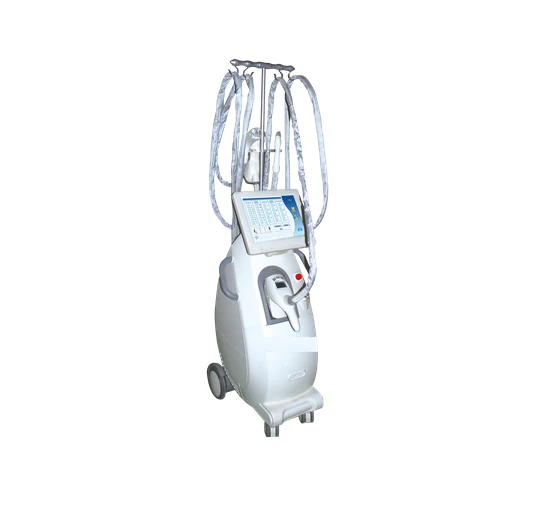
Ultrasonic Cavitation Machines
Cavitation machines buyer guide: how 40kHz ultrasonic cavitation fits a body-contouring menu, what to compare across configurations, and which claims to verify on the exact quotation.
40 kHz ultrasound↘06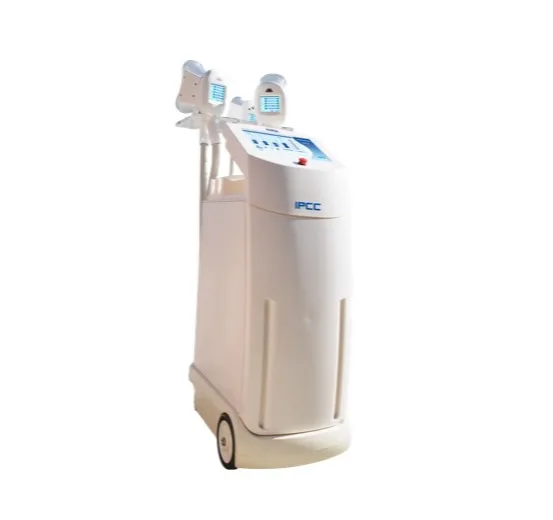
Cryolipolysis Fat Freezing Machine
Fat freezing machine buyer guide to cryolipolysis machines: a controlled-cooling equipment family for buyers planning a localized body-contouring workflow.
Controlled cooling↘Next step
Compare current configurations against the criteria in this guide.
Tell us your priority services, market, client mix and business type. Ask for the exact configuration, documents, training and service terms you need.
Describe your equipment plan ↘