Consumables
Ultrasonic Gel for Cavitation: What to Buy and Why
Ultrasonic gel for cavitation is the cheapest line on your equipment invoice and the one most likely to quietly waste the machine sitting next to it. Sound won't cross an air gap, so the coupling medium does part of the treatment rather than decorating it. Buy something sold and documented as an ultrasound transmission gel, and leave the slimming cream for the ritual at the end.
Buyer guide
Sound stops dead at air
Acoustic impedance is a simple idea: how hard a material pushes back when sound moves through it. Biological tissue sits around 1.63 MRayl. Air sits near 0.0001 MRayl, which is not close to anything. Published couplant research puts the price of even a small air gap between an acoustic sensor and its target at a 99.998 percent reduction in the wave. A dry pass isn't a weak treatment. It's barely a treatment.
Your gel isn't there for glide, then, or for comfort. Its job is to shove air out of the way, fill the dips a real body makes, and bring two badly mismatched impedances closer to equal. Water manages all three, then runs off a thigh in seconds, which is the entire reason anybody thickens it.
Geometry makes this harder than the physics does. Cavitation handpieces in our engineering archive fire a 40 kHz wave at 60 W through a rigid transducer face 72 mm across. Lay a disc that wide on a flank. Metal won't conform, and a flank won't flatten, so the gel makes up the difference. That's a live constraint on any ultrasonic cavitation machine built around a large flat head, and it's why experienced therapists use more gel than beginners, not less.
Buyer guide
Gel, slimming cream, thin lotion
Three products end up under the same handpiece. One was designed for the job. A genuine ultrasound transmission gel is water-based, polymer-thickened, oil-free, grit-free, and mixed without air whipped into it. Each entrained bubble is a tiny mirror pointed back at the transducer you paid for.
Slimming cream is an emulsion built around oils and actives, engineered to absorb. Absorption is the exact opposite of what a couplant has to do. Half an hour in, nothing is left on the surface but a scent. Thin lotion fails differently: it travels, down the flank and into the couch cover, just as the head reaches the awkward part of a hip.
Use the cream before or after the session if the ritual helps sell the treatment. Don't ask it to couple. If radio frequency shares the trolley, budget that consumable separately, because a conductive electrode has different contact requirements from an ultrasound face. Give RF skin tightening its own line on the order.
Buyer guide
What viscosity and water content do over half an hour
Body work is long work. The slimming platform in our device manuals caps working time at 30 minutes per session, and a face-sized gel habit will not survive that. A film that skins over at minute five means the therapist stops, reapplies, loses the rhythm.
Water content drives the drying. Humectant load decides whether the film stays workable to the end. Viscosity cuts both ways. Too thin and it slides off a curve. Too thick and the applicator drags, the therapist leans in harder, and improvised pressure on tissue is nobody's idea of protocol.
Our device manuals for light-based platforms give a figure worth borrowing: about 2 mm, spread evenly, laid thicker wherever the handpiece cannot sit flat. Same instinct on a body. Rib line, iliac crest, the outer swell of a hip. Those are the places contact goes, and lost contact is energy going nowhere.
Test a candidate on your own applicator before a paying client meets it. Then ask the therapist: did the head glide, or did it fight?
Buyer guide
Hygiene is the part that ends careers
Nonsterile gel is nonsterile. That's a description, not a technicality.
Between May and September 2021, CDC investigators documented 119 Burkholderia stabilis infections across ten US states, traced to contaminated nonsterile, multiuse ultrasound gel, and it ended in a national recall of that manufacturer's ultrasound gel. Those were hospitals, with catheter insertions in the picture. A contouring room carries far less risk. The handling failures transfer anyway.
The rules are cheap to enforce. Never top off a bottle from a bulk jug; discard and replace a container once it's empty, which is precisely what the 2025 AIUM handling guidance says. Keep the dispensing tip clear of skin, applicator and trolley. Wipe residual gel off the client before they dress.
Our device manuals made this point years ago on light-based platforms: gel goes on once, never reused. Our skin condition atlas adds the reason. Handled badly, it causes infection.
Buyer guide
Skin reactions, and where it stops being your call
Most gel trouble is irritation rather than allergy. Preservative and fragrance take the blame far more often than the thickener.
Our skin science training manual explains why the surface is the battleground. The stratum corneum runs 5 to 15 cell layers, roughly 20 to 30 micrometres, and carries a thin acid film built from sebum, sweat and the lipids released as corneocytes break down, sitting around pH 4.5 to 6.5. That film holds water in and keeps irritants out. Half an hour of wet product under a moving head works directly on it.
Pigment deserves saying out loud. Friction, heat and inflammation can leave post-inflammatory hyperpigmentation, and on Fitzpatrick IV to VI skin that mark can outlast the contouring result. The 2018 Dermatologic Surgery review by Juhász, Korta and Mesinkovska describes ultrasound as usable in all skin types with minimal concern for postinflammatory hyperpigmentation. Read that precisely. It's a statement about the modality, not a licence for a gel that stings.
Redness that fades inside an hour is ordinary. A rash that spreads, blisters, or is still sitting there the next morning has stopped being a product question. Stop treating, write down the product and batch number, and send the client to a clinician.
Buyer guide
The honest cost, and how to spot the markup
Cost per session is a minute of arithmetic and almost nobody does it. Weigh the jug before and after three real body sessions, then divide the price the same way. The number lands small against room time and wages. Small enough that the better gel is nearly always right, and small enough that a wide overpay runs a year before anyone notices.
Paperwork is where a markup likes to hide, so learn what the paperwork is. In the United States, ultrasound coupling media hold their own FDA product code, MUI, device name Media, Coupling, Ultrasound, under 21 CFR 892.1570, Class II, 510(k) submission type. A gel legitimately marketed there carries its own clearance number. Understand what that number records: a reviewer agreed the product is substantially equivalent to something already on sale. It says nothing about how well this gel conducts sound. Outside the US, ask for the local equivalent.
One test settles a special branded gel sold alongside a machine. Ask which property differs, stated as a measurement rather than an adjective. Then ask whether the warranty depends on buying it, and get that in writing, because cover tied to a proprietary consumable is a commercial arrangement, not an engineering requirement. Where we stand is on our service and support page.
Good coupling protects the result this category can give you. It never creates one. That same 2018 review reports ultrasound lipolysis producing a 2 to 4.6 cm decrease in abdominal circumference, modest by any honest reading, and no gel enlarges it. A poor gel hands part of it back every session, while everyone blames the machine.
Frequently asked questions
FAQCan I use aloe gel, glycerine or plain water instead of ultrasonic gel for cavitation?
Plain water couples sound well but won't stay on a curved body area, so you would reapply constantly and still lose contact. Cosmetic and household gels vary in composition, sometimes carry alcohol or fragrance, and were never tested as coupling media. For a one-off emergency any of them beats a dry head. For a paid treatment on a client, use a product sold and documented as an ultrasound transmission gel.
How much gel does one cavitation session actually use?
No supplier can answer that honestly on your behalf. Consumption scales with treated area, applicator size, session length and how heavy-handed your therapist is. The cavitation handpieces in our engineering archive carry a 72 mm face, and our device manuals allow up to 30 minutes of working time, which covers a lot of skin. Weigh the bottle before and after three real sessions, then average. That figure is yours.
Sterile or nonsterile gel for body contouring?
Cavitation is delivered on intact skin, so a nonsterile transmission gel is the normal choice. Sterile single-use packets belong where skin is broken, near fresh surgical sites, or ahead of a procedure that penetrates tissue. Handling matters more than the label anyway. The contamination outbreak CDC documented in 2021 involved nonsterile multiuse gel, and the guidance that followed was about not refilling containers, discarding them when empty, and clearing residual gel off the skin.
Should gel be warmed, and does a machine-branded gel work better?
Warm gel reduces the flinch that makes a client tense, which helps the therapist keep the head flat and moving. The 2025 AIUM guidance is specific: dry heat should be the only method used to warm it, so skip the water bath and the microwave. On branded gel, ask for one measured property that differs from a standard coupling medium, plus a full ingredient list and a regulatory reference. Adjectives alone mean you're buying a label.
Evidence trail
Published research behind this guide
This guide is educational material for equipment selection. It is not medical advice, an operating protocol or a promise of clinical outcome.
Read the research
- Manwar R, Saint-Martin L, Avanaki K. Couplants in Acoustic Biosensing Systems. Chemosensors 2022;10(5):181 (acoustic impedance of air about 10^-4 MRayl against about 1.63 MRayl for biological tissue; even a small air gap between sensor and target reduces acoustic waves by 99.998 percent; a coupling medium displaces air and fills contours, bringing target and transducer impedance closer to equality) ↗
- CDC MMWR, 2 December 2022: Outbreak of Burkholderia stabilis Infections Associated with Contaminated Nonsterile, Multiuse Ultrasound Gel, 10 States, May to September 2021 (119 infections identified across 10 US states; national recall of all ultrasound gel products from the implicated manufacturer; contaminated gel used ahead of invasive percutaneous procedures) ↗
- AIUM. Guidelines for Cleaning and Preparing External- and Internal-Use Ultrasound Transducers and Equipment Between Patients as Well as Safe Handling and Use of Ultrasound Coupling Gel, 2025 Revision, reapproved 2 July 2025 (discard and replace multidose containers when empty and do not refill them; avoid contact between the dispensing tip and any person or instrument; place the bottle upright in a holder; dry heat should be the only method used to warm gel; sterile packets for invasive procedures, nonintact skin and fresh surgical sites) ↗
- FDA device classification database record for product code MUI, device name Media, Coupling, Ultrasound (regulation number 892.1570, device class 2, 510(k) submission type) ↗
- Juhász M, Korta D, Mesinkovska NA. A Review of the Use of Ultrasound for Skin Tightening, Body Contouring, and Cellulite Reduction in Dermatology. Dermatologic Surgery 2018;44(7):949-963 (ultrasound lipolysis results in a 2 to 4.6 cm decrease in abdominal circumference; ultrasound is safe in all skin types with minimal concern for postinflammatory hyperpigmentation) ↗
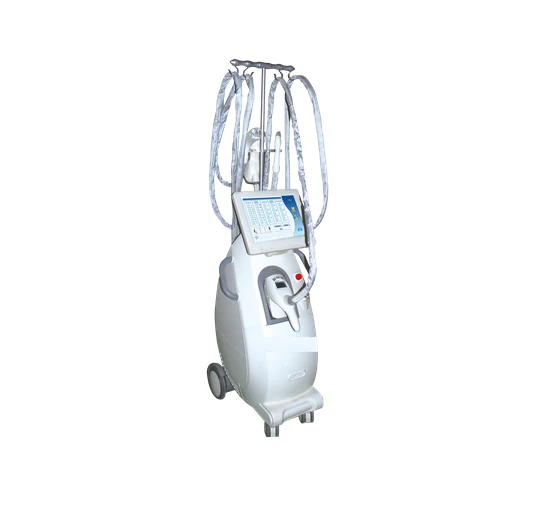
Ultrasonic Cavitation Machines
Cavitation machines buyer guide: how 40kHz ultrasonic cavitation fits a body-contouring menu, what to compare across configurations, and which claims to verify on the exact quotation.
40 kHz ultrasound↘05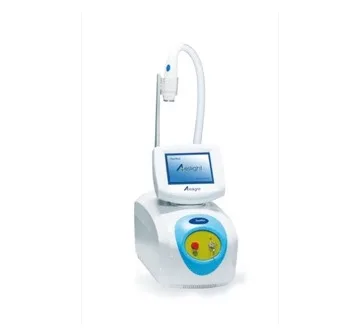
RF Skin Tightening
A non-laser energy family for buyers comparing thermal skin platforms.
Radio frequency↘Next step
Compare current configurations against the criteria in this guide.
Tell us your priority services, market, client mix and business type. Ask for the exact configuration, documents, training and service terms you need.
Describe your equipment plan ↘