Procurement
Buying Used Cavitation Equipment: The Risk Checklist
A used cavitation machine is cheap for reasons no photograph will ever show you. Cabinets photograph well, even the finished ones. What decides whether you bought a working platform or a heavy shelf is the transducer inside the handpiece, the lead running down to it, and whether anyone will still take your call about that serial number.
Buyer guide
What the low price is actually telling you
Second-hand equipment reaches the market three ways. A clinic closed. A clinic upgraded. Or the box stopped doing what the brochure promised, and the owner made that somebody else's problem. Only the third costs you, and it never appears in the listing.
You're buying blind on three things. Output verification, meaning an instrumented measurement of what the applicator actually delivers rather than a reading of what the screen was asked to send. Whether the leads were treated like precision parts or like vacuum cleaner flex. And whether a service path survives once your name sits on the plate. Cosmetic condition answers none of the three, and cosmetic condition is most of what a listing sells.
Buyers also brace for the wrong failure. A dead machine announces itself on day one. The expensive failure hums, warms the gel and under-delivers quietly for two years while clients stop rebooking.
Buyer guide
Transducer wear you can't see or hear
A cavitation applicator turns electrical drive into mechanical motion, and the stack doing that work ages with use. Our engineering archive puts numbers on the category: 40 kHz through a 72 mm tip, ultrasonic output rated at 50 W on one portable unit and 60 W on a larger console. Those are design figures. What the screen shows is a request the machine makes of the applicator, never a measurement of what the applicator managed.
Our training material defines power density as power divided by the area it is delivered over, and dose as that figure multiplied by exposure time. Fix the face at 72 mm and every watt the stack has lost lands straight on the intensity reaching tissue. A tip down by a fifth doesn't feel a fifth weaker. It feels fine.
Nobody has published a defect rate for used aesthetic body applicators, so I won't invent one. Adjacent fields did measure their kit. Mårtensson and colleagues tested 676 diagnostic transducers in daily clinical use across 32 hospitals: 39.8 percent showed a transducer error, delamination in 26.5 percent, a break in the cable in 8.4 percent. Artho and colleagues measured 83 therapeutic ultrasound units at 1 MHz, and 32 of them, 39 percent, fell outside the plus or minus 20 percent calibration standard on at least one setting. Different frequencies, different jobs. The pattern still transfers. Transducer equipment in daily service drifts, and it drifts without telling anyone.
Can you hear the difference? No. The drive sits above the audible band; your ear reports housing noise and gel.
Buyer guide
Cables and connectors, where the damage hides
Our device manuals file contact integrity under dose, not housekeeping. Keep the handle connection and its socket clean, the daily maintenance section says, to keep energy output accurate. Read that twice before you shrug at a scuffed connector. The same manuals tell operators to clean the handpiece after every treatment and return it to its holder so it can't fall. That's the discipline a departing owner stops keeping.
Troubleshooting tables say it again from the other end. Lost vacuum absorption, a dark display on the handpiece, a trigger or foot pedal that won't fire: each entry points first at the connection between machine and accessory, with the instruction to check the installation or reconnect the plug. One warning string is blunter still. RF Power Supply Communication Error, remedy, check the RF supply cable.
Then there's the journey. Our manuals class these platforms as precision instruments, prohibit inversion and warn against severe shock in transit. Your candidate made that trip once, professionally packed. The second trip gets packed by whoever cleared the room.
Inspect two points on every lead. Where the cable leaves the handpiece body, and where it enters the connector. Flex both gently with the unit powered and watch the screen. Tape on a lead is not a repair. It's a confession.
Buyer guide
The service path may not come with the box
One question outranks the rest. Will the original manufacturer service this serial number for me, in writing? Plenty won't, and it isn't spite. Warranties get written to the first purchaser, and a maker with no sight of the maintenance record inherits a stranger's history along with the liability.
MHRA guidance tells purchasers to clarify with the manufacturer, before buying, whether conditions are attached to the supply of spare parts. Parts sourced elsewhere must meet every aspect of the technical specification, and any agreement to use them should be risk assessed, costed and documented. The same guidance lists absence of manufacturer support and non-availability of correct replacement parts among the criteria for taking a device out of service.
Refurbished is a word, not a document. The US FDA's 2024 final guidance defines servicing as repair or preventive maintenance that returns a finished device to the safety and performance specifications established by the original manufacturer, and remanufacturing as work that significantly changes those specifications or the intended use, which drags manufacturer obligations onto whoever did it. So ask which happened, to which parts, by whom. Our service and support page sets out what a service relationship should contain. Hold any seller to something equivalent, us included.
Buyer guide
The inspection list, before money moves
Step 1. Provenance and the plate. Read the serial off the machine, then match it against every page in the file. MHRA guidance says usage and service history should reach purchasers before sale and travel with the device at the point of sale: reconditioning records including replacement parts, servicing records naming who did the work, usage over its working life, a fault log, the installation date. Written for hospitals. No reason a clinic asks for less.
Step 2. Hours counter, if one is fitted. Some platforms keep the tally. Our engineering archive holds a spec sheet for a portable cavitation and RF unit listing an accumulated working hours display among its features, beside 40 kHz at 50 W through a 72 mm tip. Photograph the reading, then hold it against the story you were told. A counter near zero on a five-year-old machine is a question, not a comfort.
Step 3. Every handpiece and lead, in your own hand. Faces flat and unmarked, no crazing, no sign of the coupling layer lifting off the element beneath. Leads straight out of the housing, no kinks, no field repairs. Pins clean. Count the heads against the packing list. A platform short one head is a platform short one treatment.
Step 4. Screen and error behaviour. Power it up stone cold and watch the whole boot. Run every mode for several minutes, not a polite thirty seconds, since thermal faults need time to surface. Record each warning verbatim. An intermittent error under load is the most expensive thing you will ever wave away.
Step 5. An output acceptance test by someone who isn't the seller. Buyers skip this one, and it's the only item that closes the blind spot. IEC 61847 covers measurement and declaration of basic output characteristics for ultrasonic systems between 20 kHz and 120 kHz, the band a 40 kHz applicator sits in; it's written for surgical systems, so treat it as the nearest published framework, not a perfect fit. IEC 61689, the physiotherapy standard, starts at 0.5 MHz and never reaches down here. IEC 62353 covers electrical safety testing before equipment enters service and after repair. Make the sale conditional on an engineer's report and keep the figures as your baseline. MHRA guidance is blunt about skipping checks on delivery: a fault found only when someone first uses the device is harder to date, and can invalidate warranties.
Step 6. Written confirmation of spares. Not a verbal yes on a call. Which parts remain available, for how long, from whom, at what lead time, on what conditions. Name the cavitation applicator and its lead explicitly. That's the part you'll replace first.
Buyer guide
We sell new machines, so weigh this accordingly
We aren't neutral. Pmise builds and sells new equipment, so a buyer who goes second-hand is a buyer who didn't choose us. Which is why the list above points at any seller, ourselves included. Clear all six steps on a used unit and you should buy it.
Used fits some rooms well. A second treatment room where demand is proven. A training platform that never touches a paying client. It fits badly as the only machine in a one-room clinic with no engineer within reach and no spare handpiece on the shelf, where a fortnight of downtime and a fortnight of closure are the same sentence.
Price the whole thing, not the sticker: purchase, independent inspection, one replacement handpiece, shipping, electrical safety check. Set that total against a new platform carrying a warranty and a named contact. Our ultrasonic cavitation platforms show what a new spec sheet commits to in writing, and the wider body and skin equipment range shows where cavitation sits against the technologies competing for the same room.
One clinical note, because it belongs in a purchase decision. Equipment that under-delivers tempts an operator to compensate by raising settings or dwelling longer on one spot, and that is where thermal injury and post-inflammatory hyperpigmentation stop being theoretical, more so in deeper skin phototypes. Patient selection and diagnosis stay with a clinician, not with the machine.
Frequently asked questions
FAQCan I test a used cavitation machine properly by myself?
Partly, yes. You can match the serial to the paperwork, inspect every face and lead, run each mode long enough for thermal faults to surface, and record on-screen warnings word for word. What no buyer can do by hand or by ear is confirm delivered output, because a worn transducer feels normal and sounds normal. That part needs an engineer with instruments, booked before you pay.
Will the original manufacturer service a machine I bought second-hand?
Sometimes. Often not. Either way you want the answer before money moves. Warranties are usually written to the first purchaser, and a manufacturer with no sight of the maintenance record may simply decline the risk. MHRA guidance tells purchasers to clarify in advance whether the manufacturer imposes conditions on supplying spare parts. Ask by serial number, and ask directly rather than through the seller.
Is refurbished safer than plain used?
Only when documents stand behind the word. US FDA guidance separates servicing, which returns a device to the safety and performance specifications established by the original manufacturer, from remanufacturing, which significantly changes those specifications or the intended use. Ask which was performed, on which parts, by whom, and get the parts list. Refurbishment with no parts list is a paint job with a better adjective.
What single finding should end the conversation?
No serial and no history. A plate that's missing, illegible or mismatched with the file leaves you unable to verify age, model variant, service record or recall status, and no amount of inspection recovers that. Running it close: a seller who refuses an independent output and electrical safety check before payment. Both refusals are telling you something the machine can no longer do.
Evidence trail
Published research behind this guide
This guide is educational material for equipment selection. It is not medical advice, an operating protocol or a promise of clinical outcome.
Read the research
- MHRA. Managing Medical Devices: guidance for health and social care organisations, January 2021 (section 3.9, usage and service history should always be available for prospective purchasers before sale and supplied with the device at the point of sale, with a minimum of reconditioning and replacement-parts records, all maintenance and servicing records naming the servicing organisation, record type and frequency of usage over its working life, fault log, decontamination status and date of installation; section 5.1, finding a device broken only when someone first tries to use it makes it harder to establish when the problem arose and can invalidate warranties; section 8.6.1, purchasers should clarify with the manufacturer whether conditions are imposed before spare parts will be supplied, parts from other sources must meet all aspects of the technical specification and be risk assessed, costed and documented; section 10.1.1, absence of manufacturer support and non-availability of correct replacement parts as replacement criteria) ↗
- Mårtensson M, Olsson M, Segall B, Fraser AG, Winter R, Brodin LÅ. High incidence of defective ultrasound transducers in use in routine clinical practice. European Journal of Echocardiography, volume 10 issue 3, May 2009, pages 389-394 (676 transducers from 7 manufacturers in daily clinical use at 32 hospitals; 39.8 percent showed a transducer error, delamination in 26.5 percent, break in the cable in 8.4 percent) ↗
- Artho PA, Thyne JG, Warring BP, Willis CD, Brismée JM, Latman NS. A Calibration Study of Therapeutic Ultrasound Units. Physical Therapy, volume 82 issue 3, March 2002, pages 257-263 (83 units in clinical use measured at 1 MHz across four intensity settings; 32 units, 39 percent, outside the plus or minus 20 percent calibration standard on at least one output setting, 15 above and 17 below) ↗
- US FDA. Remanufacturing of Medical Devices, final guidance issued 10 May 2024 (servicing is repair and/or preventive or routine maintenance of one or more parts in a finished device, after distribution, for purposes of returning it to the safety and performance specifications established by the original equipment manufacturer and to meet its original intended use; remanufacturing is any act done to a finished device that significantly changes its performance or safety specifications, or intended use) ↗
- IEC 61847:2025, Ultrasonics. Surgical systems. Measurement and declaration of the basic output characteristics (applicable to ultrasonic surgical systems operating in the frequency range 20 kHz to 120 kHz used for fragmentation, emulsification, debridement or cutting of tissue; specifies essential non-thermal output characteristics, methods of measurement and the characteristics manufacturers are to declare) ↗
- IEC 61689:2022, Ultrasonics. Physiotherapy systems. Field specifications and methods of measurement in the frequency range 0,5 MHz to 5 MHz (scope begins at 0.5 MHz, so it does not extend down to 40 kHz cavitation applicators) ↗
- IEC 62353:2014, Medical electrical equipment. Recurrent test and test after repair of medical electrical equipment (applies to testing of medical electrical equipment and systems before putting into service, during maintenance, inspection and servicing, and after repair or on the occasion of recurrent tests, to assess safety) ↗
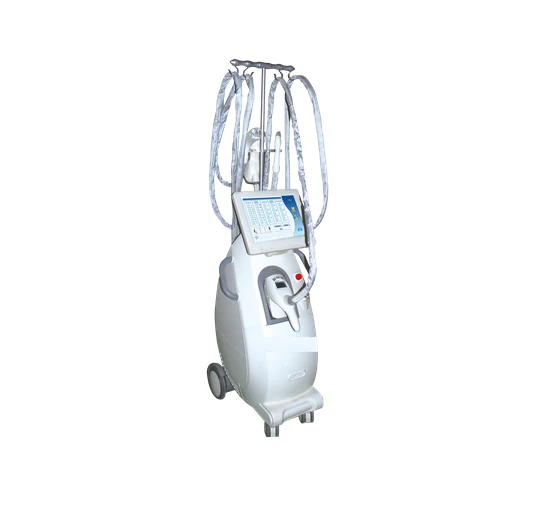
Ultrasonic Cavitation Machines
Cavitation machines buyer guide: how 40kHz ultrasonic cavitation fits a body-contouring menu, what to compare across configurations, and which claims to verify on the exact quotation.
40 kHz ultrasound↘06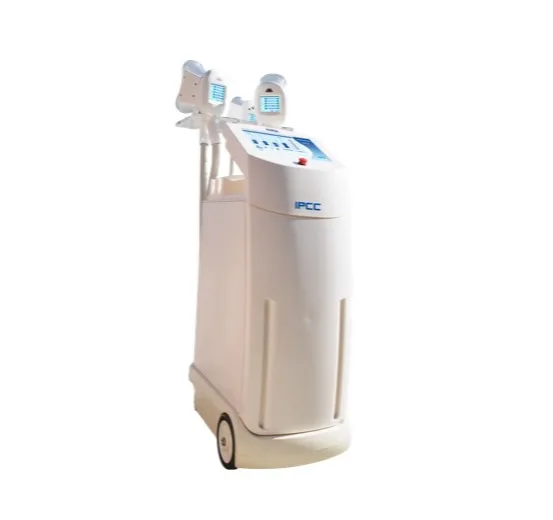
Cryolipolysis Fat Freezing Machine
Fat freezing machine buyer guide to cryolipolysis machines: a controlled-cooling equipment family for buyers planning a localized body-contouring workflow.
Controlled cooling↘Next step
Compare current configurations against the criteria in this guide.
Tell us your priority services, market, client mix and business type. Ask for the exact configuration, documents, training and service terms you need.
Describe your equipment plan ↘