Procurement
Vetting a Cavitation Machine Manufacturer
Search for a cavitation machine manufacturer and you will find a few hundred companies. Most of them make nothing. They put a logo on a shell built somewhere else, and the difference only surfaces in year three, when a transducer dies and the replies stop coming.
Buyer guide
The listing page is not a factory floor
Open twenty supplier pages in this category and you will keep seeing the same console. Same curved shell, same screen, same four handpieces sitting in the same cradle, photographed in what looks like the same rented studio. It isn't a conspiracy. It's an assembly economy. A small number of workshops build the platform, and a much larger number of companies resell it under their own branding.
Buying from a trader is not automatically a mistake. Some are responsive, honest about what they are, and cheaper than the factory. What you lose is depth. A reseller can't tell you why drive frequency shifts as a tip warms up, can't get a board onto a plane in eleven days, and can't honour a warranty that its own supplier has quietly stopped honouring.
So the trader versus manufacturer question isn't snobbery about supply chains. It's a question about who is still reachable on the day a machine that earns you money stops earning it. Read our ultrasonic cavitation platform notes for what the hardware is meant to do, then use the tests below on whoever is quoting you.
Buyer guide
Ask one engineering question and grade the reply
This is the cheapest due diligence you will ever run. Send one narrow technical question, then read the answer like a hiring manager.
Good questions are specific and slightly awkward. What is the drive frequency tolerance on the cavitation handpiece, and how do you verify it after assembly? What happens to output when an operator presses the tip hard into tissue? How long can the console run at maximum ultrasonic output before thermal protection intervenes, and what does the operator see when it does? Does the RF section share a power supply with the ultrasound section?
Now grade it. A manufacturer replies with a number, a method, and usually a caveat: we check it on a bench at final commissioning, the tolerance is this, and here is the failure mode when it drifts. A trader replies with adjectives. Advanced technology. Imported chip. Very stable. If the answer lands in nine minutes and contains no measurable quantity, you are talking to someone who forwarded your email and pasted the brochure.
One more tell, and it costs you nothing. Ask what the machine cannot do. The FDA states plainly that non-invasive body contouring does not treat obesity and will not produce weight loss. A supplier who says the same thing out loud is a supplier you can build a realistic treatment menu around. A supplier who promises liposuction results has already shown you how they will handle a warranty claim.
Buyer guide
Which parts do you build, and which do you buy?
Ask it flatly. The answer you want is not "everything", because nobody makes everything, and the vendor claiming otherwise is either confused or lying.
Our own answer comes straight off the process map in our quality manual. Machined metal parts, the enclosure and the LCD display panel are outsourced, controlled through our purchasing procedure. What stays inside the building is the work that decides whether a machine survives a booking calendar: handpiece assembly, circuit soldering, whole-machine assembly and optical alignment, commissioning, a burn-in run, and final inspection before packing. Soldering is classified as a special process for a blunt reason. You cannot inspect a bad joint from the outside.
Any real manufacturer can sketch that same split for their own line, in about a minute, without checking with anyone. A reseller can't. Watch for two substitutes: answering a process question with a certificate, or claiming full in-house production for a console whose enclosure is visibly identical to four competitors' enclosures.
Buyer guide
Ask for the same document twice
Here is the test that catches people out. Request a technical specification sheet for the machine in one configuration. A week later, through a different contact if you can manage it, request the sheet for a slightly different configuration. Same model family, one extra handpiece, or a different destination market.
You are not checking the numbers. You are checking whether the paperwork keeps its shape. Controlled documents come off a template, carry a revision, and use the same field names between versions. Improvised ones drift. Layout changes, units change, and figures appear that nobody can trace back to a measurement.
Our archive supplies a sobering example of why you pin this down. Two cavitation datasheets from different years, describing machines sold under the same name, quote the RF section differently: one gives 2.64 MHz with RF power at or below 120 W, the other lists 330 W input against 50 W output. Both are genuinely ours. Neither is false. They describe different builds, which is exactly why your quotation should reference a model code and a document revision date instead of a marketing name.
Then verify certificates rather than admiring them. An ISO 13485 certificate names a legal entity and its registered address, states a scope of covered activities, and carries an issue date, an expiry date and validity conditional on surveillance audits. Read the scope line before anything else. On our own certificate the covered systems are listed individually, and the slimming platform appears with its exact technology combination spelled out. If the product you are buying is not inside that scope, the certificate does not cover it. Check the number in the IAF CertSearch database. For CE, check the notified body in NANDO and the certificate in EUDAMED, where notified bodies must register certificates issued, suspended, reinstated, withdrawn or refused, and that record is public.
Know what carries no weight, too. FDA establishment registration is not approval and not clearance, the agency does not issue registration certificates at all, and it has publicly called on firms to stop producing misleading ones. Europe hands you a sharper tool. Under Article 16 of the EU MDR, a distributor selling a device under its own name or trademark takes on the manufacturer's obligations, unless an agreement identifies the actual manufacturer on the label. So ask to see the label. Ask whose name sits on the declaration of conformity. That one document settles most trader versus manufacturer arguments in about four seconds.
Buyer guide
References you can phone, in your market
Testimonials on a website are worth nothing. What you want is two or three contactable references: clinics in your country or a comparable one, running the same platform, who bought at least eighteen months ago. Older beats newer here. A machine's second year is when its true running cost shows up.
Expect friction, and welcome it. A serious supplier has to ask their client's permission first, which takes days. Instant reference lists tend to be staff, resellers, or fiction.
On the call, skip the satisfaction question entirely. Ask what broke. Ask how long the part took to arrive, who paid the freight, and whether anyone had to escalate to get it moving. Ask whether training went past the on-screen presets. Ask if they would buy it again, then stop talking and let the pause answer for them.
Buyer guide
After-sales is either a person or an inbox
Ask for a name. Not a department, a name. Who owns your account once the invoice clears, which time zone do they work in, and who picks it up when they are on holiday? A support contact who replies within a working day and already knows your serial number is worth more than two extra years of warranty on paper.
Dig into parts next. Which components are consumables that will fail on a schedule, what do they cost, and how long will they be stocked after the model is discontinued? Transducers, handpiece cabling and power supplies are the usual candidates. Get those answers in writing before the deposit leaves your account, because afterwards you have no leverage left.
Traceability is the quiet test, and almost nobody runs it. Our quality manual requires batch inspection records to be kept for five years, or at minimum two years from the date the product is released, so any unit can be traced back to the inspection that passed it. Ask for the record attached to your serial number. A manufacturer produces it. A reseller sends you a photograph of a sticker. What we commit to after delivery, including spares and training, sits on our service and support page.
Buyer guide
The answers you should expect from anybody
We are a manufacturer, and we are well aware that every listing in this category says exactly that. Which is why the tests above are built so a wrong answer shows itself without a factory visit and without a plane ticket.
A straight answer looks like this, from us or from anyone else. A named engineer replying with numbers instead of a sales inbox replying with mood. A parts list with prices on it. A certificate whose scope line actually mentions your product. Two references who picked up the phone. And a frank paragraph about who should not be treated at all.
That last one matters more than buyers expect. Patient selection is clinical work, not a preset on a menu. Anything that heats tissue carries a real risk of post-inflammatory hyperpigmentation, and that risk climbs in deeper skin phototypes, so a supplier who never mentions it has not thought about your clients. If a lump, a lesion or a change in the skin turns up during a course, that is a referral, not a treatment setting.
Run these questions at us if you want to see how they behave in practice. The wider Pmise equipment range is documented the same way: what each platform does, and what it does not.
Frequently asked questions
FAQHow do I tell a trader from a manufacturer without visiting the factory?
Three cheap tests, done by email. Ask one narrow engineering question and see whether the reply contains numbers and a verification method. Ask which parts are made in-house and which are bought, since a real maker names both without hesitating. Then ask whose name appears on the label and the declaration of conformity. Under EU MDR Article 16, a distributor selling under its own brand takes on manufacturer obligations unless the actual manufacturer is identified on that label.
Does an ISO 13485 or CE certificate prove I am buying from the maker?
No. It proves a certificate exists, which is not the same claim. Read the legal entity name, the registered address, the issue and expiry dates, and above all the scope line, since a certificate that lists other systems does not cover your machine. Verify the number rather than the PDF: accredited certificates can be checked in IAF CertSearch, and notified bodies must register CE certificates in EUDAMED, where the information is publicly accessible.
What does "FDA registered" mean on a cavitation machine listing?
Much less than the seller wants you to think. FDA establishment registration and device listing do not denote approval or clearance of the facility or the device, and the FDA does not issue registration certificates at all. It has publicly asked certain firms to stop producing misleading "FDA Registration Certificates". Treat any framed certificate of that kind as a marketing artifact, then go and check the actual regulatory pathway that applies in your own market.
What should I actually ask a reference clinic?
Not whether they are happy. Ask what broke, how many days the replacement part took, who paid the freight, and whether they had to escalate to get an answer. Ask whether training covered anything beyond the on-screen presets. Ask what the machine failed to deliver against the sales pitch. Then ask whether they would buy the same platform again, and stay silent long enough for the honest version to arrive.
How long should after-sales cover last, and what should it include?
Duration matters less than structure. You want a named contact rather than a shared inbox, a stated response window, a priced spare parts list, and a commitment on how long parts stay stocked after the model is discontinued. Consumable items such as transducers and handpiece cabling should be priced before you pay a deposit. Ask also for the batch inspection record tied to your serial number, which a manufacturer can retrieve and a reseller cannot.
Evidence trail
Published research behind this guide
This guide is educational material for equipment selection. It is not medical advice, an operating protocol or a promise of clinical outcome.
Read the research
- US FDA. Non-Invasive Body Contouring Technologies: what these devices do, and that they do not treat obesity or produce weight loss ↗
- U.S. Food and Drug Administration. Important Reminders about Registration and Listing (registration and listing do not denote approval or clearance). ↗
- U.S. Food and Drug Administration. FDA in Brief: FDA Calls on Certain Firms to Stop Producing and Issuing Misleading "FDA Registration Certificates". ↗
- European Commission, Public Health. EUDAMED Notified Bodies and Certificates module (notified bodies register certificates issued, suspended, reinstated, withdrawn or refused; the information is accessible to the public). ↗
- Regulation (EU) 2017/745, Article 16: Cases in which obligations of manufacturers apply to importers, distributors or other persons (TUV SUD MDR reference text). ↗
- International Accreditation Forum. IAF CertSearch, the global database for validating accredited management system certifications such as ISO 13485. ↗
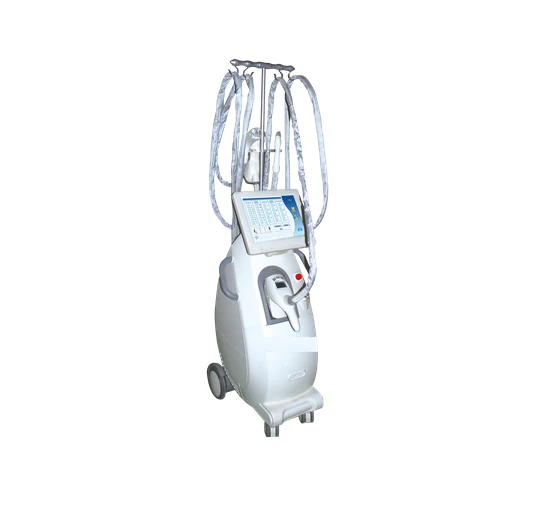
Ultrasonic Cavitation Machines
Cavitation machines buyer guide: how 40kHz ultrasonic cavitation fits a body-contouring menu, what to compare across configurations, and which claims to verify on the exact quotation.
40 kHz ultrasound↘05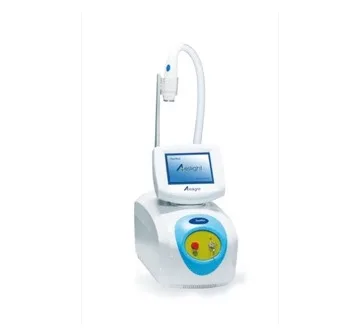
RF Skin Tightening
A non-laser energy family for buyers comparing thermal skin platforms.
Radio frequency↘Next step
Compare current configurations against the criteria in this guide.
Tell us your priority services, market, client mix and business type. Ask for the exact configuration, documents, training and service terms you need.
Describe your equipment plan ↘