Technology explainer
Cavitation Liposuction: Why the Name Misleads Clinics and Clients
Cavitation liposuction is a phrase that fuses two procedures that share almost nothing: surgical ultrasound-assisted liposuction, done by a surgeon through incisions with a cannula and suction, and external low-frequency ultrasonic cavitation, done through intact skin with a handpiece. Clinics that buy the wrong machine, or advertise the wrong word, end up with refund demands and advertising complaints. This guide separates the two so you can buy, name and sell the treatment honestly.

Buyer guide
What cavitation liposuction actually means: two different procedures
Start with the definition, because the whole keyword turns on it. Surgical ultrasound-assisted liposuction is a surgical procedure performed by a surgeon through incisions, using a cannula connected to suction, under anaesthesia. The American Society of Plastic Surgeons describes it plainly: a special cannula vibrates very rapidly and gives off ultrasound energy, that energy liquefies the fat cells, and the fat is then suctioned out. The ultrasound can be delivered above the skin with a special emitter or below the surface with an ultrasound cannula. Either way, you need a surgeon, a sterile field and a recovery period.
External cavitation is not that. External cavitation is a non-invasive body-contouring treatment delivered through intact skin with a handpiece. No incision. No anaesthesia. No downtime. You'll see it sold as lipo cavitation, ultrasonic cavitation, or ultracavitation. The last term is the one the literature uses, and it's defined as equipment that emits sound waves of varied frequency and high intensity.
So why the confusion? Because the word liposuction was borrowed from surgery and applied to a body-contouring treatment. Marketing did that, not surgeons. And once a client books "lipo cavitation" on your site, they arrive expecting surgical results at a fraction of the price, and you're the one who has to explain the gap.
Here is the one-line test a buyer can apply in ten seconds. Incisions and a cannula means surgery. A handpiece on intact skin means external cavitation. If a supplier's page shows a cannula, you are looking at a surgical device. If it shows a handpiece and a gel bottle, you are looking at a cavitation platform. The FDA is explicit that only certain devices are approved or cleared for liposuction, and it's important to determine that the device being used is cleared by the agency. That check belongs in your purchase file, whichever side of the line the machine sits on.
Buyer guide
How external ultrasonic cavitation is claimed to work
The mechanism described in peer-reviewed work on ultracavitation goes like this. Ultrasonic waves promote the formation of gas or vapour microbubbles, subject to negative or positive pressure generated in the ultrasonic field. After those microbubbles implode, the adipocyte membrane may be ruptured, promoting extravasation of the fat. The released content is mainly triglycerides dispersed in the interstitial space, transported through the lymphatic system to the liver.
Read the verbs carefully. "May be ruptured." That is the claim, not a certainty. A study using adipose tissue biopsies found that the mean size of subcutaneous adipocytes was significantly reduced compared with placebo-treated areas, which is a real measured outcome, but on a small sample.
In practice, cavitation is rarely sold alone. It's combined with radiofrequency for skin tightening and with vacuum or lymphatic drainage to move the released content. That combination is standard because fat reduction without skin support leaves clients unhappy, especially on the abdomen and flanks. If your clinic already runs an RF skin tightening platform, you have half the protocol.
What actually determines a session? Frequency, output power and handpiece size. With an ultrasonic cavitation platform at 40 kHz, the frequency is fixed by the transducer, so what you can vary clinically is power, dwell time, handpiece geometry and the number of passes. Ask a supplier to put those numbers in writing. A spec sheet that says "high power cavitation" and nothing else is not a spec sheet. It's a slogan.
Buyer guide
What the published evidence supports, and where it is thin
There is real literature here, and you should read it before you buy. Studies exist on ultracavitation and radiofrequency for abdominal adiposity, with measured circumference and fat-thickness outcomes. That is the good news: the modality isn't folklore.
Now the caveats, and they matter more. Sample sizes are small. Protocols and devices differ between studies. Follow-up is short. An experimental study on ex vivo porcine adipose tissue illustrates how sharply the parameters change the result: an acoustical power of 25 W for 5 minutes produced a 1.05 g change in adipose tissue mass with no cavitation effects in the form of vapour-filled cavities, while four sonication passes at 75 W for 5 minutes did create cavitation in the form of vapour-filled cavities. Same tissue, same duration, different power, different physical outcome.
So what does the evidence support? Modest localised circumference reduction in selected clients. Not weight loss. Not large-volume fat removal. And nothing you can transfer directly from one machine to another without your own measurements.
Where the evidence is thin: long-term durability beyond a few months, head-to-head device comparisons, and outcomes for higher BMI clients. If a distributor tells you their machine is proven for obese patients, ask for the study. We have not seen one in our archive, and we won't pretend otherwise. For a deeper review of what the non-invasive fat reduction literature does and does not show, see our guide on non-invasive fat reduction evidence.
Buyer guide
What a clinic may and may not tell a client
This section is the one nobody else writes, and it's the one that keeps you out of trouble. Say this: non-invasive body-contouring treatment for localised fat in suitable candidates, measured in centimetres, alongside diet and exercise. That sentence is defensible. Put it in your consent form, your price list and your booking system, word for word.
Do not say the treatment removes fat like liposuction. Do not promise permanent fat loss. Do not guarantee inch loss. Do not describe it as a substitute for surgery or for weight loss. And do not call the service liposuction in advertising, price lists or booking systems, even if the keyword is what clients type into Google. That single word is the wording that triggers refund demands and advertising complaints, because it sets an expectation the device cannot meet. You can rank for the term without adopting it as your service name. Write "cavitation body contouring" in the booking menu, and let the FAQ page explain why clients search for the other phrase.
Also state, in writing and before the first treatment: the number of sessions, the measurement method you'll use (tape measure at a marked point, or calipers), and the maintenance expectation. A client who was told six sessions and measured a 2 cm reduction at a marked point is a client who comes back. A client who was told "lipo" and measured nothing is a chargeback.
Buyer guide
Screening, contraindications and what can go wrong
Screening is not paperwork. It's the part of the protocol that decides whether the treatment happens at all. Standard exclusions: pregnancy or breastfeeding, pacemaker or metal implants, cardiac or vascular disease, coagulation disorders, active infection or inflammation in the treatment area, and a history of malignancy. Use caution in areas previously treated with liposuction or abdominoplasty, because the residual fat layer should not be targeted.
Reported side effects are usually temporary: mild discomfort, bruising, transient redness. Improper technique is associated with dimpling or loose skin, which is why handpiece technique and pass discipline belong in your training record, not just your sales brochure.
Skin type deserves a line of its own. Post-inflammatory hyperpigmentation is a real risk in darker skin types whenever heat or mechanical trauma is involved, so photograph and document baseline skin condition, and refer any lesion you cannot identify. A written consent form, a screening questionnaire and a treatment log protect both the client and the clinic. If a finding needs a diagnosis, that's a referral, not a session.
Log three checks per session: the marked measurement point, the power setting used, and any adverse observation. Three lines. It takes a minute and it has settled more disputes than any certificate on the wall.
Buyer guide
Cavitation vs liposuction vs other body-contouring options
Compare the options on invasiveness, anaesthesia, downtime, treatable fat volume, number of sessions and who performs it. Surgical ultrasound-assisted liposuction is invasive, needs anaesthesia, involves downtime, handles larger volumes, is a single procedure, and is performed by a surgeon. External cavitation is non-invasive, needs no anaesthesia, has no downtime, suits small localised areas, needs a series of sessions, and is performed by a trained operator. Those are different products for different clients.
Cavitation suits small localised areas on suitable candidates. Surgery suits larger volumes and skin excision needs. Between them sit the other non-invasive options a clinic may already own: cryolipolysis, radiofrequency, and laser lipo pads. If you already run a cryolipolysis platform, cavitation is a complement, not a replacement, because the two work on different tissue behaviour and can be staged in one programme.
Here's the practical point for your front desk. The client should choose the modality, not the marketing name. Sit them down, measure, look at the area, and recommend. If the honest recommendation is surgery, say so and refer. You will lose one booking and gain a reputation.
Buyer guide
Buying a cavitation platform: what to ask any supplier
Ask for the regulatory status of the specific model, not the brand. Certificate or clearance number, issuing body, and the exact model it covers. A certificate that names a different model than the one in the quote is not evidence for your machine. If a supplier can't produce that, treat the claim as unverified and say so in your purchase file.
Then ask for frequency, output power, handpiece count and treatment depth in writing, and compare those numbers across quotes. This is where a real specification separates suppliers. Note that IEC 61689, the standard covering ultrasonics physiotherapy systems, addresses field specifications and methods of measurement in the frequency range 0.5 MHz to 5 MHz. A 40 kHz cavitation platform sits below that range by design, which is exactly why you should ask what standard, if any, the manufacturer tested against, and get the answer in writing. IEC 60601-2-5:2009 specifies requirements and tests for the safety of ultrasonic physiotherapy equipment, and it was published on 30 July 2009, but it does not apply to equipment in which a tool is driven by ultrasound, such as equipment used in surgery or dentistry, nor to physiotherapy equipment using focused ultrasound pulse waves. Read the scope before you accept a certificate as proof of anything.
Ask about training, spare parts and consumable lifetime, warranty and defect handling, and shipping terms and lead time. Get the training in writing with hours, not "full training provided." Ask what happens when a handpiece fails in month four. Ask who pays the freight.
What we build: Pmise is a Beijing-based manufacturer of laser, light and energy-based aesthetic equipment, selling professional platforms to clinics and distributors. Our ultrasonic cavitation machines operate at 40 kHz ultrasound, and configurations are quoted per project, so there is no list price to compare. Nothing we sell is a liposuction device, and we won't let a distributor imply otherwise. If you run a multi-modality body programme, look at our body programmes page for how cavitation, cryolipolysis and RF are staged together.
One more thing, and then you can go and read the studies. There's a reason our engineering archive keeps a cavitation section separate from the slimming and cryolipolysis sections. They're different tools with different claims. Buy them as such.
Frequently asked questions
FAQDoes lipo cavitation really work?
It depends which procedure you mean. External ultrasonic cavitation has peer-reviewed evidence showing modest localised circumference reduction in selected clients, measured in centimetres, alongside diet and exercise. It is not weight loss and not large-volume fat removal. Surgical ultrasound-assisted liposuction, which is a different procedure performed by a surgeon through incisions with a cannula and suction, produces a much larger change and is irreversible. Don't let one word cover both.
Can belly fat be removed with cavitation?
Studies on ultracavitation and radiofrequency for abdominal adiposity report measured reductions in circumference and fat thickness, so the abdomen is the area with the most published data. But sample sizes are small, protocols differ, and follow-up is short. Cavitation suits small localised areas on suitable candidates, not large volumes. If the client needs skin excision or has a high BMI, the honest recommendation is a surgical referral, not a package of sessions.
Can fat cavitation go wrong?
Reported side effects are usually temporary: mild discomfort, bruising, transient redness. Improper technique is associated with dimpling or loose skin, and post-inflammatory hyperpigmentation is a risk in darker skin types. Screen properly and exclude pregnancy or breastfeeding, pacemakers or metal implants, cardiac or vascular disease, coagulation disorders, active infection in the treatment area, and malignancy history. Use caution on areas previously treated with liposuction or abdominoplasty.
How many cavitation sessions are needed before results show?
There is no single number in the published literature, because protocols and devices differ between studies. What you should do is state the number of sessions, the measurement method and the maintenance expectation in writing before the first treatment. Log the marked measurement point, the power setting used and any adverse observation at every session. If a supplier quotes you a fixed session count that guarantees a result, ask for the study behind it.
Evidence trail
Published research behind this guide
This guide is educational material for equipment selection. It is not medical advice, an operating protocol or a promise of clinical outcome.
Read the research
- How Assisted Liposuction Works | American Society of Plastic Surgeons ↗
- Effects of Ultracavitation and Radiofrequency on Abdominal Adiposity ↗
- IEC 60601-2-5:2009 | IEC ↗
- Equipment, measurement and dose—a survey for therapeutic ultrasound ↗
- Experimental evaluation of high intensity focused ultrasound for fat reduction of ex vivo porcine adipose tissue ↗
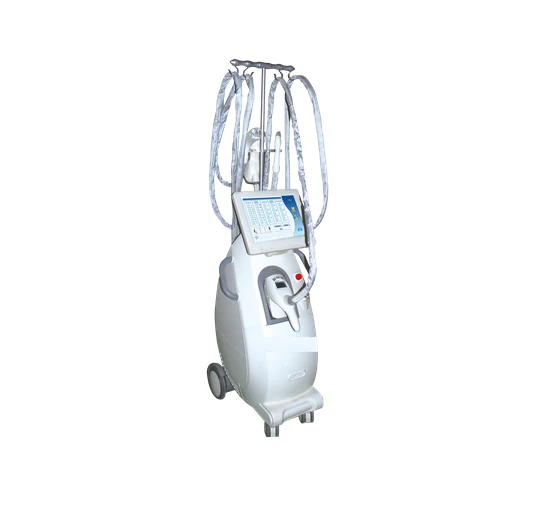
Ultrasonic Cavitation Machines
Cavitation machines buyer guide: how 40kHz ultrasonic cavitation fits a body-contouring menu, what to compare across configurations, and which claims to verify on the exact quotation.
40 kHz ultrasound↘06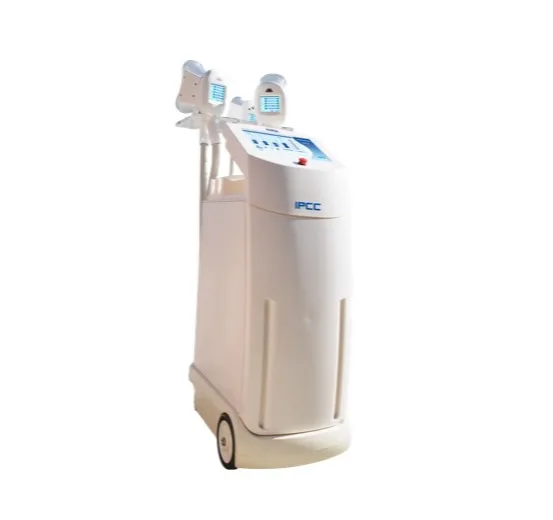
Cryolipolysis Fat Freezing Machine
Fat freezing machine buyer guide to cryolipolysis machines: a controlled-cooling equipment family for buyers planning a localized body-contouring workflow.
Controlled cooling↘Next step
Compare current configurations against the criteria in this guide.
Tell us your priority services, market, client mix and business type. Ask for the exact configuration, documents, training and service terms you need.
Describe your equipment plan ↘