Buyer guide
10in1 80k Cavitation Machine: What Buyers Get
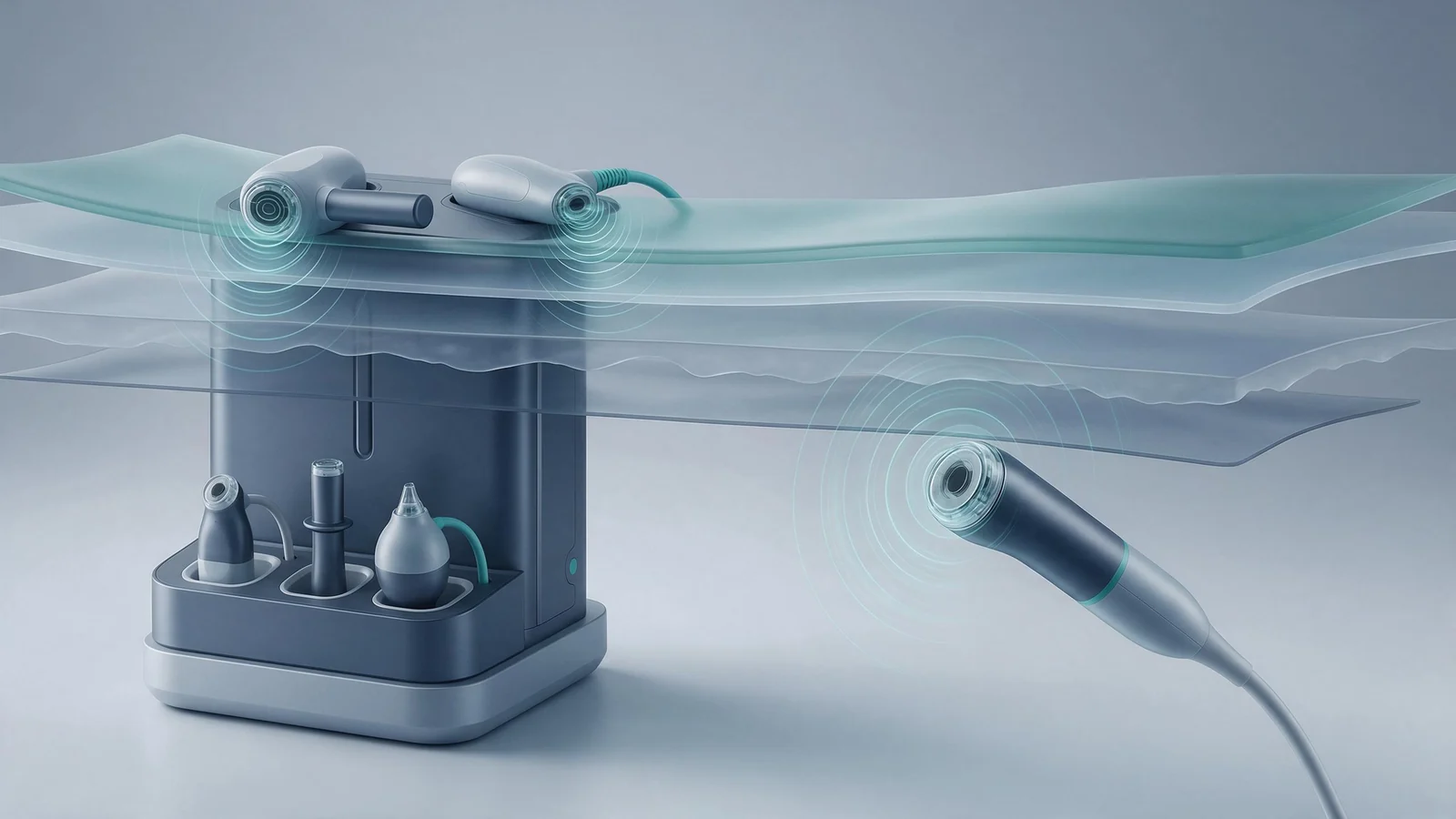
A 10in1 80k cavitation machine is a multi-handle body-contouring platform in which one of the handpieces, the cavitation handle, runs at roughly 80 kHz ultrasound, while the remaining handles cover radiofrequency, vacuum, pads and light-based add-ons. The number tells you about one handle, not the whole machine, and it tells you nothing at all about whether the bundle suits the services your room actually sells. This page walks through what 80k changes versus 30k and 40k, what usually sits inside a 10-in-1 package, and how to read a spec sheet before you commit.
Buyer guide
What an 80k Cavitation Machine Actually Is
Cavitation is one modality. That's the sentence to hold onto. Ultrasound cavitation works at a set frequency, and 80k (80 kHz) is simply the frequency band the cavitation handle runs in. Low-frequency ultrasound is defined in the literature as operating between 35 and 300 kHz, and it relies on mechanical cavitation as its primary mechanism of action, according to a review of ultrasound-induced lipolysis (Investigating the Metabolic Effects of Ultrasound-Induced Lipolysis). So 80 kHz sits inside the low-frequency band. It is not a different technology. It is the same physics parked at a different point on the dial.
What buyers get wrong is assuming the headline number describes the platform. It doesn't. The frequency figure on a listing describes the cavitation handle only. It says nothing about the RF handle, nothing about the vacuum handle, nothing about the lipo laser pads, and nothing about the photon or bio handle you'll find in the same case. A supplier can sell you a machine with a beautifully specified 80 kHz cavitation handpiece and a mediocre everything else, and the listing will still read like a five-star product.
Picture the purchase this way. You are not buying a frequency. You are buying a menu of treatments in a flight case, and the frequency is one line item on that menu.
Buyer guide
80k vs 30k and 40k: Does the Higher Frequency Matter?
Here is the trade-off in principle, stripped of marketing. Higher frequency generally means shallower penetration and a smaller focal effect. Lower frequency reaches deeper. That's the physics, and it's consistent across ultrasound work: in a study of HIFU exposures in excised porcine fat across four frequencies, inertial cavitation activity was always initiated at 0.5 MHz for pressures greater than 1.6 MPa (HIFU-induced cavitation and heating in ex vivo porcine subcutaneous fat). Different frequency, different threshold behaviour. Depth and effect change with the dial.
Now the part nobody on page one will tell you: no evidence is presented here showing that 80k produces better fat-loss outcomes than 40k. None. If a supplier claims 80k outperforms 40k, ask them for the data. Ask for the study, the protocol, the measurement method and who ran it. A number on a landing page is not data.
What should drive your choice is the treatment area and the protocol you intend to sell. A 40 kHz ultrasound cavitation weight loss machine and an 80 kHz unit are tools for different geometries and different comfort profiles. Match the frequency to the body area and the session plan you've built, not to the biggest number on the page. If your clients mostly book abdominal work and you've built a protocol around a specific depth, buy the frequency that serves that protocol. If you're unsure which band suits your menu, our comparison of 30k, 40k and 80k cavitation covers the depth and comfort differences in more detail.
Buyer guide
What the Extra Handles in a 10-in-1 Package Usually Are
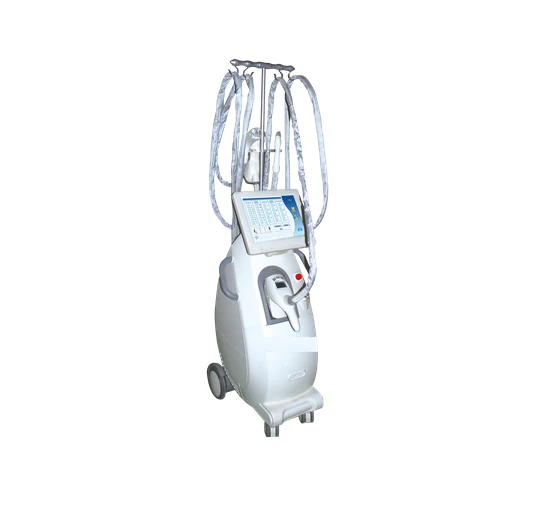
The typical composition looks like this. One cavitation handle. One or more RF handles, often a 3-pole and a 4-pole. A vacuum or negative-pressure handle. Lipo laser pads. A photon or bio handle. And a hot/cold hammer for contact cooling or warming. Add them up and you land somewhere around ten, which is where the label comes from.
Each handle maps to a different treatment or add-on service. So "10-in-1" is a menu question, not a power question. It's asking: how many distinct services can this case support? Not: how strong is it?
And the counts aren't standardised between suppliers. One vendor's 10-in-1 might include four RF handles and no pads. Another's might include two cavitation handles and a single RF. The same label can mean genuinely different contents. Before you sign anything, get the handle list in writing with the quantity of each, then compare it against the services you intend to sell. If you're also weighing a photon 60k cavitation machine against an 80k build, the same rule applies: the frequency in the product name describes one handle, and the bundle contents decide the menu.
Buyer guide
Matching the Bundle to Your Treatment Menu and Room
Write out the services a 10-in-1 platform can support. Cavitation for circumference work. RF for skin tightening and contouring. Vacuum for lymphatic-style massage and mechanical manipulation. Lipo pads for larger-area sessions. Photon or bio handles for light-based add-ons. Hot/cold for comfort and post-session care. Then go through your booking history and mark which of those your client base actually books. Be honest. A handle that never gets used is a handle you paid for, trained on, insured, and now store.
That's the operational cost of a bundle, and it's the thing the ranking pages skip. More handles means more staff training, more consumables, more storage, more cleaning time between clients, and more ways for a new therapist to pick the wrong handpiece. A bundle is not free capacity. It is overhead with a plug on the end.
Who is the 10-in-1 format wrong for? Single-treatment rooms. Mobile therapists. Anyone whose client base books one service and one service only. If you sell cavitation and nothing else, a dedicated 40 kHz cavitation unit is the better buy. You'll train faster, you'll have one consumable line to manage, and you won't be paying for handles that sit in the case. The bundle only pays for itself when the second and third services actually get sold. Our cavitation machine purchase checklist walks through the decision in order if you want a structured way to work it out.
Buyer guide
How to Read a 10-in-1 Spec Sheet Before You Buy
Ask for the frequency, power and treatment-depth figures per handle. Not one headline number for the whole machine. Per handle. If the supplier can't produce that breakdown, you've learned something useful about the supplier.
Then ask which parts are consumable and what a replacement handle or pad costs over the machine's life. Handpieces fail. Pads wear. Membranes perish. If a replacement cavitation handle costs a meaningful fraction of the original purchase, your second year of ownership looks nothing like your first. Ask for the figure before you order, not after something breaks. This is where total cost of ownership lives, and it's the number that separates a good bundle from an expensive one.
Finally, ask for the exact configuration quoted. Configurations are quoted per project, and the advertised bundle may be a base build with options listed separately. Get the quotation to name every handle, every quantity, and every included accessory. What you sign should match what arrives. Our criteria for choosing a cavitation machine sets out the same sequence if you want it in one place.
Buyer guide
What to Ask Any Supplier About Compliance and Support
Request the named certification or registration for the exact model offered, with its number. Not a marketing badge. Not a flag icon in the footer. A certificate number you can look up yourself. Depending on where you operate, the categories to ask about include CE, ISO 13485, FDA 510(k), TGA and Health Canada. Some of those are not applicable to every device class, and that's fine. The point is that a supplier who holds a registration can name it and show it.
Where does ultrasound safety documentation fit? IEC 60601-2-5:2009 specifies requirements and tests for the safety of ultrasonic physiotherapy equipment, and the FDA lists it as a recognized consensus standard covering particular requirements for the basic safety and essential performance of ultrasonic physiotherapy equipment (FDA recognized consensus standards). Ask whether the unit is tested to that family of standards and what test documentation ships with it. Then ask two more questions. Is the documentation in the language of your market? And what training format is included, on site, remote, or a manual only?
Add spare-parts availability and lead time to the list. A platform with no parts pipeline is a platform with a fixed service life. Get all of it in writing before you place the order.
Buyer guide
Where Our Cavitation Platform Fits
Pmise (Beijing Pmise Technology Development Co., Ltd.) is a Beijing-based manufacturer of laser, light and energy-based aesthetic equipment that sells professional platforms to clinics and distributors. Our ultrasonic cavitation machines are listed at 40 kHz ultrasound, and configurations are quoted per project. No model code or spec table is published on this site for our ultrasonic cavitation platform because every build is quoted per project. We publish no certification, clearance or client reference for any model.
That last sentence is deliberate. We record none. So rather than make a claim you'd have to verify anyway, we tell buyers what to request from any supplier: the named certificate and its number for the exact model, the test documentation that ships with the unit, the consumable and replacement-part pricing, the training format, and the quoted configuration in writing. Ask us for the same things.
This is educational material for equipment buyers, not medical advice. Body-contouring devices carry real considerations, including skin-type risk and post-inflammatory hyperpigmentation, and any client with a diagnosed condition, a pacemaker, or medication that causes photosensitivity should be assessed by a qualified clinician before treatment. Refer out when the presentation calls for it.
Frequently asked questions
FAQWhat is better, 40k or 80k cavitation?
Neither is better in the abstract. Higher frequency generally means shallower penetration and a smaller focal effect; lower frequency reaches deeper. No evidence is presented here showing that 80k produces better fat-loss outcomes than 40k. Match the frequency to the treatment area and protocol you intend to sell. If a supplier claims 80k outperforms 40k, ask for the study, the protocol and the measurement method behind that claim.
Do body cavitation machines really work?
Low-frequency ultrasound between 35 and 300 kHz relies on mechanical cavitation as its primary mechanism of action, and both high-frequency (1 to 3 MHz) and low-frequency (35 to 300 kHz) ultrasound received FDA approval for waist circumference reduction between 2010 and 2014. That is the regulatory and mechanistic picture, not a promise about your client. Outcomes vary by protocol, area and operator, and no device replaces assessment by a qualified clinician.
Can I do 80k cavitation on my face?
Cavitation handles are designed for body work, and the 80 kHz figure describes a body-contouring handpiece. Facial tightening is a different indication served by different modalities, typically radiofrequency or light-based platforms. If a supplier tells you the cavitation handle doubles as a facial device, ask for the treatment protocol and the safety documentation for that specific use before offering it.
What should I check before buying a cavitation machine?
Ask for frequency, power and depth figures per handle, not one headline number. Ask which parts are consumable and what a replacement handle or pad costs. Ask for the named certification or registration with its number for the exact model, plus the test documentation that ships with the unit. Ask about training format, spare-parts availability and lead time. Get the full configuration quoted in writing before you order.
Evidence trail
Published research behind this guide
This guide is educational material for equipment selection. It is not medical advice, an operating protocol or a promise of clinical outcome.
Read the research
- Investigating the Metabolic Effects of Ultrasound-Induced Lipolysis ↗
- HIFU-induced cavitation and heating in ex vivo porcine subcutaneous fat - PubMed ↗
- Potential Risks with Certain Uses of Radiofrequency (RF) Microneedling – FDA Safety Communication | FDA ↗
- [PDF] •Basic Safety and Essential Performance of Medical Electrical ... - FDA ↗
Next step
Compare current configurations against the criteria in this guide.
Tell us your priority services, market, client mix and business type. Ask for the exact configuration, documents, training and service terms you need.
Describe your equipment plan ↘