Buyer guide
Ultrasonic cavitation ems machine slimming muscle stimulation: A Buyer Guide for Clinics
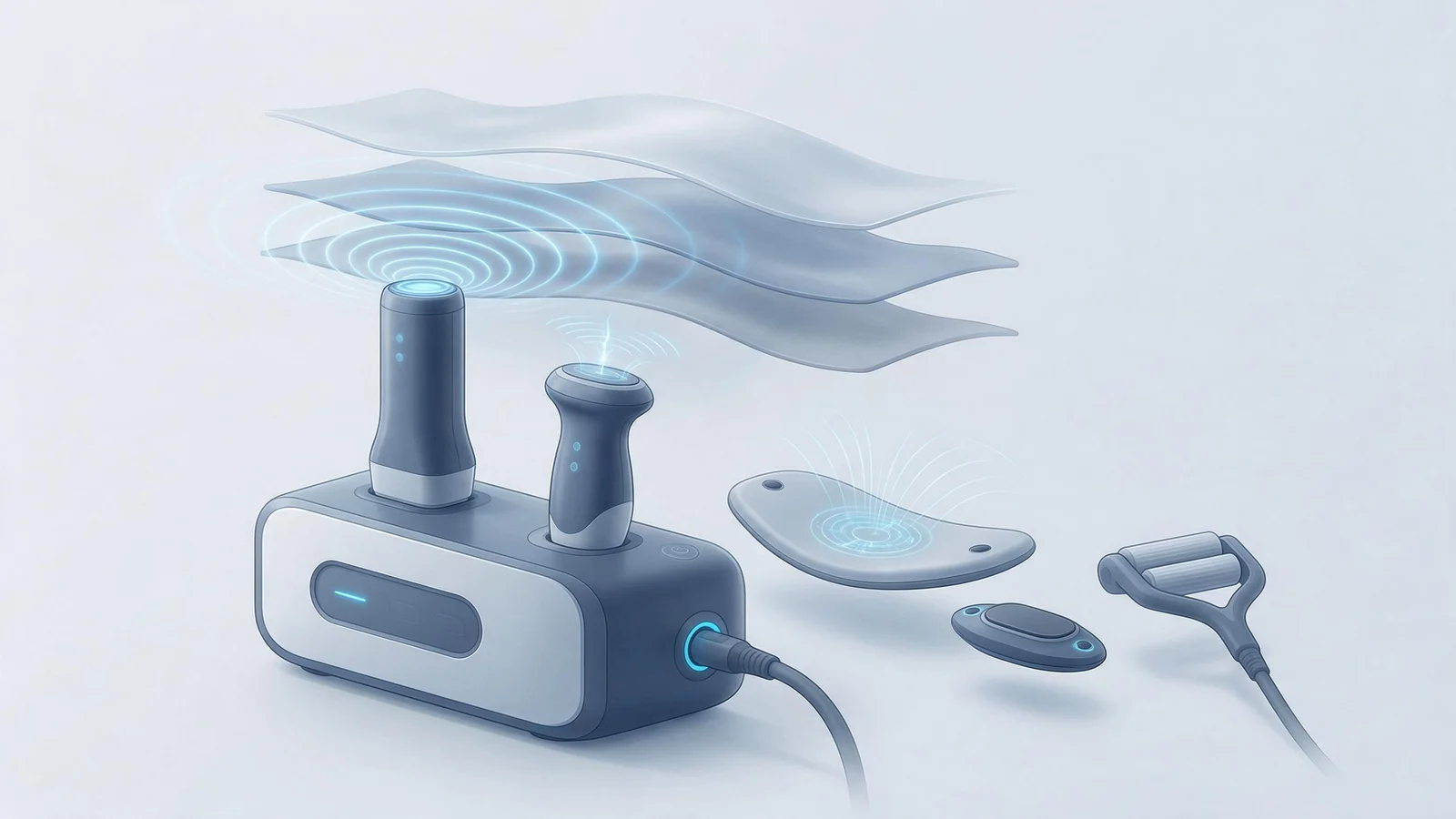
An ultrasonic cavitation ems machine slimming muscle stimulation combination is two devices in one housing, and they do two different jobs. Cavitation is for localised fat; EMS is for muscle activation. If you're a clinic owner or distributor weighing one platform against two, this guide breaks down what each modality actually does, how to sequence them, and what to verify before you buy.
Buyer guide
Why Clinics Combine Ultrasonic Cavitation and EMS in One Machine
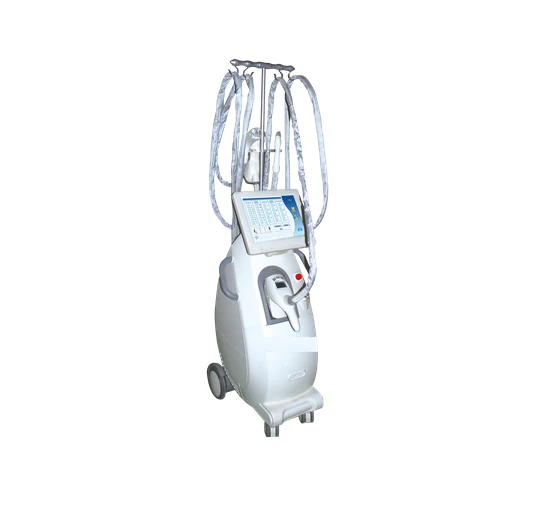
The two modalities have different purposes, and that's the whole point of buying them together. Cavitation targets subcutaneous fat deposits. EMS targets muscle activation. A combination unit lets your clinic offer a body-contouring menu from one footprint without buying two separate platforms, which matters when you're short on treatment-room space or capital. You get one cart, one power draw, one booking slot.
What the combination does not do is more important than what it does. It is not a substitute for exercise and it does not replace a weight-loss programme. Clients who arrive expecting either will be disappointed, and disappointed clients leave reviews. So set the frame at consultation: this is contouring support alongside a healthy diet and activity routine, nothing more. A buyer who is choosing between a dedicated cavitation platform and a combined unit should read the comparison of EMS versus cavitation before committing, because the two modalities are not interchangeable and your menu should not treat them as such.
Some operators market a 5 in1 ultrasonic cavitation skin rejuvenation machine as a single answer to body and face. That packaging is fine as a sales label, but the clinical logic still splits along the same line. Fat work on one side, muscle activation and skin work on the other.
Buyer guide
Ultrasonic Cavitation: What the 40 kHz Handpiece Actually Does
Low-frequency ultrasound creates pressure on fat cells below the skin. Those cells break down and the contents are cleared via the lymphatic and urinary systems. That is the working model, and it's why hydration and post-treatment movement get mentioned in every serious protocol.
Where does it go on the body? Treatment areas with localised fat: abdomen, flanks, thighs, hips, upper arms. Bony areas such as the head and neck are unsuitable. The handpiece needs a conductive gel or cream for coupling. Dry skin contact is ineffective, and you'll feel the difference immediately in how the handpiece glides and how the client reports sensation. Book around 20 minutes per cavitation area, and keep sessions inside the 10 to 30 minute cap per area. Our own ultrasonic cavitation machines operate at 40 kHz ultrasound, so when you're comparing suppliers, ask each one whether their handpiece output is stated in writing for the configuration you're buying. No model code or full spec table is published for our cavitation units on this site because configurations are quoted per project.
Coupling gel is not a consumable you can improvise. If your team is still trialling gels, the guide to ultrasonic gel for cavitation covers what to look for, and the broader safety picture sits in the notes on ultrasonic cavitation safety. Skin-type matters here too. Darker Fitzpatrick types carry a higher risk of post-inflammatory hyperpigmentation after any energy-based treatment, so screen and document before you treat, and refer anything you're unsure about to a physician.
Buyer guide
EMS in a Slimming Platform: Muscle Activation, Not Muscle Building
EMS delivers electrical impulses through electrode pads to trigger muscle contractions. Neuromuscular electrical stimulation uses electrical stimulation of motor axons through electrodes placed over a muscle or nerve to generate muscular contractions. That definition matters because it draws the boundary cleanly. In clinical and research use, contractions produced by NMES repeatedly over weeks can reduce disuse atrophy and promote muscle hypertrophy and contractile function, neural adaptations, and positive health and well-being in clinical and nonclinical populations, but that is a training-adjacent effect measured over weeks, not a salon result you can promise in a single paid session.
In a slimming platform, EMS is used for muscle activation, pain relief and atrophy prevention. It does not build muscle and it does not replace exercise. Say that plainly to every client, and be wary of copying the ranking pages that claim otherwise. A systematic review and meta-analysis revealed that electrical muscle stimulation seems to have positive effects on muscle mass and strength parameters, but not on body fat mass. Read that sentence twice, because it is exactly the sentence your consultation script needs. Fat mass, no effect. If a client's goal is fat reduction, EMS is not the modality carrying that goal.
Pad technique decides whether the session is worth anything. Pads must be applied to clean, oil-free skin, and wiped after use to preserve adhesion and hygiene. Skip that step and you'll be replacing pads early and explaining skin irritation you didn't need.
Buyer guide
Treatment Sequencing: Can Cavitation and EMS Run in the Same Session?
Yes, and here's a sequence that works in a busy room. Cavitation and infrared can be combined in one pass. EMS is run as a separate step because it uses pads rather than a handpiece, so the two don't share a working surface and they don't share a rhythm.
A practical clinic sequence runs like this. First, EMS pad session to prime the area. Second, cavitation with gel, working the marked zones. Third, post-treatment massage and hydration advice, plus a note on light activity for the rest of the day. Typical timings: 10 to 20 minutes per area for EMS, around 20 minutes per cavitation area, with 10 to 30 minute session caps. Build the booking as one 45 to 60 minute appointment if you're treating a single region pair, and be honest at reception about that duration or you'll run late all afternoon.
Across a course, most clinics will space sessions rather than stack them daily, and the review point should be written into the client record. Say week four for a check-in and week twelve for a review. Those are your operating settings, not clinical promises, and they give the client something concrete to hold onto. If your platform also carries radio frequency, the way to layer that is set out in cavitation and RF combined. One caution that applies to every energy modality here: this is educational material for equipment buyers, not medical advice, and any client with a diagnosed condition belongs with a clinician.
Buyer guide
Handpieces, Pads and Consumables a Clinic Must Stock
Cavitation handpiece plus reusable silicone electrode pads and cables are the core working parts of a combination unit. The handpiece is durable. The pads are not, and that's where your planning should go.
Pads are the recurring consumable. Clinics need multiple sets in rotation for hygiene and to avoid downtime. How many? Work it out from your booking sheet: if you're running eight EMS sessions a day and each set needs to be cleaned and dried between clients, you need at least three sets in rotation, ideally four with one resting. Two sets is a scheduling accident waiting to happen. Pad lifespan varies with skin prep and cleaning discipline, so track it. Log the date a set enters service and the date you retire it, then divide the replacement cost by the number of sessions it delivered. That gives you a cost-per-client figure you can actually put into your menu pricing, and it stops the pads being an invisible subsidy of your margin.
Conductive gel, cleaning materials and protective covers should be planned as part of the per-client cost too. Add them to the same calculation. Then price the protocol as a course rather than a one-off: a package of sessions with a review built in converts better and funds your consumable stock properly. Distributors evaluating this category should note that our ultrasonic cavitation machines operate at 40 kHz ultrasound, and that configurations are quoted per project, so consumable supply terms need to be agreed in writing alongside the platform itself.
Buyer guide
Who This Combination Suits, and Who Should Not Be Treated
Suitable clients are those with localised fat and a stable BMI who want non-invasive contouring alongside a healthy diet and activity routine. They understand it's a supporting treatment. They turn up to appointments. They don't ask you for a number on the scale.
Contraindications to screen for, every time, on the intake form and again verbally: pregnancy or breastfeeding, pacemakers or metal implants, coagulation disorders, active infection or inflammation in the treatment area, history of malignancy. None of those are maybes. Document the screen and keep it in the file.
The combination is not appropriate for clients seeking significant weight loss or an invasive-result outcome. Refer them onward. It is also not appropriate for anyone whose skin condition makes energy-based treatment risky without medical clearance, and darker skin types need a PIH conversation before the first session rather than after. A distributor selling into clinics should make sure the end user has that screening habit built in, because no platform compensates for a missing consultation.
Buyer guide
What to Verify Before Buying a Cavitation + EMS Platform
Ask every supplier for the model-specific certification or clearance document, the device spec sheet, and the pad and consumable supply terms. Model-specific matters. A certificate for a company is not a clearance for the unit you're buying, and a spec sheet that lists a family of products rather than your configuration tells you nothing you can put in a tender document.
Pmise (Beijing Pmise Technology Development Co., Ltd.) is a Beijing-based manufacturer of laser, light and energy-based aesthetic equipment that sells professional platforms to clinics and distributors, and we quote per configuration. Device parameters may only be quoted from the published model tables. Configurations are quoted per project, so confirm specs in writing before you sign anything. That is the same advice we'd give you about any supplier: get the spec sheet, the certificate and the spare-pad supply commitment in writing, with a named contact for consumable reorders.
Two more things worth asking, and neither is about the machine. What training is included, and in what form, live or remote? What happens to a faulty unit or a bad pad batch, and what's the turnaround? A distributor's reputation lives or dies on the second question. Also ask how the platform differs from a home device, because power, handpiece count and duty cycle are the differences that decide whether you can run back-to-back professional sessions or only occasional ones. Our cavitation range is listed at ultrasonic cavitation machines, and configurations there are quoted per project. Compare the professional duty cycle against any consumer unit before you decide the category is the same product at a different price.
Frequently asked questions
FAQDo ultrasonic cavitation slimming machines actually work?
They work on localised fat as a contouring support, not as a weight-loss treatment. Low-frequency ultrasound creates pressure on fat cells below the skin, which break down and are cleared via the lymphatic and urinary systems. Results depend on the client's diet, activity and consistency, and you should not promise inch loss. Screen out bony areas such as the head and neck, and use conductive gel, because dry skin contact is ineffective.
Does the EMS muscle stimulator actually work?
For muscle activation and atrophy prevention, yes, within limits. Neuromuscular electrical stimulation generates muscular contractions, and repeated use over weeks can reduce disuse atrophy and promote muscle hypertrophy and contractile function. But a systematic review and meta-analysis found electrical muscle stimulation seems to have positive effects on muscle mass and strength parameters, and not on body fat mass. It does not replace exercise.
Where does the fat go after cavitation?
The working model is that the disrupted fat cells release their contents, which are then cleared via the lymphatic and urinary systems. That is why hydration and light post-treatment activity are part of a sensible protocol, and why the treatment is positioned as contouring support rather than a weight-loss intervention. Clients seeking significant weight loss should be referred to an appropriate programme.
How much fat does cavitation burn?
There is no figure we can give you, and any supplier who quotes one is inventing it. Cavitation targets localised fat deposits through mechanical pressure rather than through calorie burning, so framing it as fat burn is misleading. Set expectations around contouring support alongside diet and activity, book around 20 minutes per area, and keep sessions inside the 10 to 30 minute cap.
Evidence trail
Published research behind this guide
This guide is educational material for equipment selection. It is not medical advice, an operating protocol or a promise of clinical outcome.
Read the research
- IEC 60601-2-5:2009 ↗
- Possible Effects on Health of Ultrasound Exposure, Risk Factors in the Work Environment and Occupational Safety Review - PMC ↗
- Enhancing Adaptations to Neuromuscular Electrical Stimulation Training Interventions - PMC ↗
- Effects of electrical muscle stimulation on core muscle activation and physical performance in non-athletic adults: A randomized controlled trial - PMC ↗
Next step
Compare current configurations against the criteria in this guide.
Tell us your priority services, market, client mix and business type. Ask for the exact configuration, documents, training and service terms you need.
Describe your equipment plan ↘